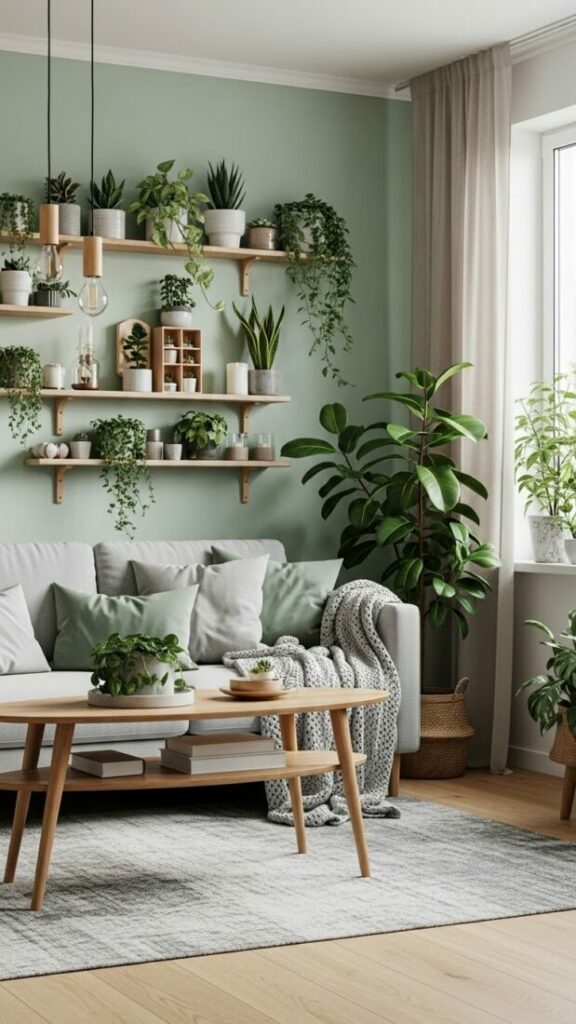
Biophilic living room ideas are reshaping the landscape of modern interior design by reconnecting us with our primal roots. For too long, we have lived in sealed boxes. We have separated ourselves from the natural world.
This separation causes stress. It disrupts our circadian rhythms. It lowers our mood.
Biophilic design is the architecture of life. It is not just about putting a potted plant in the corner. It is about mimicking the conditions of nature within the built environment.
In this guide, we will explore how to blur the lines between indoors and outdoors. We will discuss fractal patterns, organic materials, and lighting strategies. Prepare to turn your living space into a breathing ecosystem.
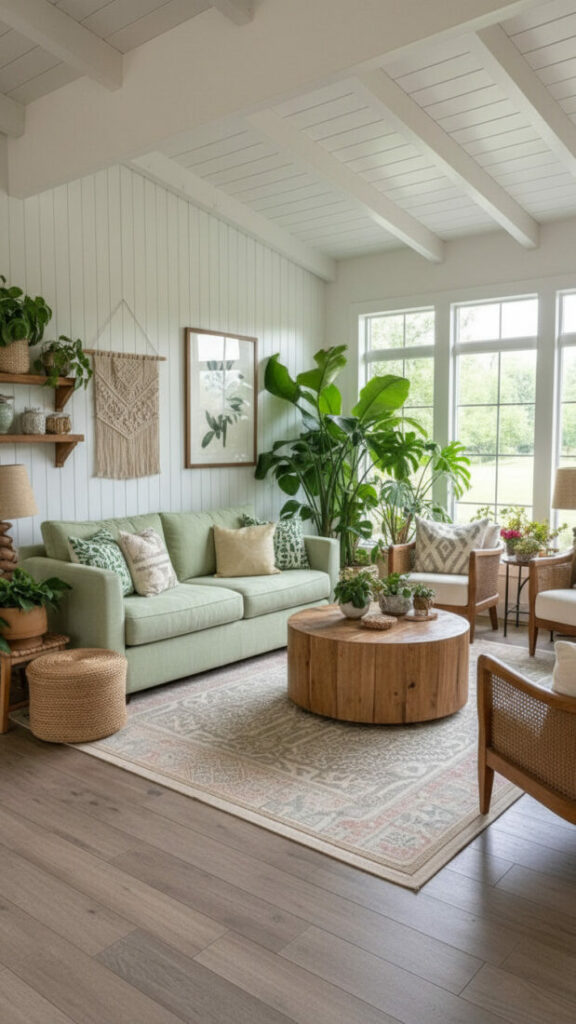
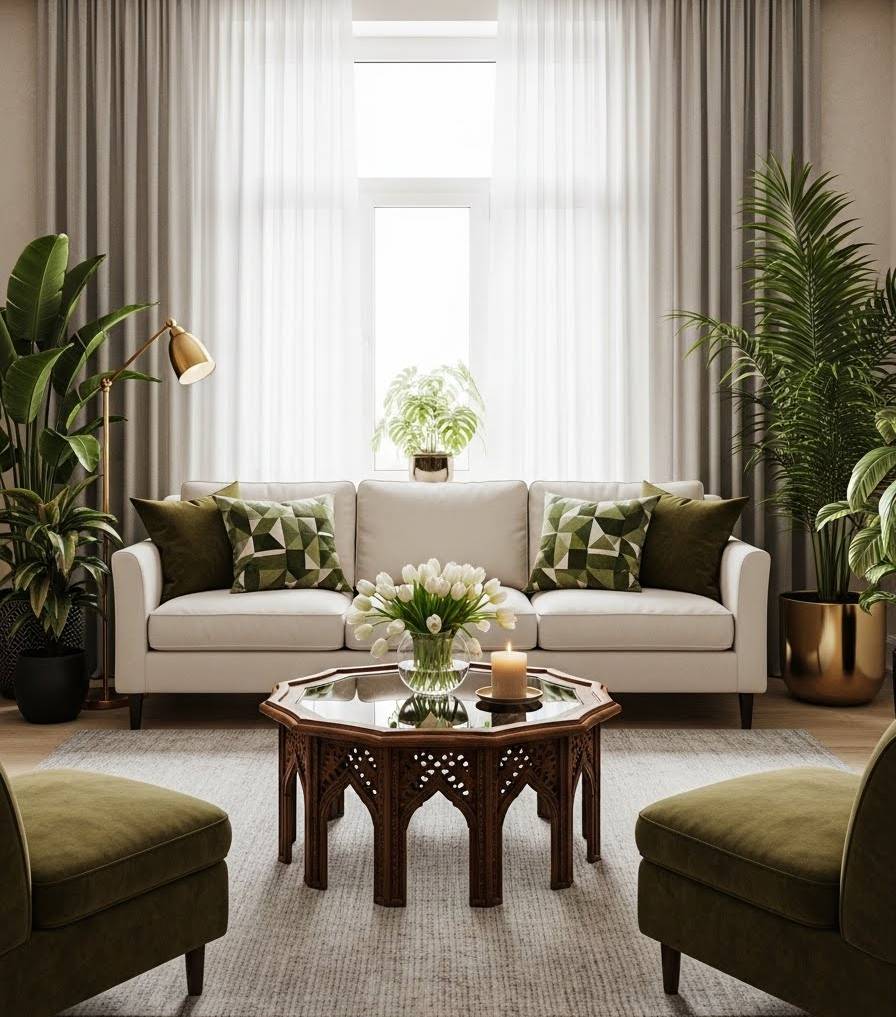
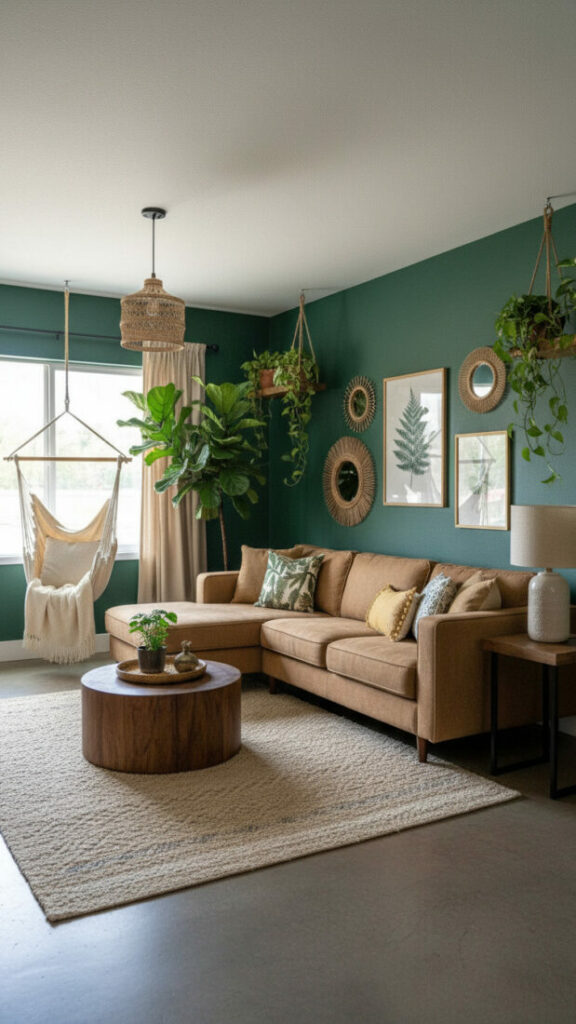
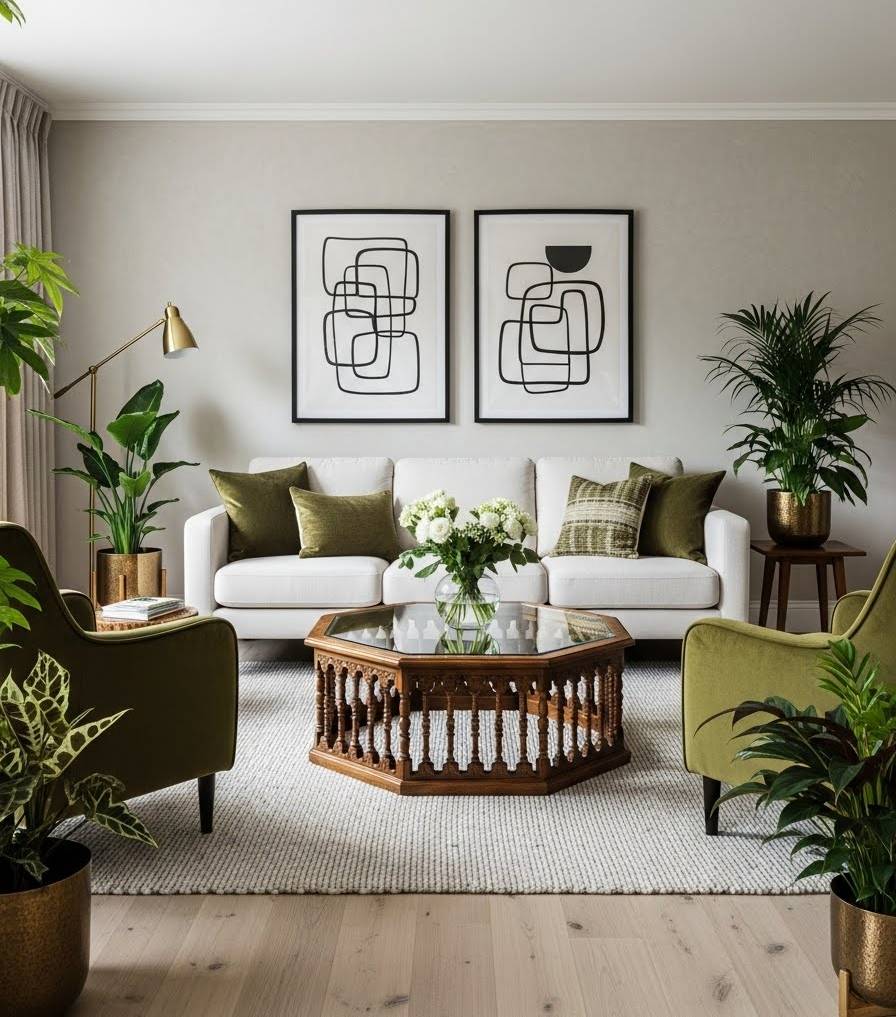
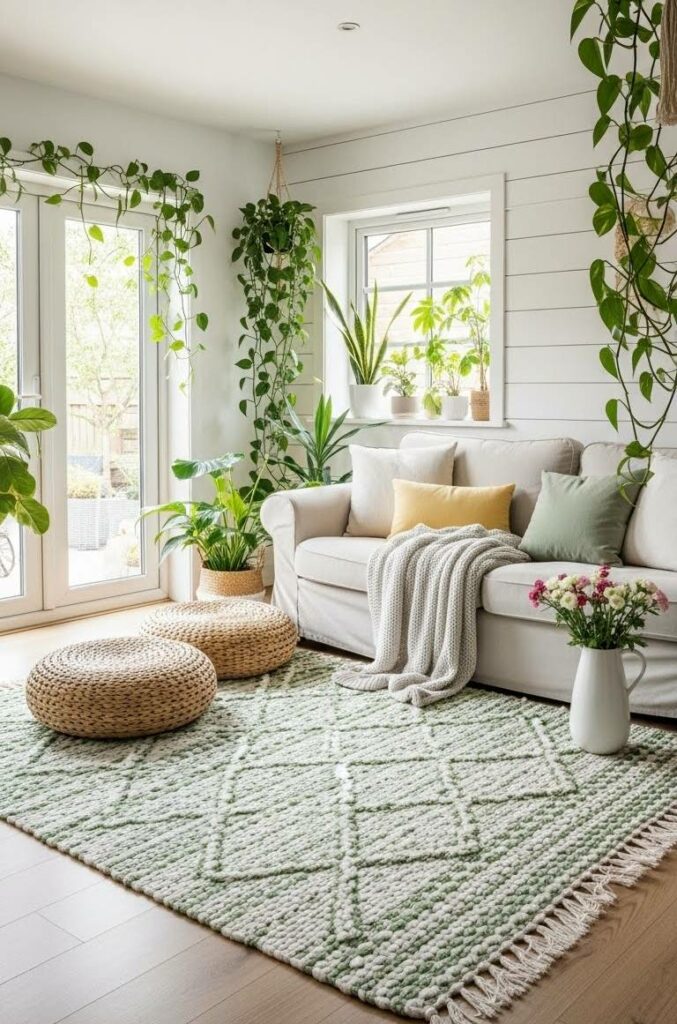
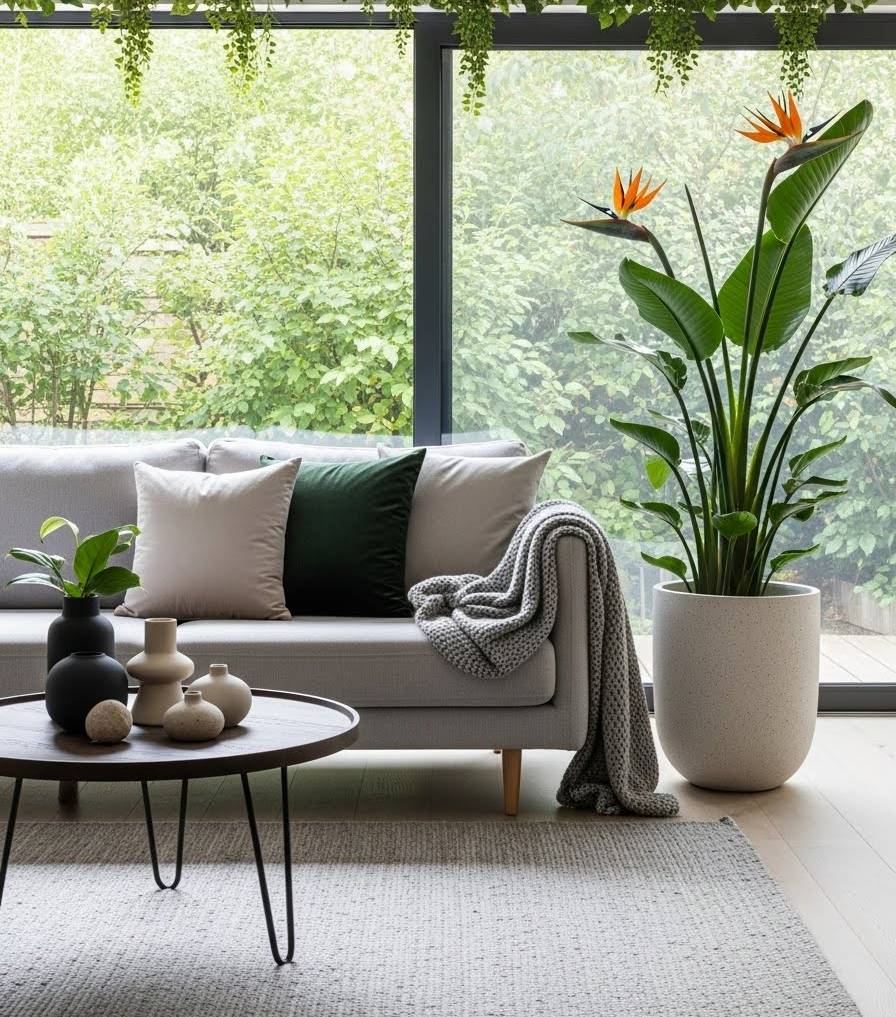
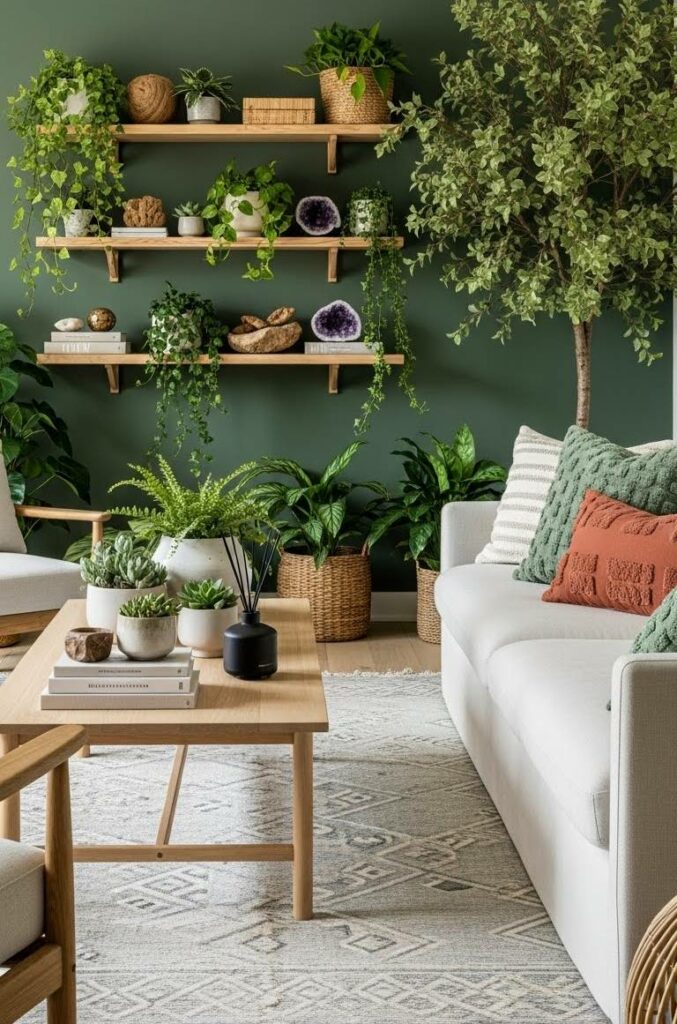
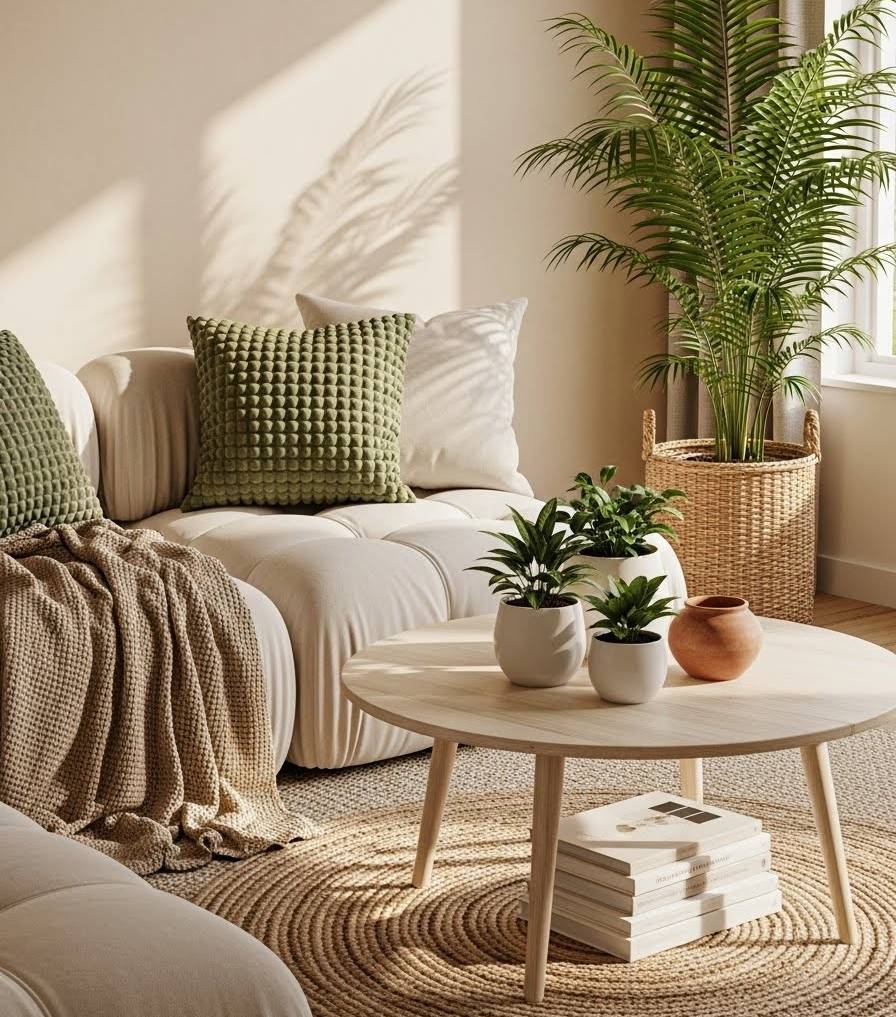
The Science Behind Biophilia
Why do we feel calm in a forest? Evolution has wired our brains to seek out nature-inspired design. It signals safety. It signals resources.
Cortisol Reduction:
Studies show that merely looking at wood grain reduces cortisol levels. Cortisol is the stress hormone. Therefore, your furniture choices directly impact your blood pressure.
Cognitive Function:
Visual connection to nature improves focus. It enhances creativity. By integrating biophilic living room ideas, you are not just decorating. You are optimizing your brain.
The Three Pillars of Biophilic Design
To execute this look, you must understand the framework. It goes deeper than aesthetics.
1. Nature in the Space:
This is the direct presence of nature. It includes indoor plants, water features, and natural light. It is the tangible biology in the room.
2. Natural Analogues:
These are organic references. It includes furniture with organic shapes. It includes textiles with botanical patterns. It mimics nature without being alive.
3. Nature of the Space:
This is spatial configuration. It mimics the sensation of a savannah or a cave. It provides “Refuge and Prospect.” You feel safe, yet you can see out.
Maximizing Natural Light Optimization
The sun is the engine of life. A dark room feels dead. You must prioritize natural light optimization.
Remove Heavy Drapes:
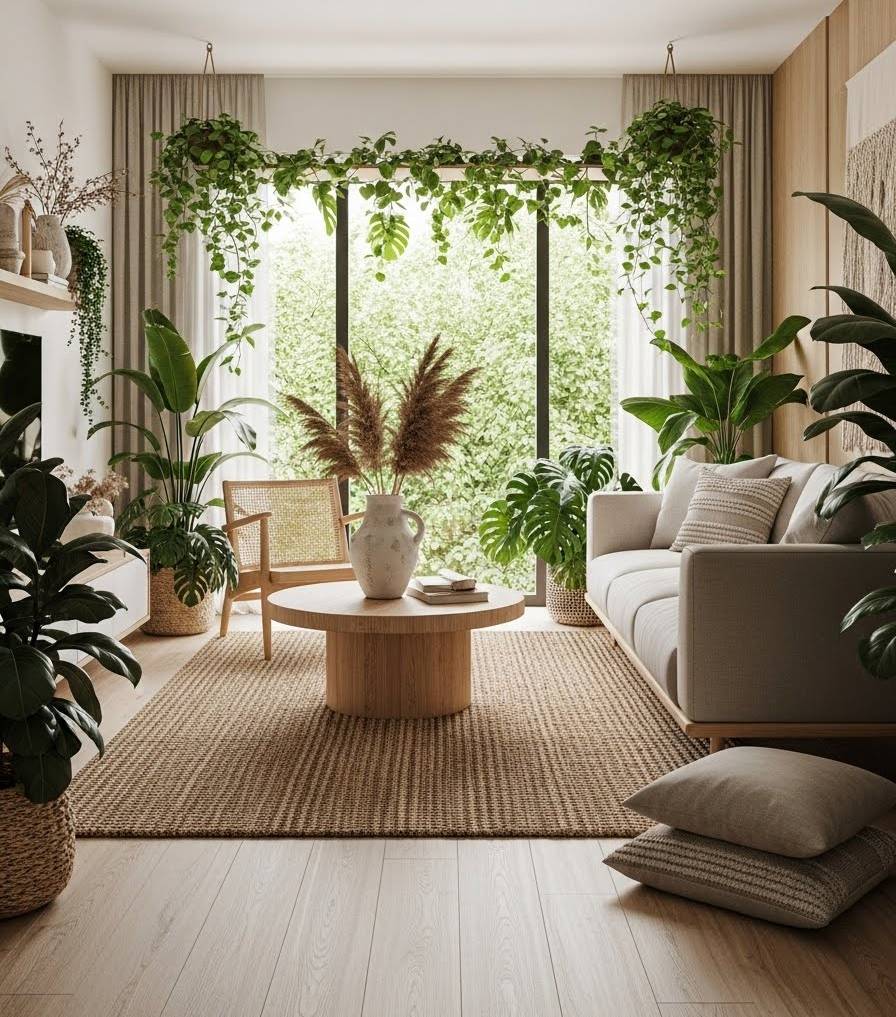
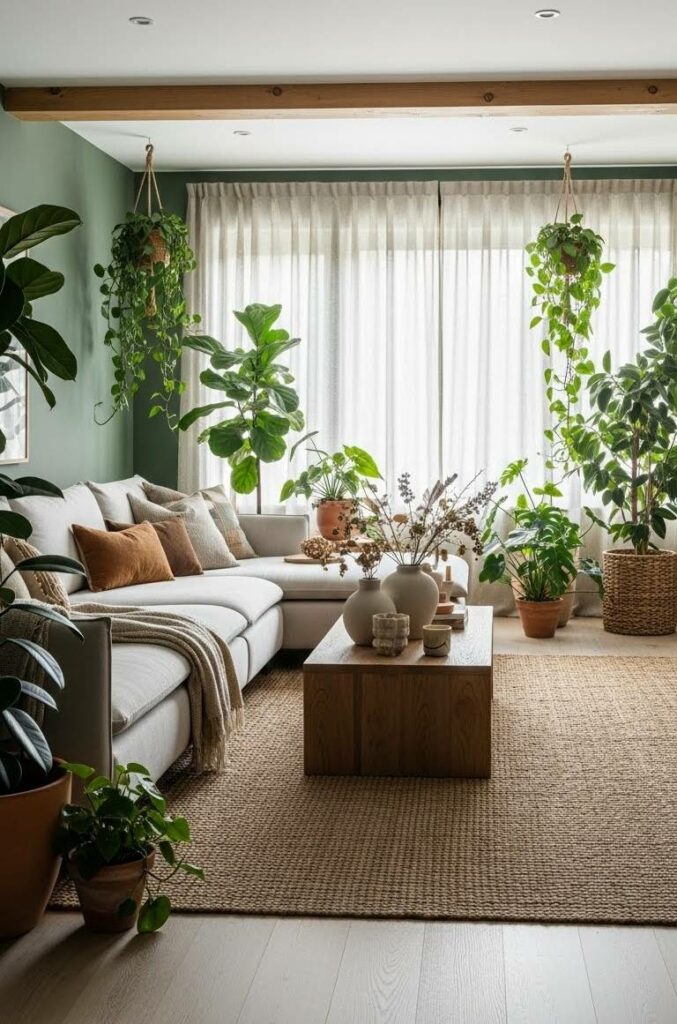
Replace blackout curtains with sheer linen. Linen diffuses the light. It creates a soft glow similar to sunlight filtering through leaves.
Mirror Placement:
Place a large mirror opposite the window. It bounces the light deep into the room. It doubles the view of the outdoors.
Clean the Windows:
It sounds simple, but dirty glass blocks distinct light spectrums. Keep them pristine to allow the full spectrum of UV light to enter.
The Green Hierarchy: Plant Selection
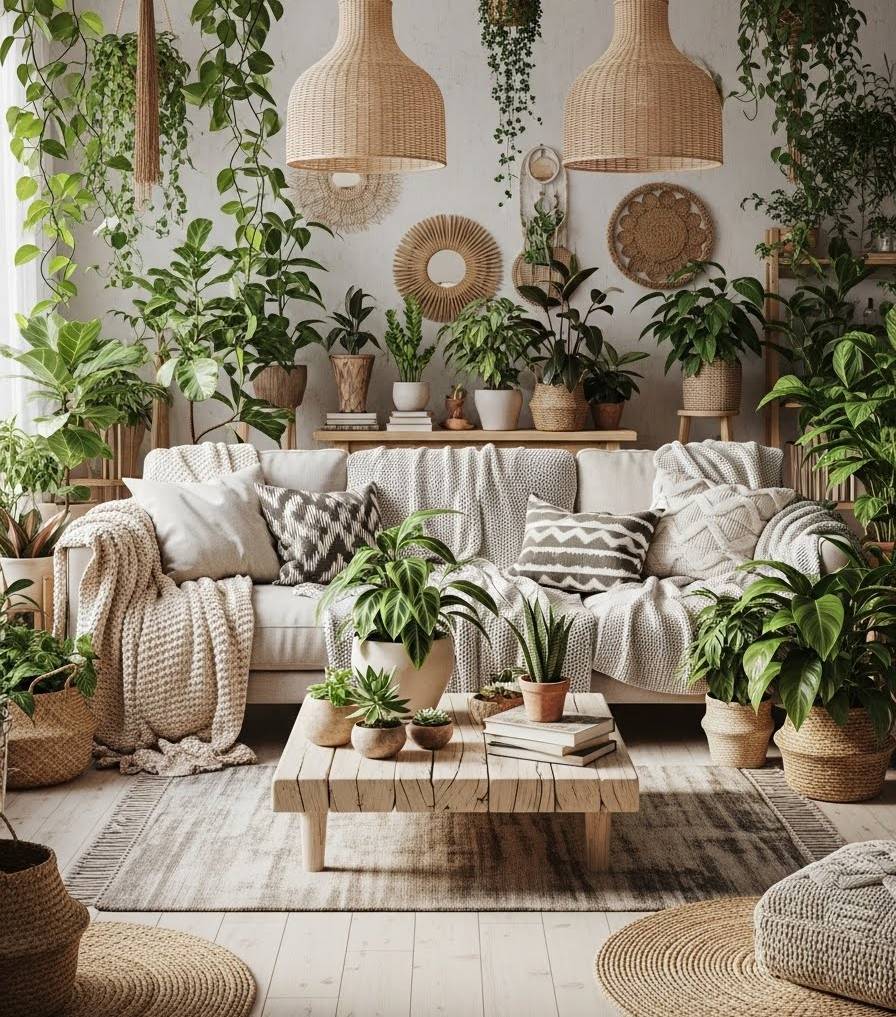
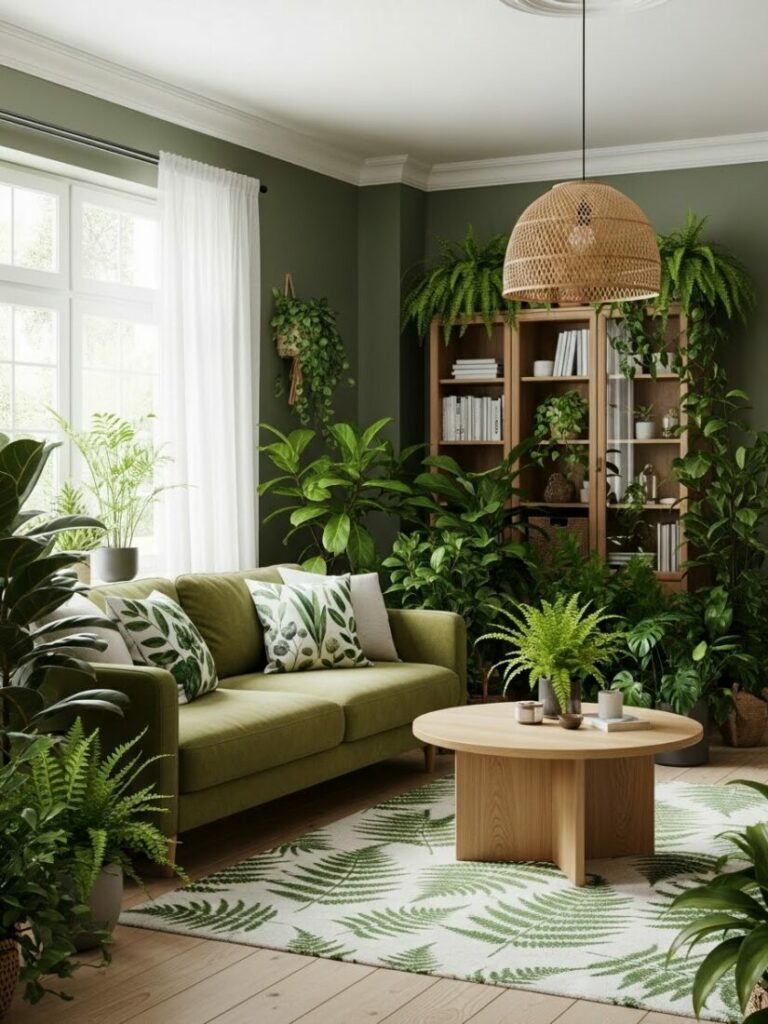
Plants are the paint of biophilic living room ideas. However, you need variety. You need a hierarchy of scale.
The Canopy Layer (Trees):
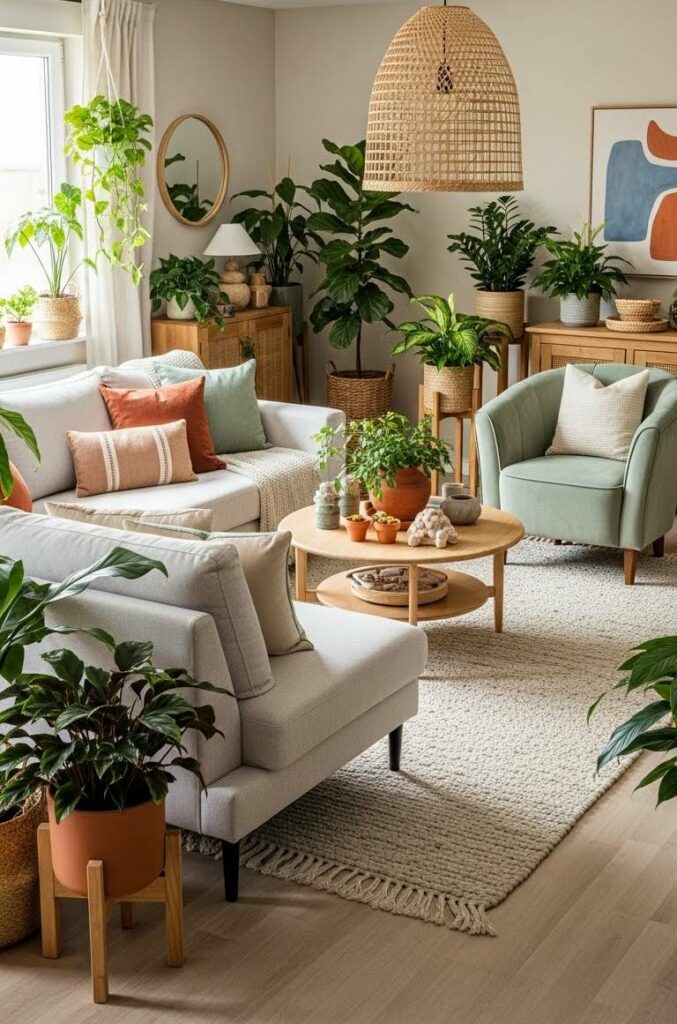
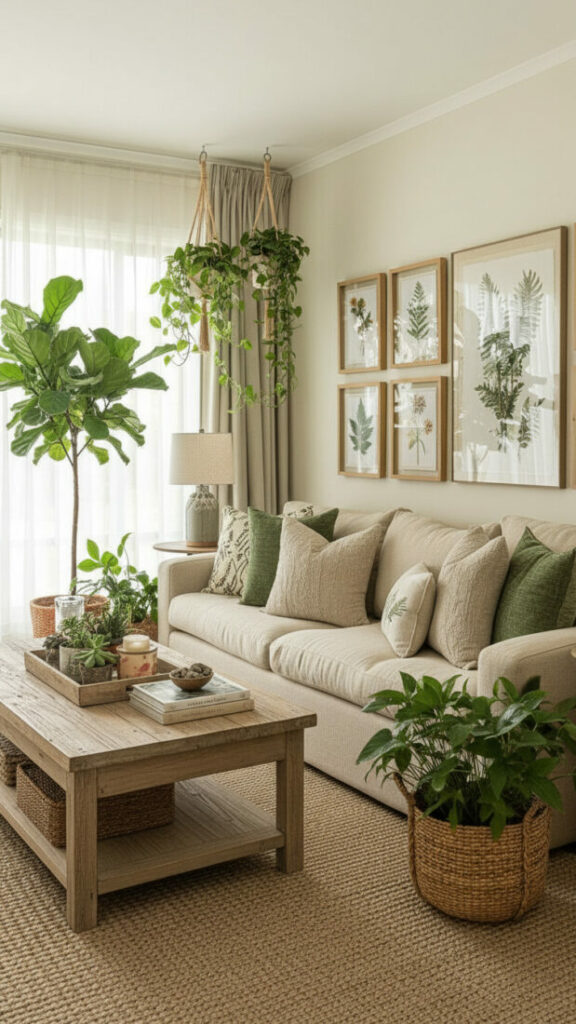
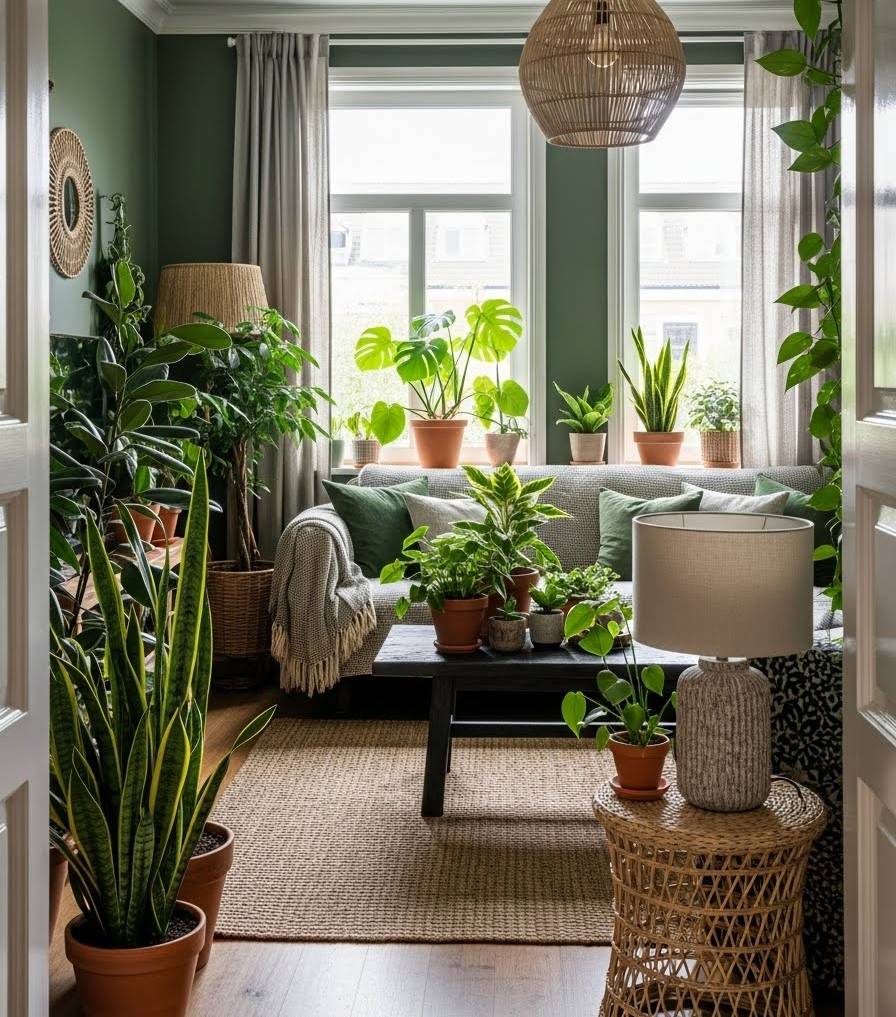
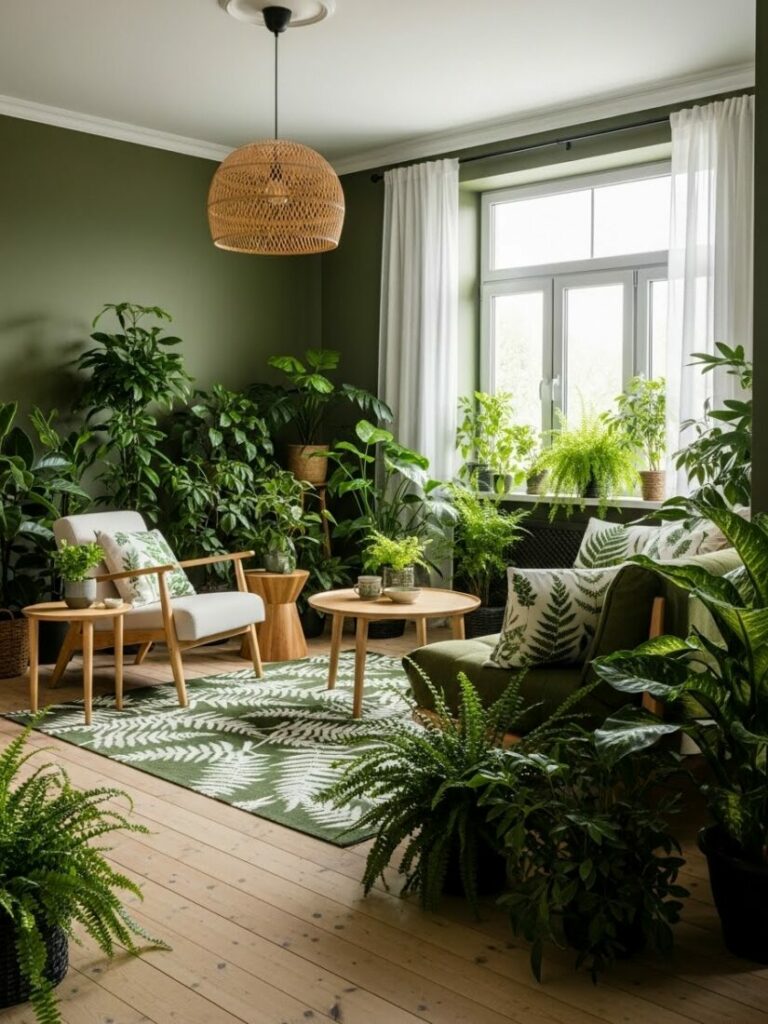
Use a Ficus Lyrata (Fiddle Leaf Fig) or a Ficus Elastica. These tall trees draw the eye up. They mimic the forest canopy. Place them in corners to soften the architecture.
The Understory Layer (Shrubs):
Use Monsteras or Peace Lilies. Put them on plant stands. They fill the middle volume of the room. Their leafy greens improve air quality.
The Ground Cover (Trailing):
Use Pothos or String of Pearls. Let them cascade from shelves. This softens the hard edges of bookshelves and media units.
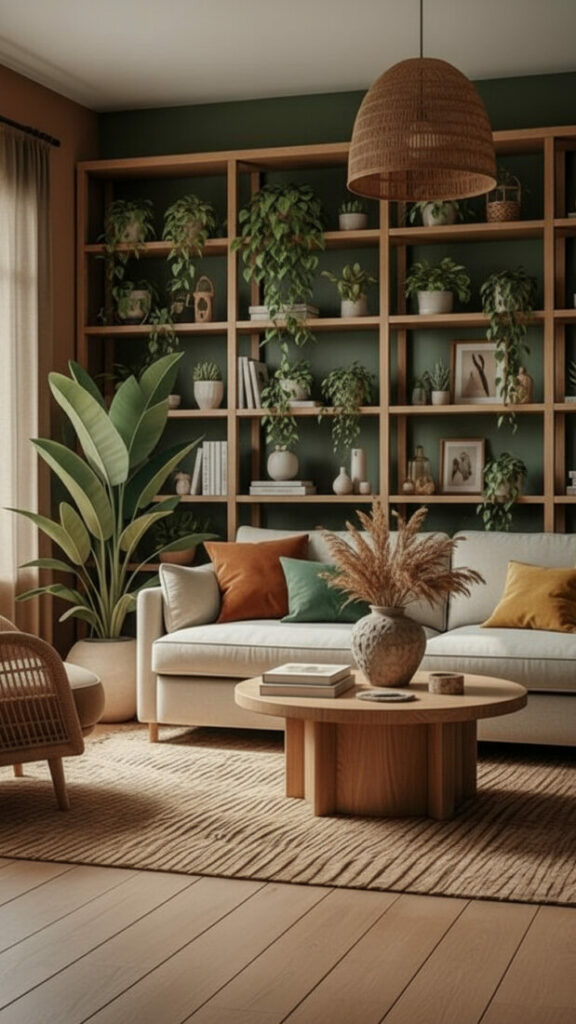
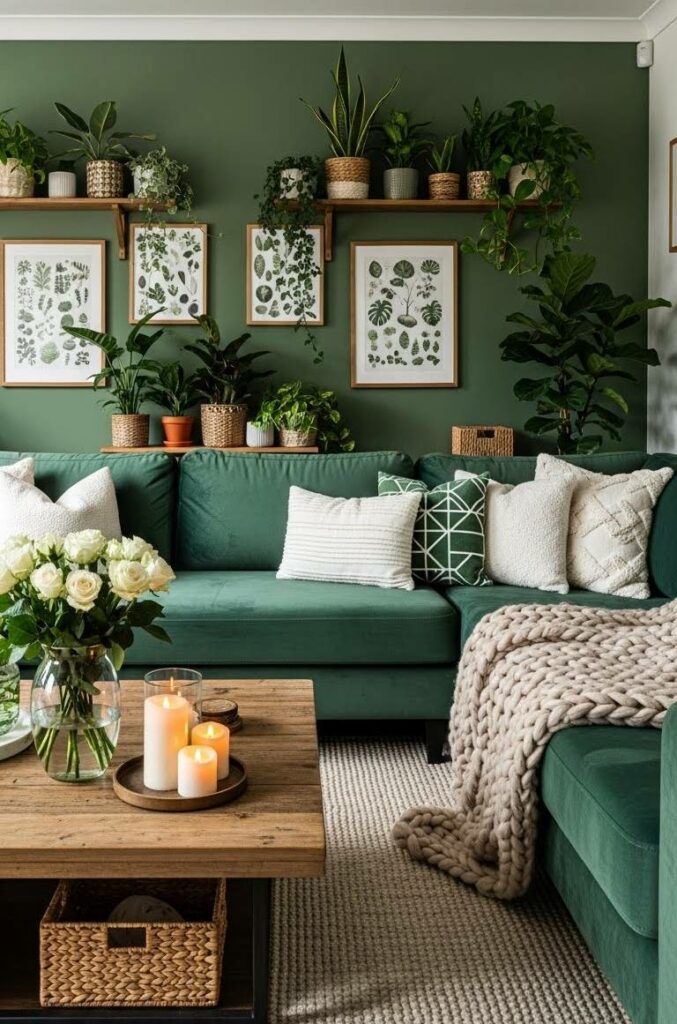
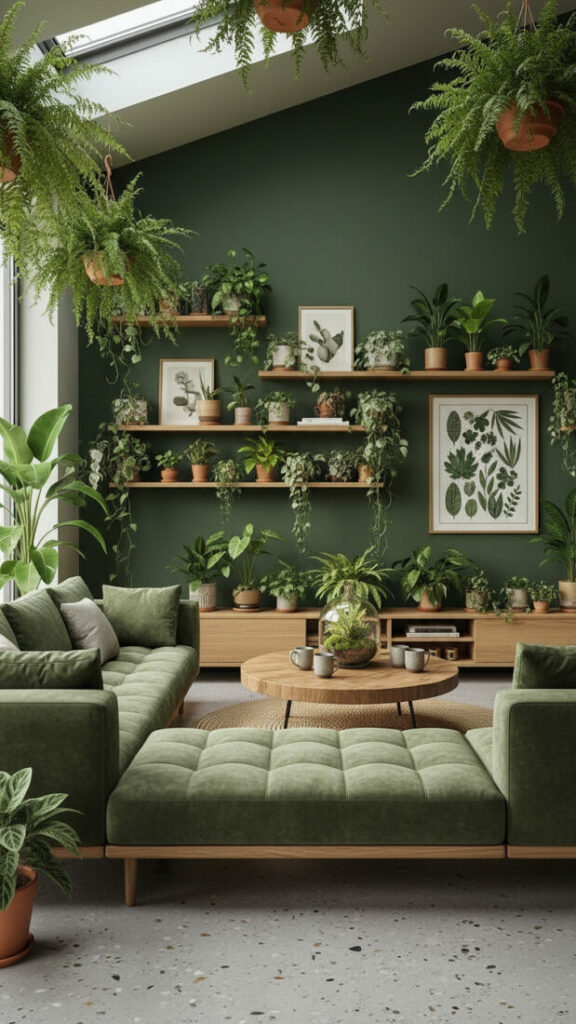
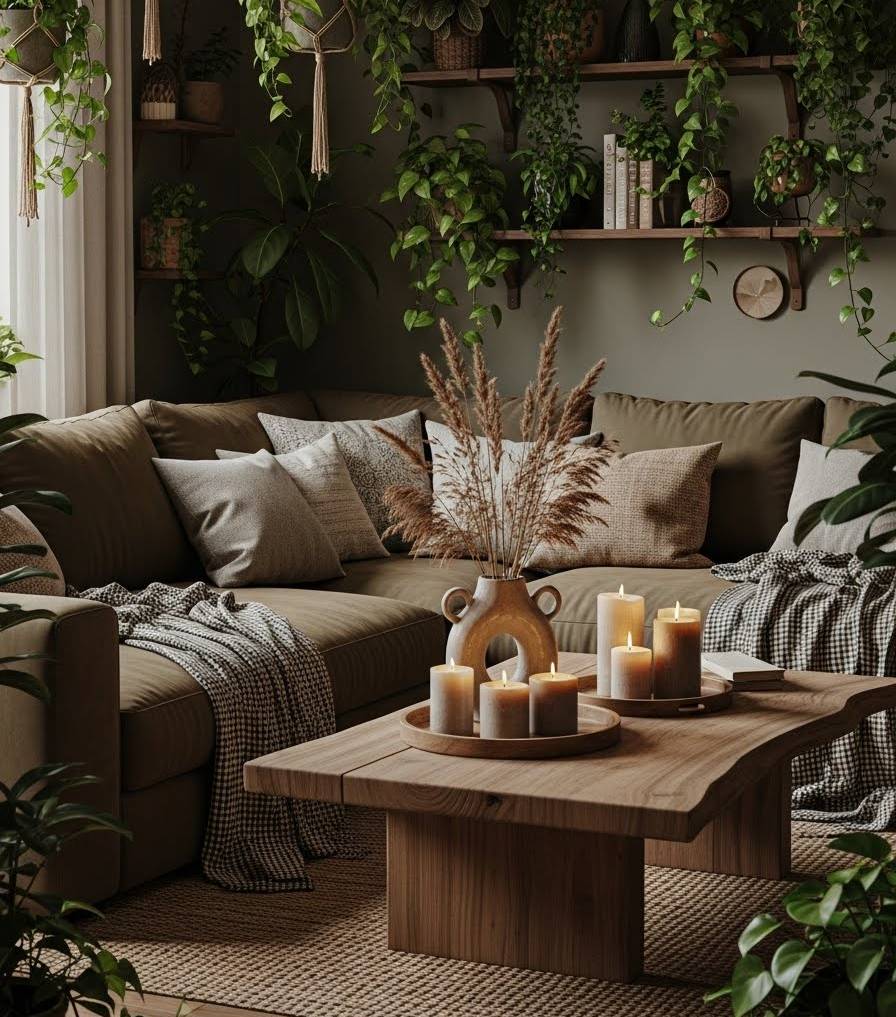
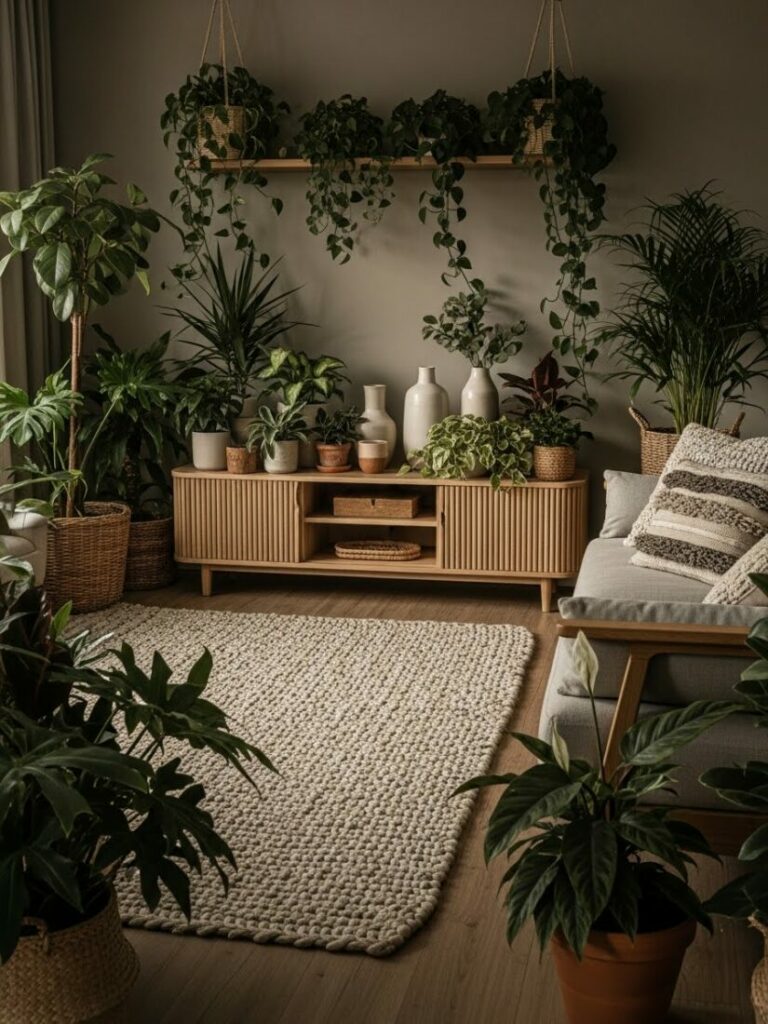
Palette 1: The Forest Floor
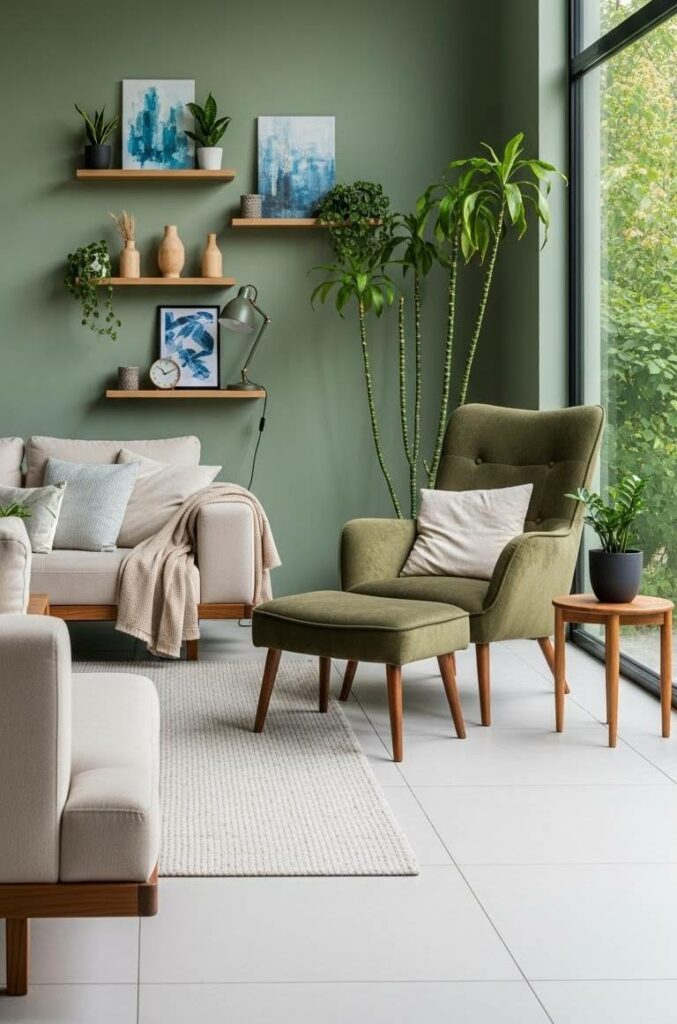
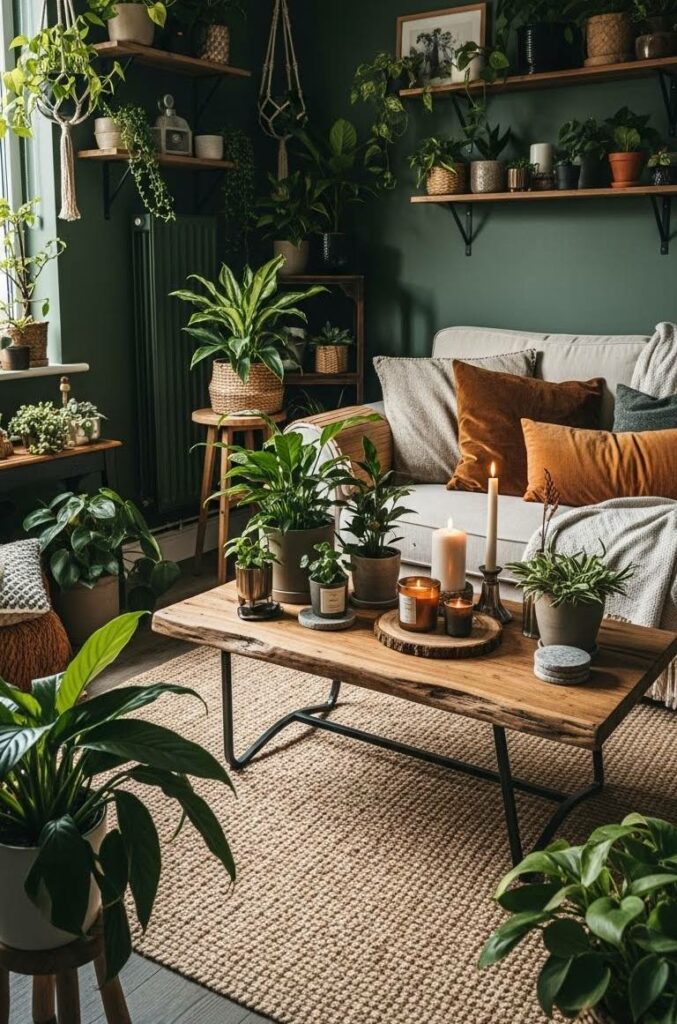
This color scheme is grounding. It is dark, rich, and moody. It is perfect for North-facing rooms.
The Color Story:
- Deep Moss Green: The primary wall color.
- Espresso Brown: Dark wood furniture.
- Mushroom Grey: For textiles and rugs.
- Rust Orange: The pop of color (decaying leaves).
Execution Strategy:
Use velvet textures. A moss-green velvet sofa feels like actual moss. It is soft to the touch.
Pair it with raw timber. A coffee table made from a tree stump adds a brutalist natural element.
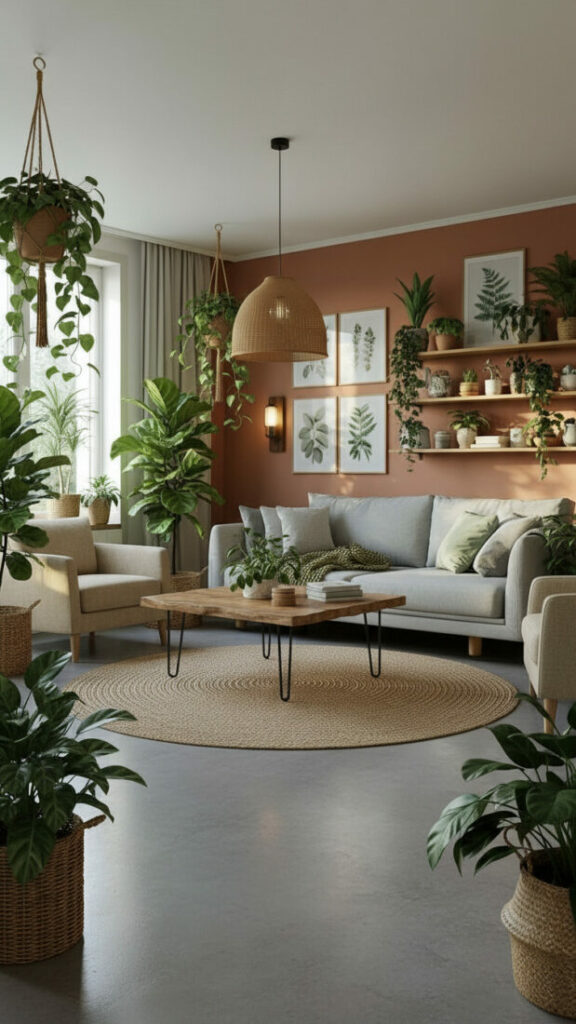
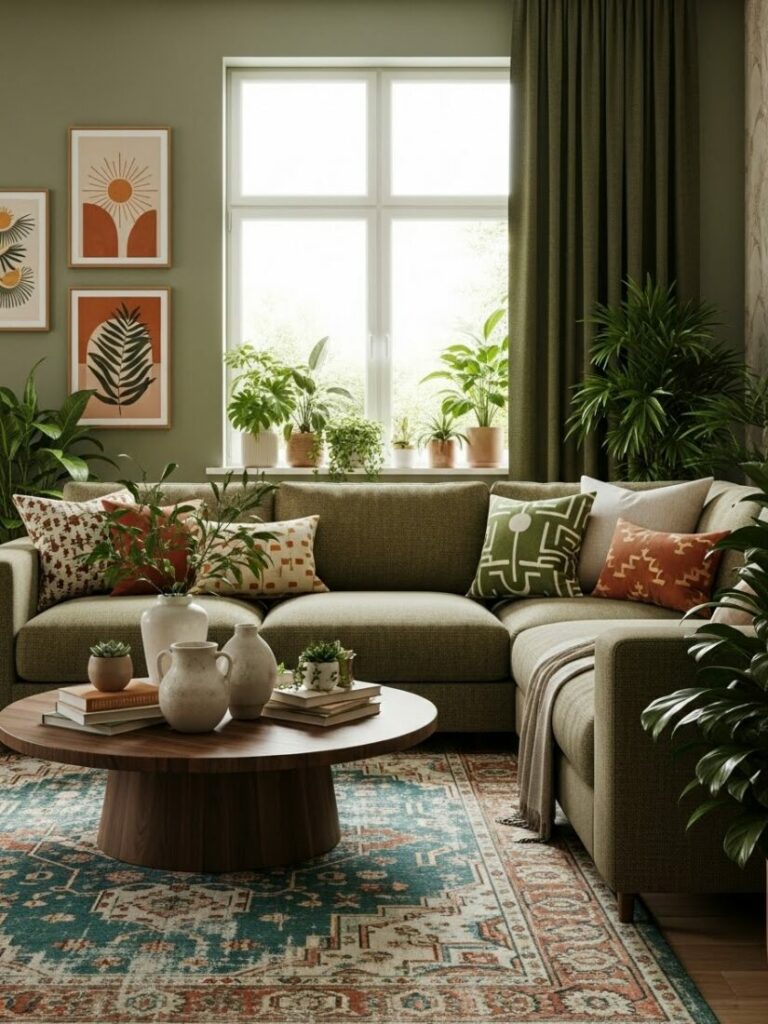
Palette 2: The Desert Sanctuary
This is lighter. It is airy. It draws inspiration from the Southwest and arid landscapes.
The Color Story:
- Terracotta: Baked earth tones.
- Sand Beige: The neutral base.
- Sage Green: Muted cactus tones.
- Sky Blue: A pale, dusty accent.
Execution Strategy:
Use plaster walls. A limewash finish in beige adds texture. It looks like adobe.
Choose leather furniture. A cognac leather chair fits the desert vibe perfectly. Add woven baskets for texture.
Living Walls and Vertical Gardens
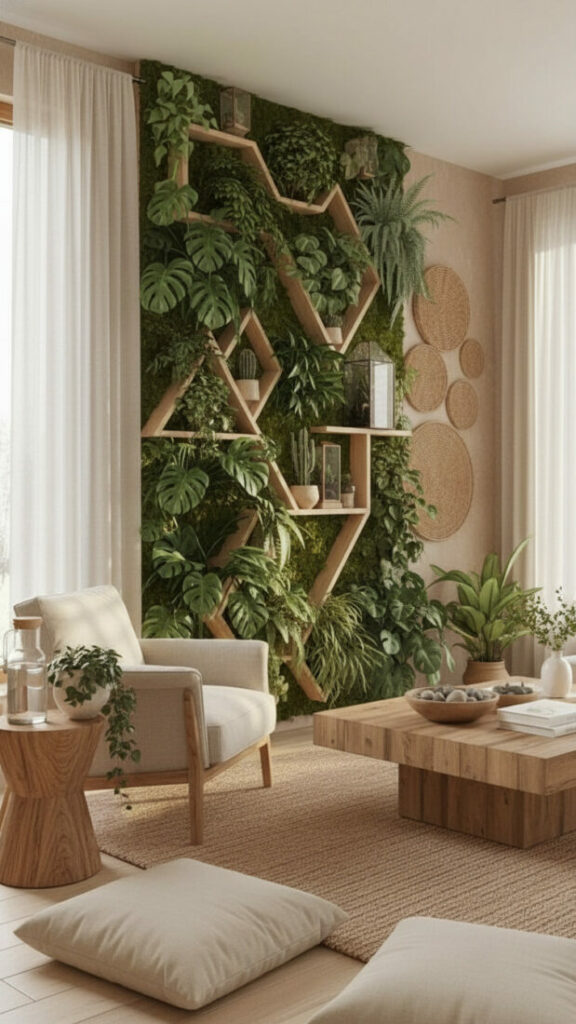
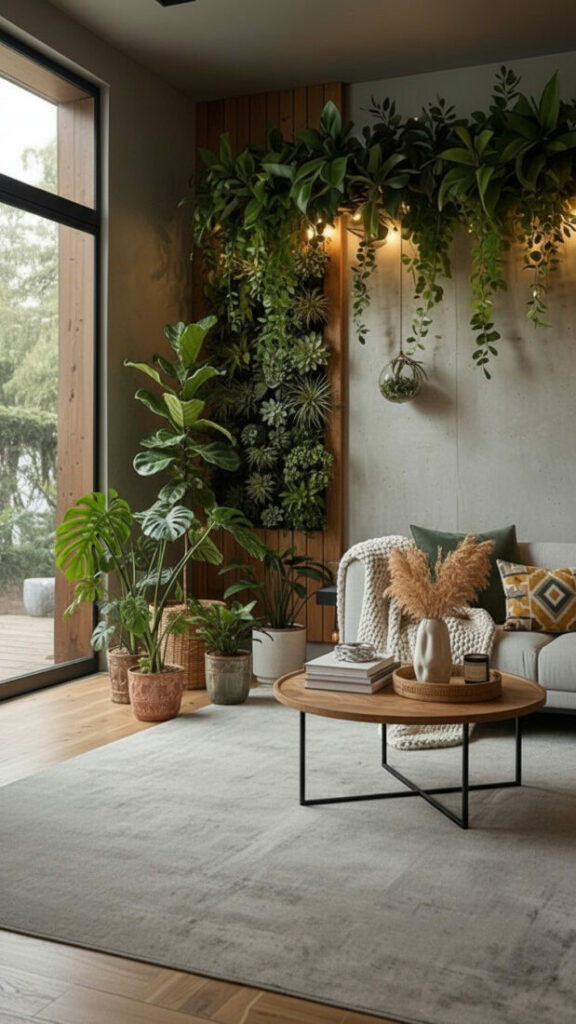
If you lack floor space, look up. Living walls are the pinnacle of biophilic living room ideas.
Preserved Moss Art:
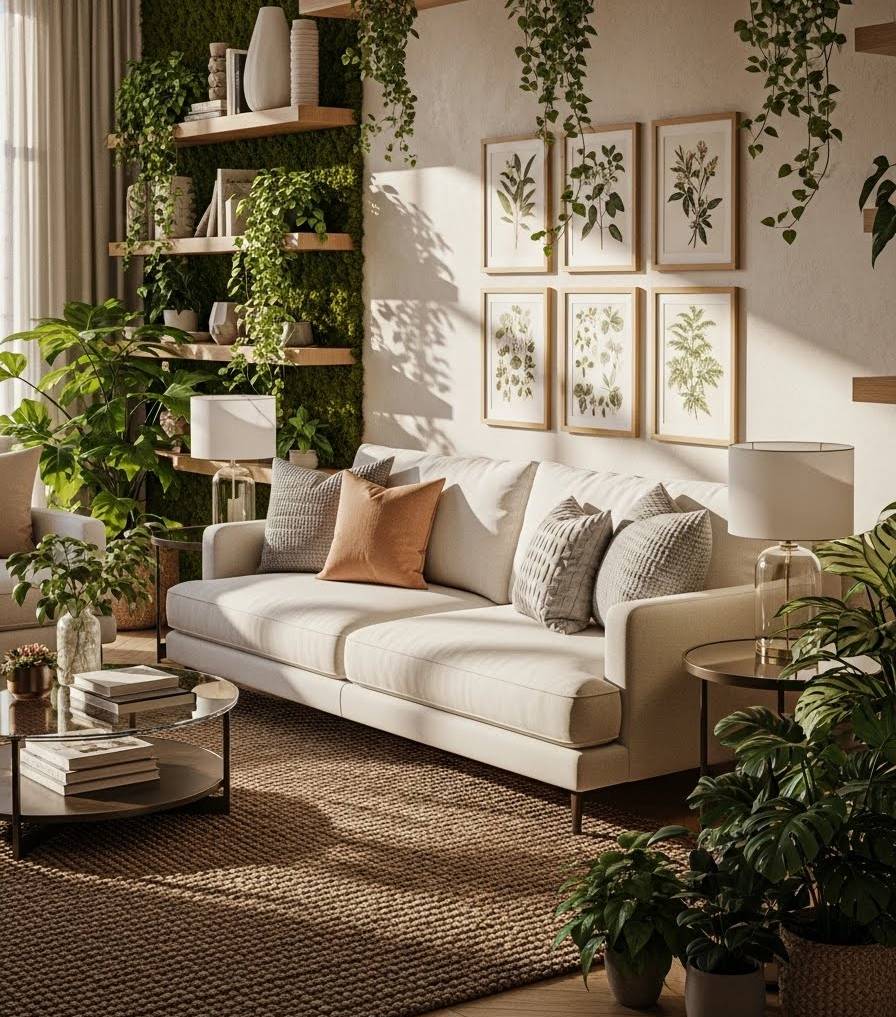
This is low maintenance. It is real moss that has been preserved. It does not need water. Frame it like a painting. It provides sound absorption.
Active Hydroponic Walls:
These are systems with built-in irrigation. They actively filter the air. They require plumbing and light, but the visual impact is stunning.
Trellis Systems:
Install a simple wooden trellis indoors. Train a fast-growing ivy to climb it. It creates a green partition without blocking light.
Materiality: Raw and Refined
Touch is essential. Biophilia rejects plastic. You must use natural materials that age gracefully.
Live Edge Wood:
A dining table or coffee table with a live edge shows the tree’s history. It celebrates imperfection. It is wabi-sabi.
Stone Elements:
Use Travertine or Limestone. A stone side table feels cold and solid. It grounds the room.
Bamboo and Rattan:
These are sustainable materials. They grow fast. Rattan furniture is lightweight and airy. It allows light to pass through its weave.
Water Features for Soundscapes
The sound of running water reduces stress immediately. It masks traffic noise.
Tabletop Fountains:
You do not need a massive installation. A small ceramic fountain on a side table works. The trickle is soothing.
Aquariums:
A planted aquarium (aquascaping) is a living television. Watching fish swim lowers blood pressure. Focus on live aquatic plants, not plastic castles.
Furniture with Organic Shapes
Nature rarely has straight lines. Yet, our homes are full of boxes. Biophilic living room ideas embrace the curve.
The Curved Sofa:
A kidney-shaped sofa promotes conversation. It flows through the room like a river. It feels softer and more welcoming.
Round Tables:
Swap the rectangle coffee table for a round one. Or use a cluster of pebble-shaped tables.
Asymmetry:
Arrange furniture asymmetrically. Nature is not perfectly symmetrical. A relaxed layout feels more organic.
Textile Layering: The Haptic Experience
We experience our homes through our skin. Textiles provide the softness that balances the hard wood and stone.
Wool and Sheepskin:
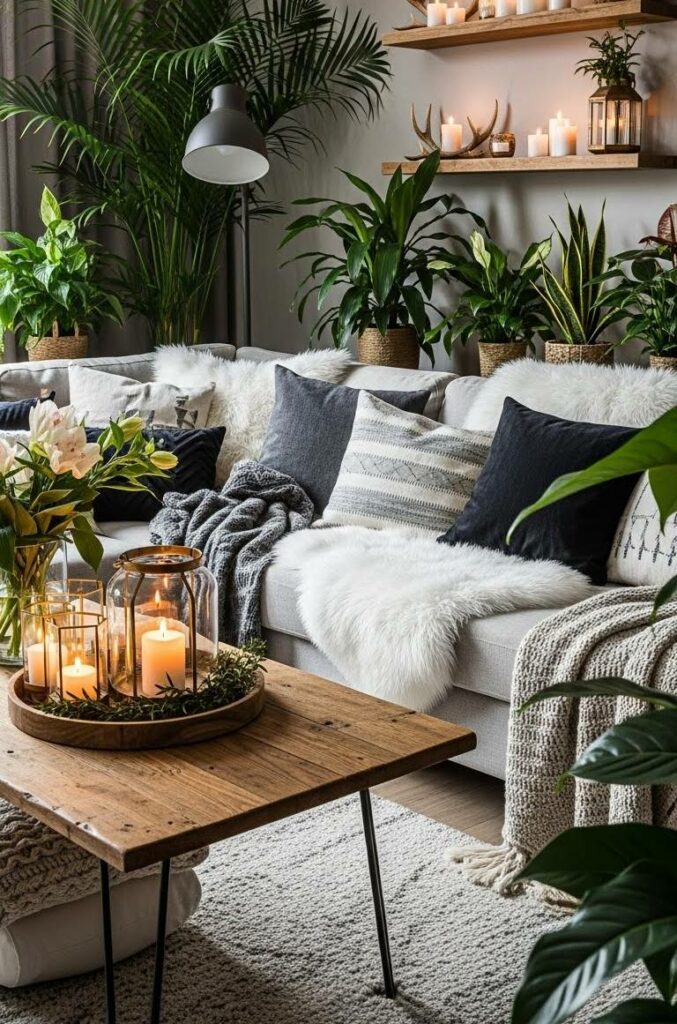
A real sheepskin throw is thermoregulating. It is warm in winter and cool in summer. Drape it over a hard wooden chair.
Jute and Sisal:
Use natural fiber rugs. They have a rough texture that stimulates the feet. This “sensory design” keeps you present in the moment.
Unbleached Linen:
Use linen for pillows. The slight wrinkle in the fabric looks natural. Avoid perfectly ironed polyester.
Fractal Patterns in Decor
Fractals are repeating patterns found in nature. Think of a fern leaf, a snowflake, or a river delta. Our brains love these patterns.
Wallpaper:
Use wallpaper with a botanical print. A pattern of repeating leaves mimics the visual complexity of a forest.
Rug Patterns:
Look for rugs with abstract, organic swirls. Avoid rigid grids. The pattern should look like water ripples or wood grain.
Air Quality and Ventilation
You cannot see air, but you feel it. Stagnant air feels oppressive. Biophilic living room ideas prioritize airflow.
Cross Ventilation:
Open windows on opposite sides of the room. Create a breeze. The movement of air mimics being outside.
Air Purifying Plants:
Snake Plants and Spider Plants filter toxins. They actively clean the VOCs from your furniture. They are functional biology.
Lighting: Mimicking the Sun
Artificial light often disrupts our sleep. You need “Circadian Lighting.” This means the light changes throughout the day.
Morning Light:
Use cool, bright white bulbs (4000K) in the morning. This wakes up the brain. It mimics the midday sun.
Evening Light:
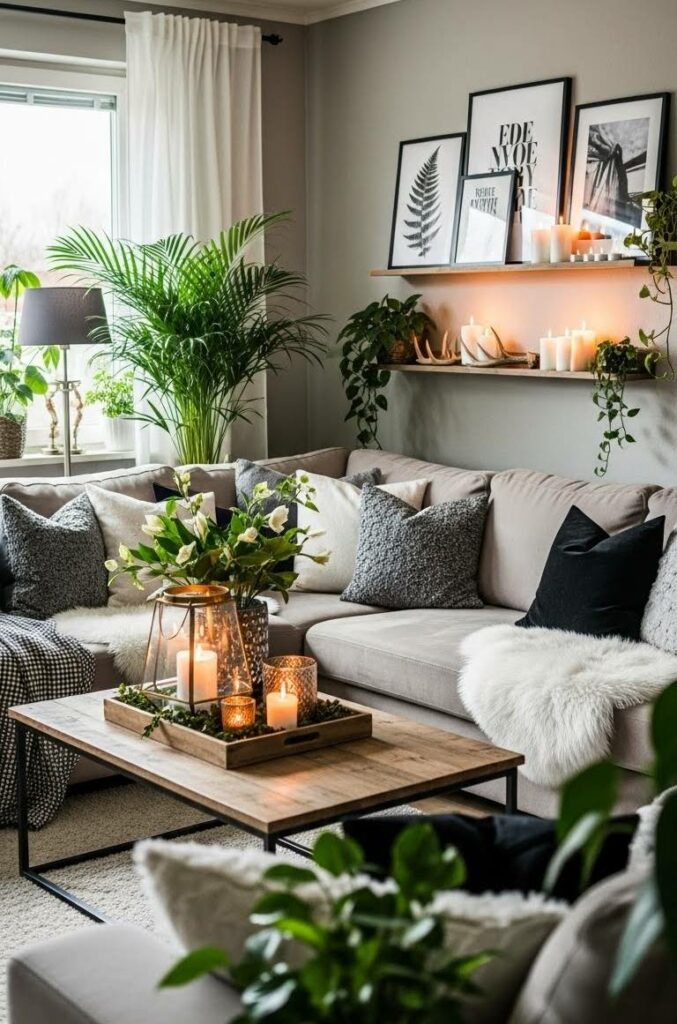
Switch to warm, amber bulbs (2700K) in the evening. This mimics the sunset. It tells the body to produce melatonin.
Dappled Light:
Use woven basket lampshades. The light shines through the weave. It creates shadows on the wall that look like sunlight through trees.
Small Space Biophilia
You do not need a large house to embrace nature. Biophilia scales down easily.
Hanging Planters:
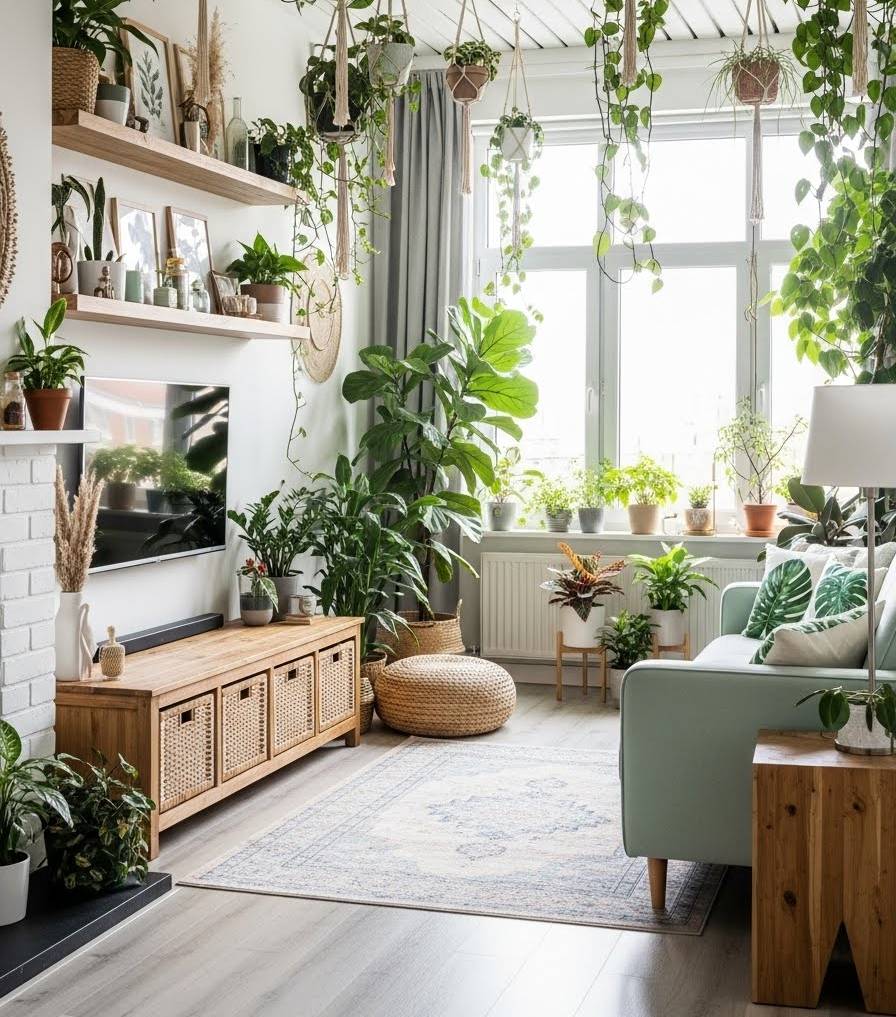
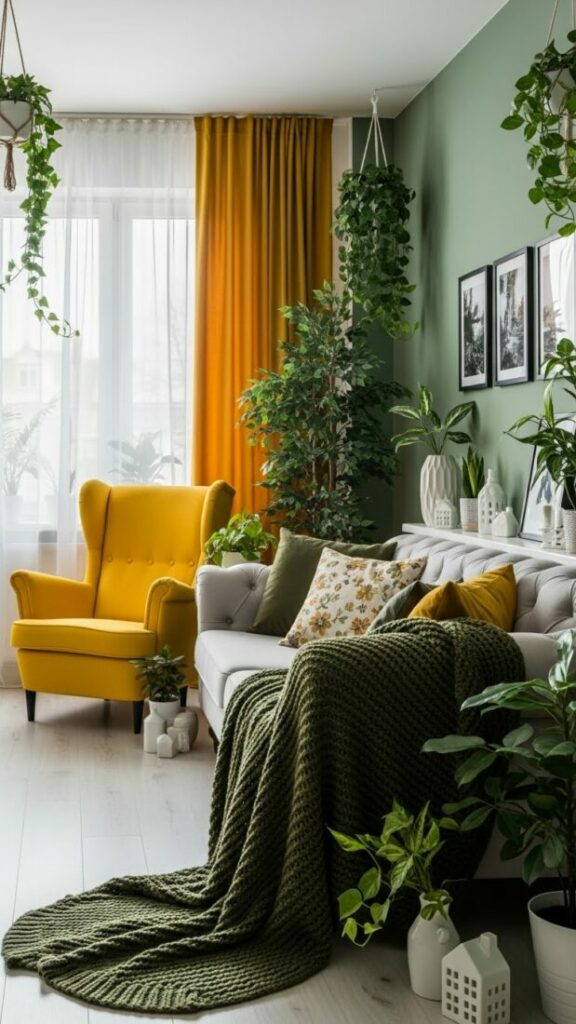
Use macrame hangers. Suspend plants from the ceiling. This keeps the floor clear but adds green volume to the room.
Window Sills:
Turn your windowsill into a mini herb garden. It is functional and beautiful. The scent of basil or mint adds an olfactory dimension.
Seasonal Biophilic Updates
Nature is not static. It changes seasons. Your home should too.
Spring:
Bring in fresh tulips. Use lighter, pastel green textiles. Open the windows more often.
Autumn:
Bring in dried branches. Use rust and ochre throw pillows. Highlight the cycle of life and decay.
Common Biophilic Mistakes
1. Using Fake Plants:
Plastic plants collect dust. They do not clean the air. Subconsciously, we know they are fake. They do not provide the same mental health benefits.
2. Overcrowding ( The Jungle Trap):
Too many plants creates visual chaos. It creates clutter. Biophilia is about harmony, not hoarding plants. Leave negative space.
3. Ignoring Pests:
Real plants attract gnats. This causes stress. Use preventative measures like Neem oil. Keeping the ecosystem healthy is part of the design.
The Concept of “Refuge and Prospect”
This is an evolutionary theory. Humans love to sit with their back to a wall (Refuge) while looking out at a view (Prospect).
Layout Hack:
Position your sofa against a solid wall. Face it toward the window or the door. Do not float the sofa with your back to the entrance.
This subconscious positioning makes you feel secure. It allows you to relax fully.
Sustainable Furniture Choices
Biophilic living room ideas must be eco-friendly. You cannot love nature while destroying it with fast furniture.
FSC Certified Wood:
Ensure your wood furniture comes from managed forests. Look for the FSC logo.
Second-Hand / Vintage:
Vintage furniture has a lower carbon footprint. It often features better craftsmanship and higher quality wood than modern flat-pack items.
Art and Decor Selection
Your art should reflect the theme. Avoid industrial cityscapes. Choose nature photography or landscape paintings.
Botanical Prints:
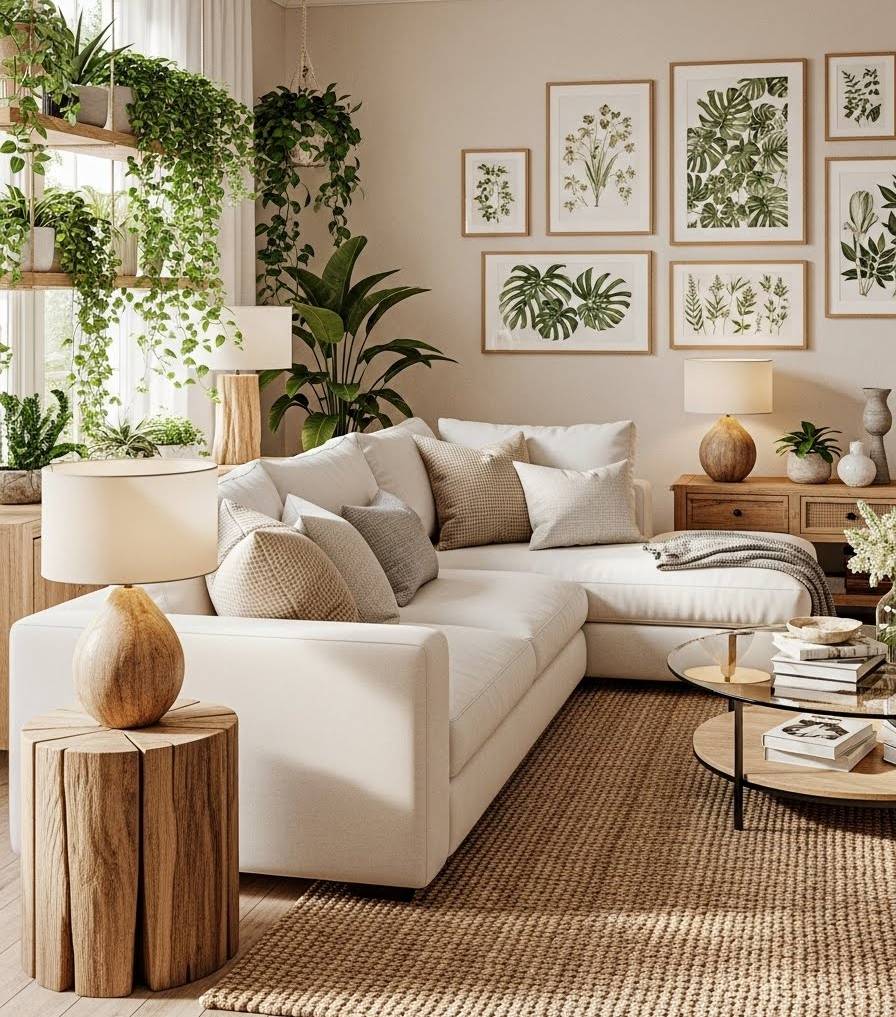
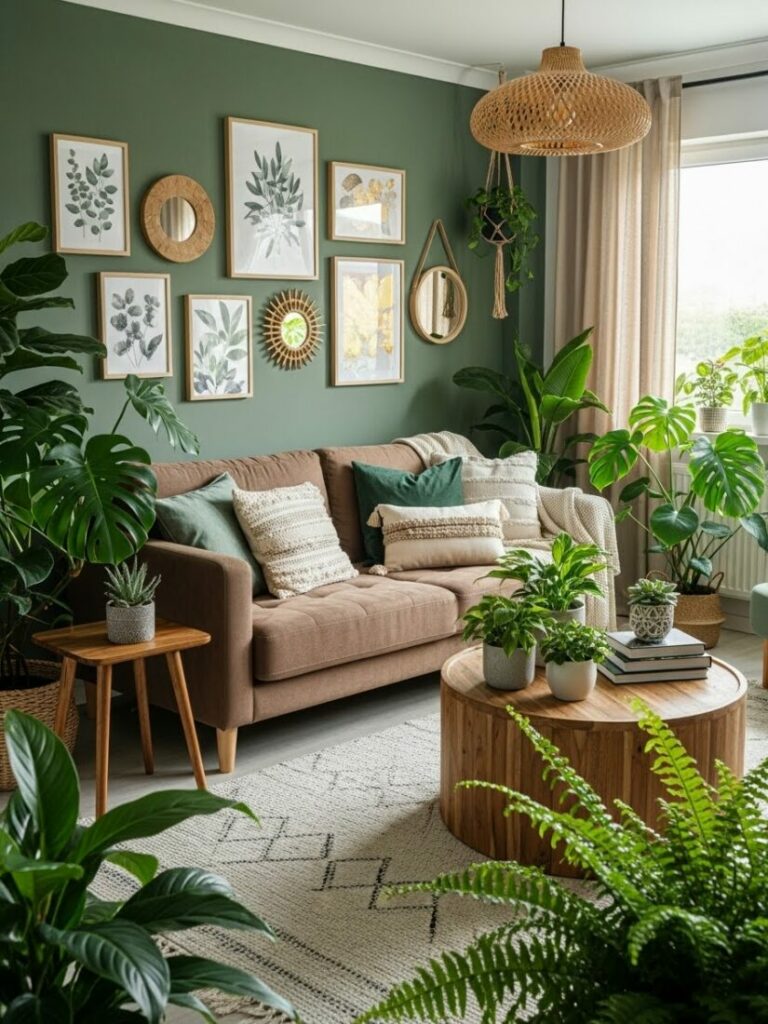
Vintage botanical illustrations are educational and beautiful. They look great in a gallery wall layout.
Driftwood Sculptures:
Place a piece of driftwood on a shelf. The weathered texture tells a story of water and time.
Conclusion: A Return to Roots
Implementing biophilic living room ideas is a lifestyle change. It is an acknowledgment that we are biological beings.
We need light. We need clean air. We need to see green.
By transforming your living room into a biophilic sanctuary, you are investing in your long-term health. You are creating a space that heals you after a long day in the concrete jungle.
Start with one plant. Open the curtains. Let nature back in.