
Implementing large indoor plants ideas is the single most effective way to breathe life into a sterile architectural space. Furniture fills a room, but plants finish it.
We are currently witnessing a “Green Renaissance” in interior design. We are moving away from small, cluttered windowsills. We are embracing the canopy.
A massive indoor tree changes the acoustics. It softens the light. It acts as a living sculpture that evolves daily.
This guide is your botanical blueprint. We will explore specific species for every light level. We will discuss the art of pot selection. We will ensure your investment thrives for years.
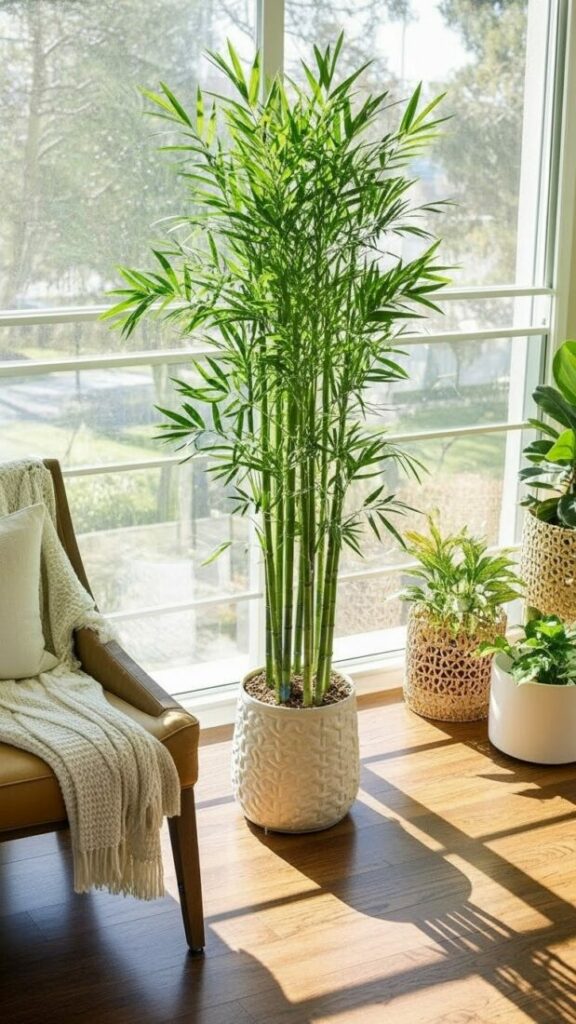
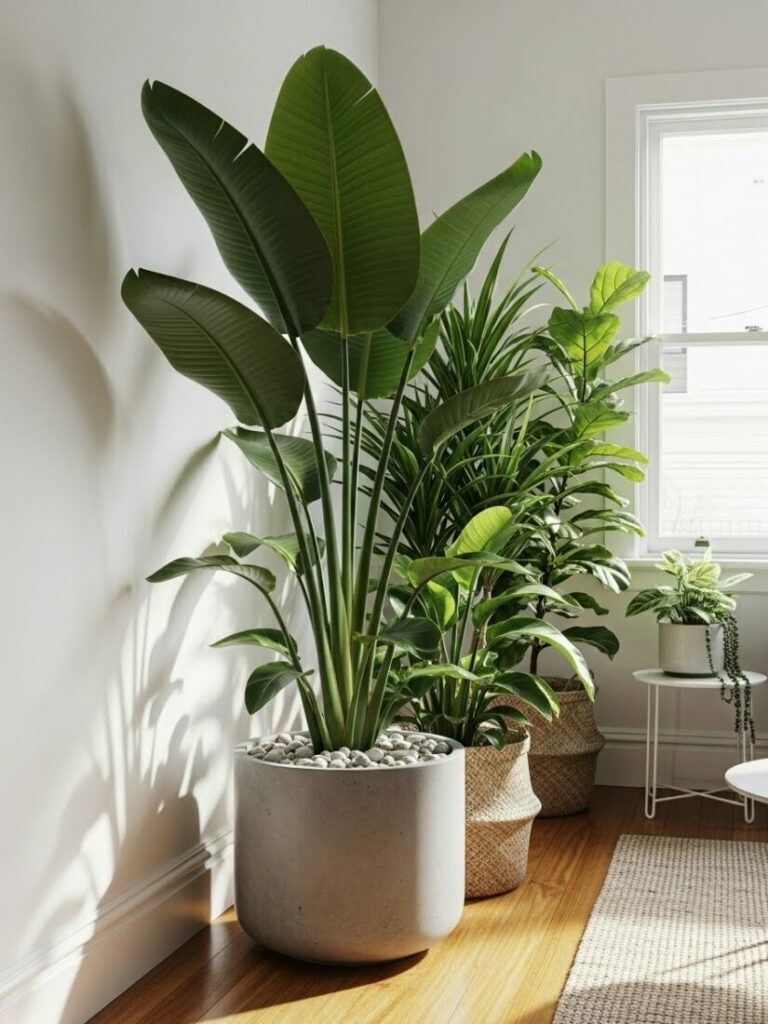
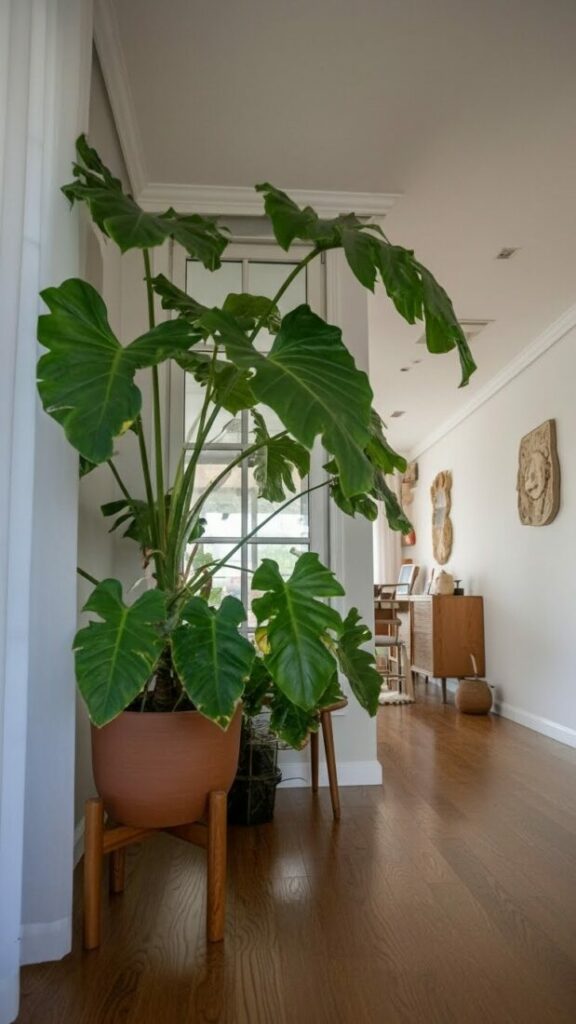
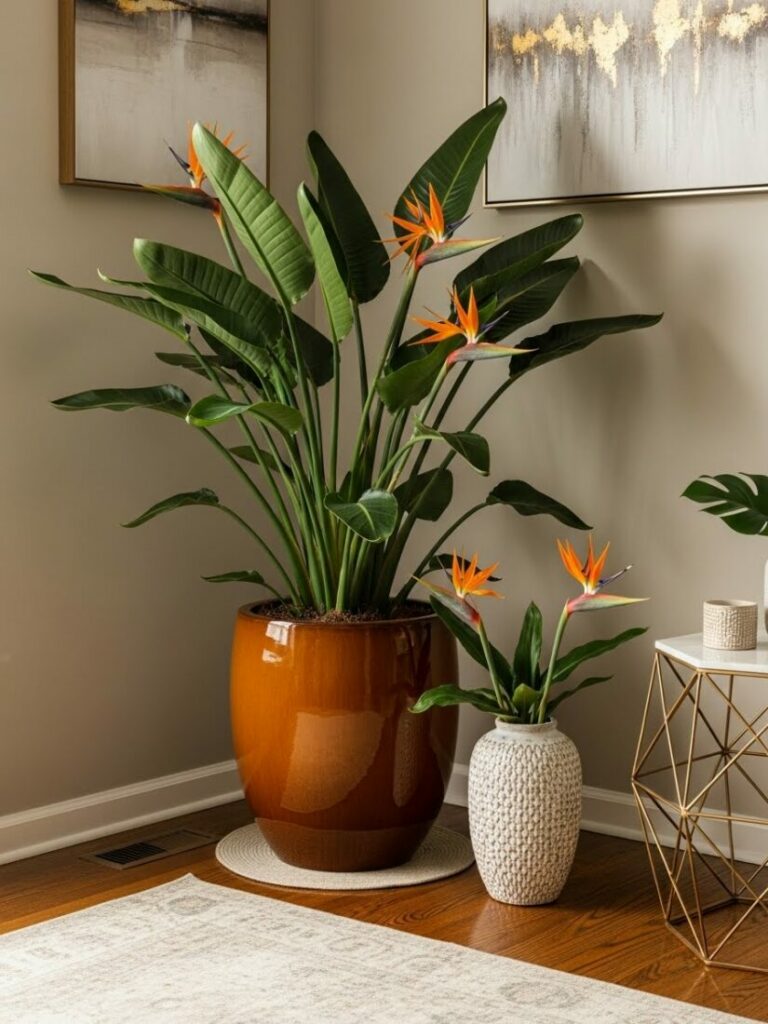
The Psychology of Scale and Nature
Why do we crave large indoor plants ideas? It is evolutionary. Humans seek shelter under trees.
The “Canopy Effect”:
Sitting beneath large foliage triggers a safety response in the brain. It lowers cortisol. It signals protection from the elements.
Visual Softening:
Modern homes are full of right angles. Walls meet floors at 90 degrees. Plants have no straight lines. They break the grid.
By introducing organic shapes, you reduce visual tension. The room feels more relaxed and welcoming.
Assessing Your Light Conditions
Before buying a six-foot tree, you must audit your light. This is non-negotiable. Light is food for plants.
Direct vs. Indirect Light:
Direct light means the sun hits the leaves directly. Indirect light means the room is bright, but the sun does not touch the plant.
The North Window:
This offers low, consistent light. It is too dark for most desert plants. However, rainforest floor plants thrive here.
The South Window:
This is the powerhouse. It offers intense, bright light all day. Most large trees, like Ficus and Olives, demand this exposure.
Idea 1: The Ficus Lyrata Statement
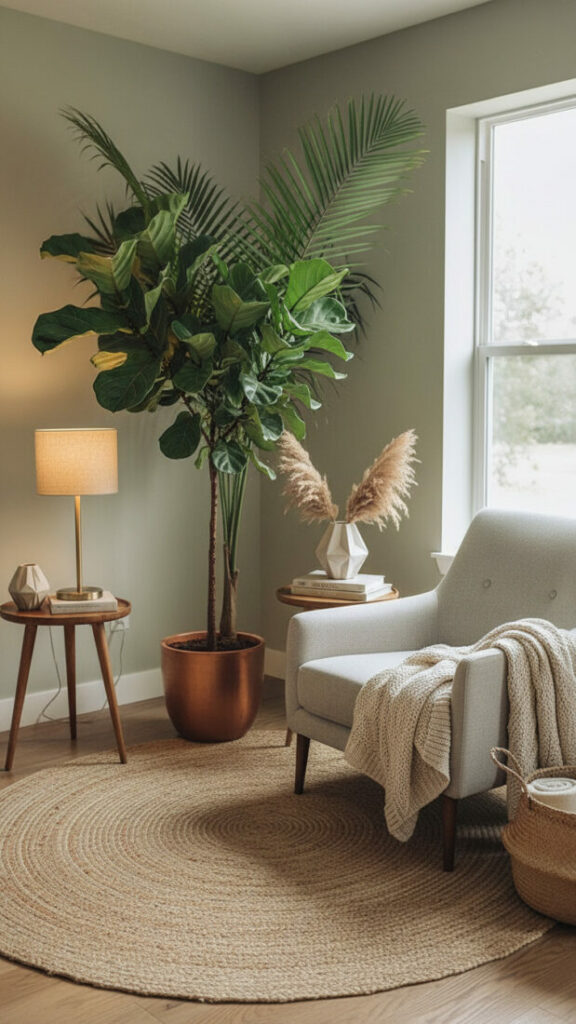
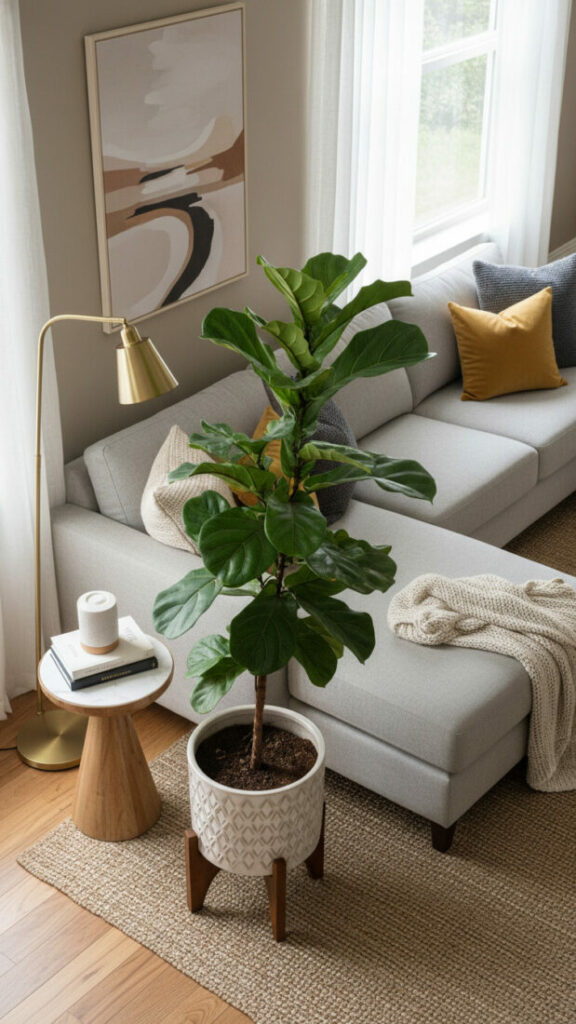
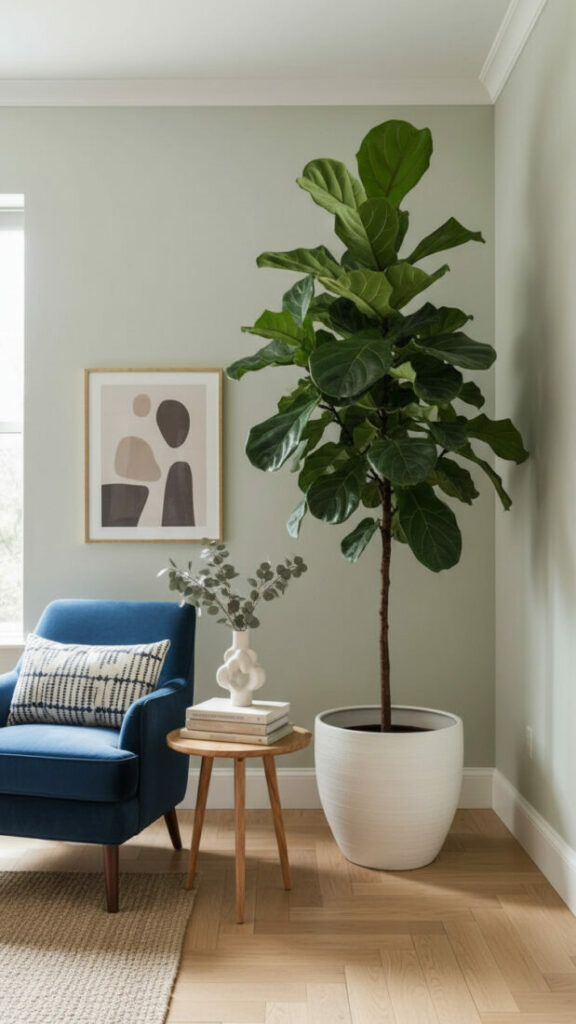
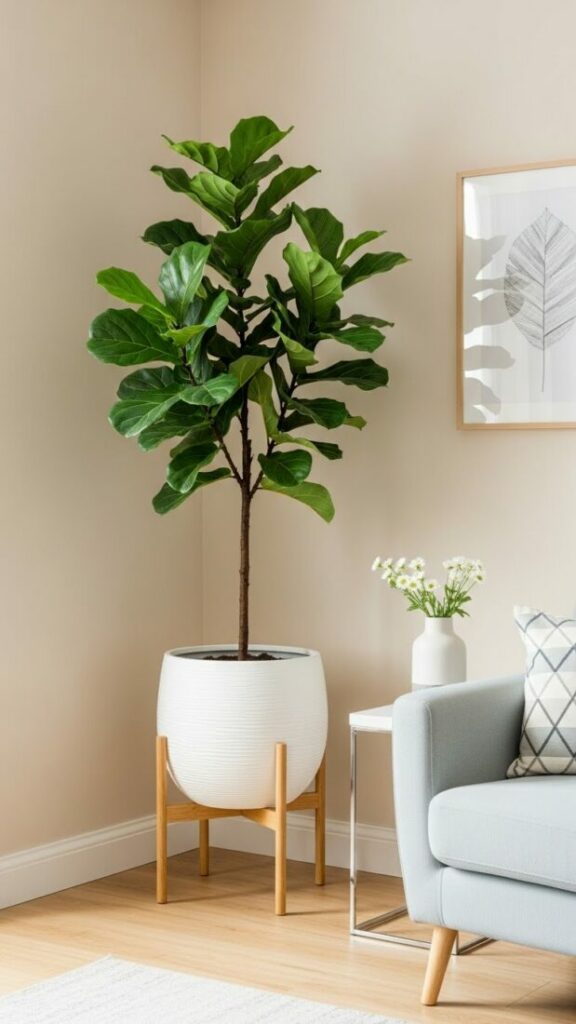
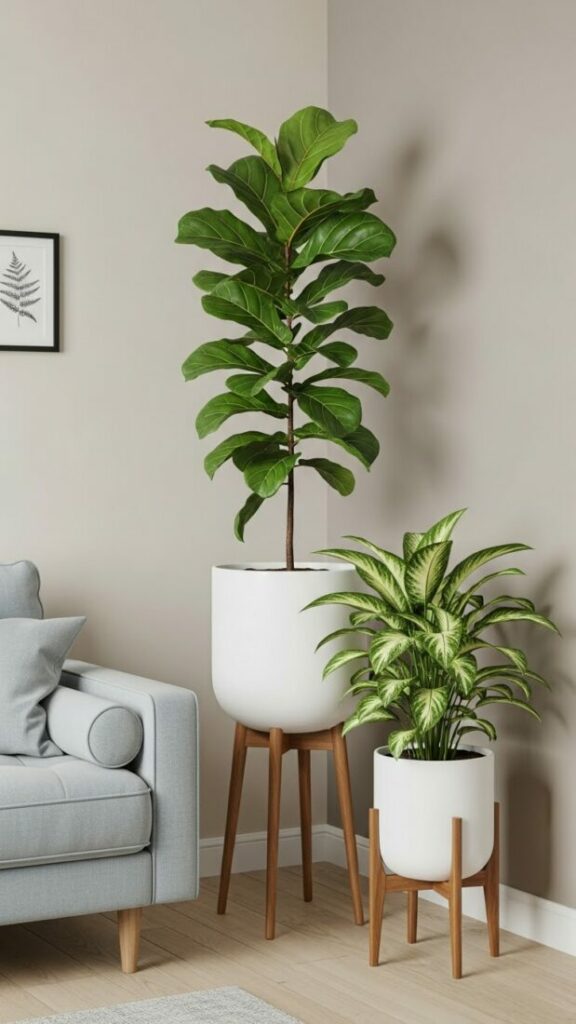
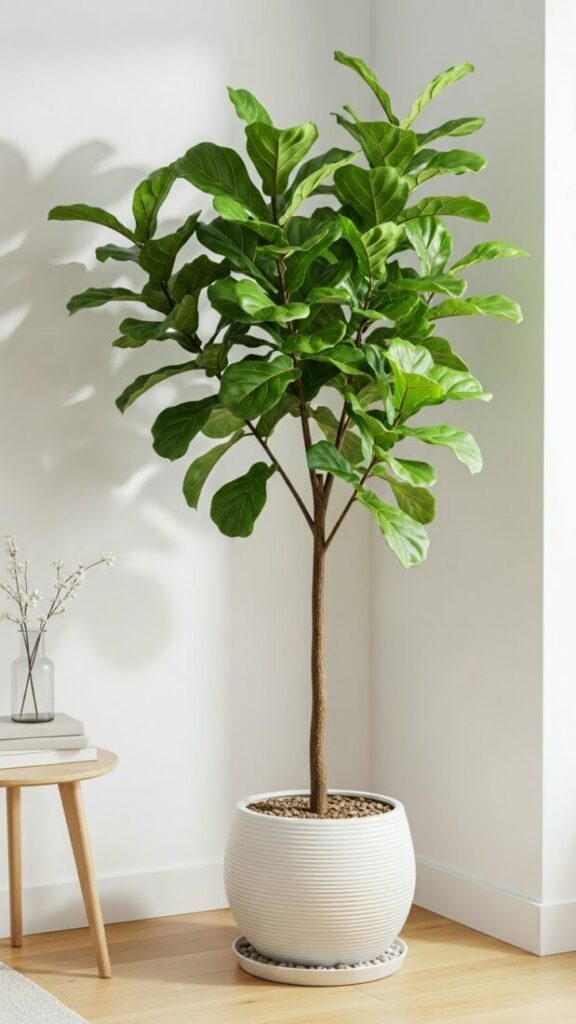
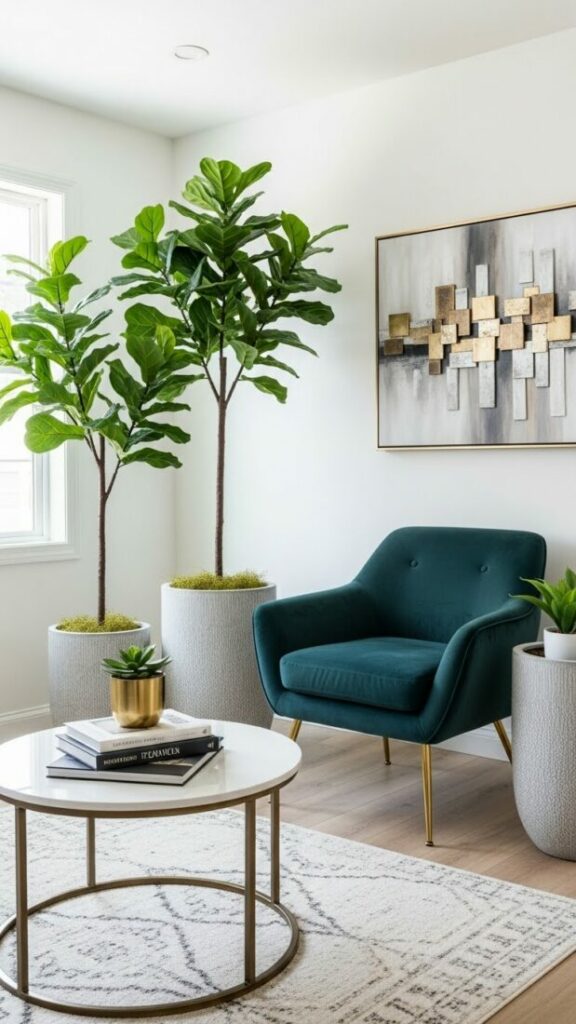
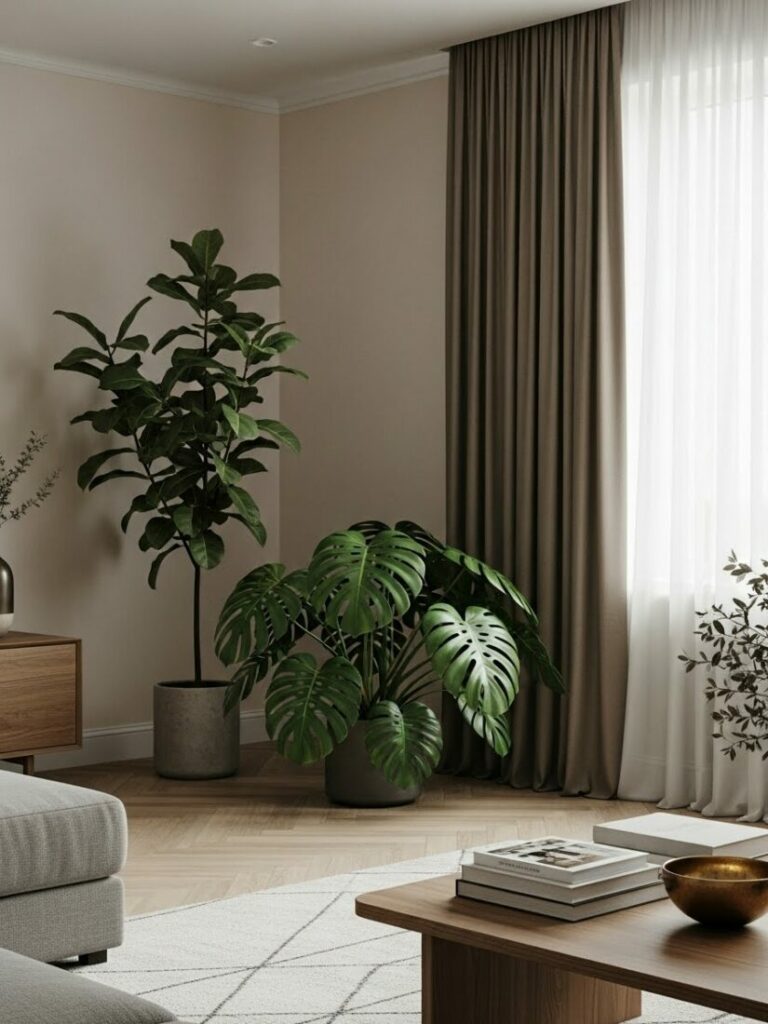
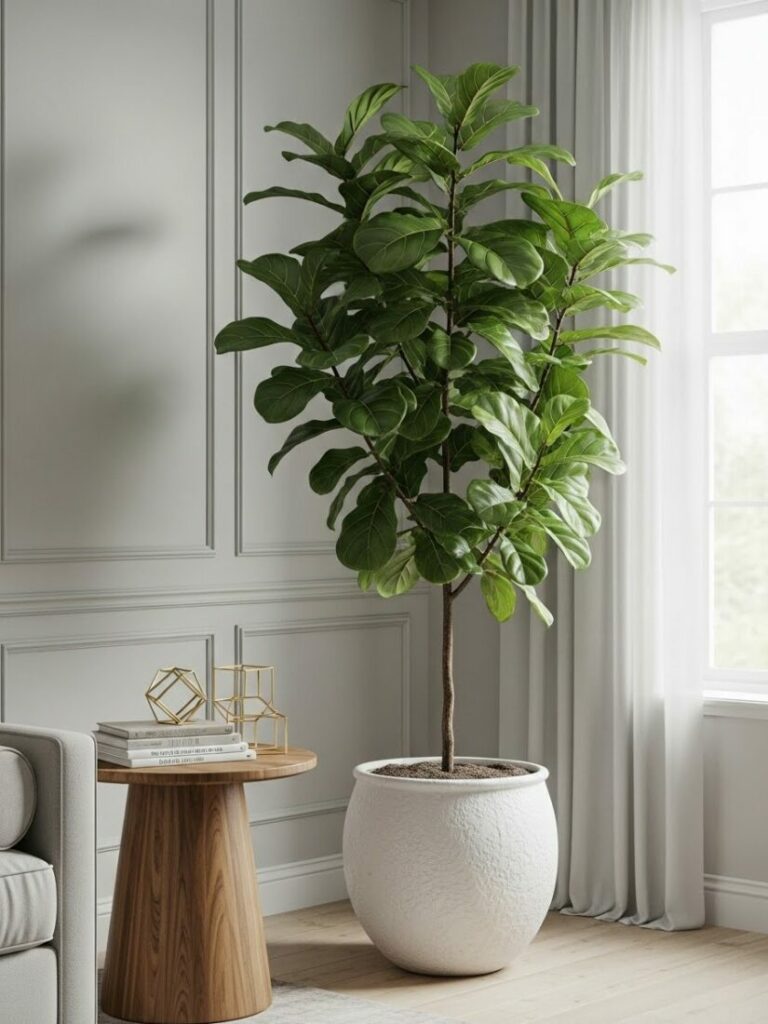
The Fiddle Leaf Fig is the king of large indoor plants ideas. Its violin-shaped leaves are iconic. It defines the modern aesthetic.
Styling The Fiddle:
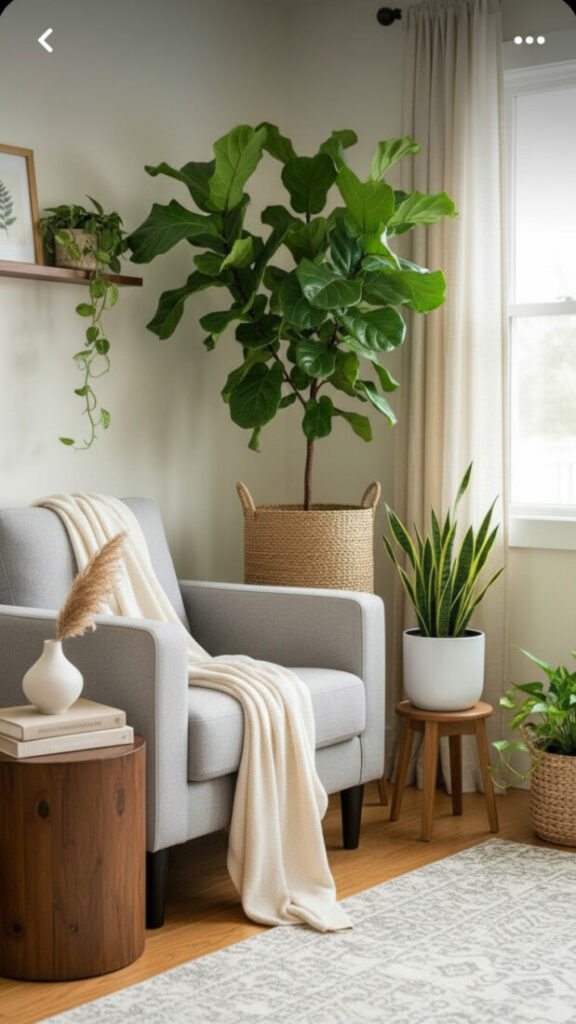
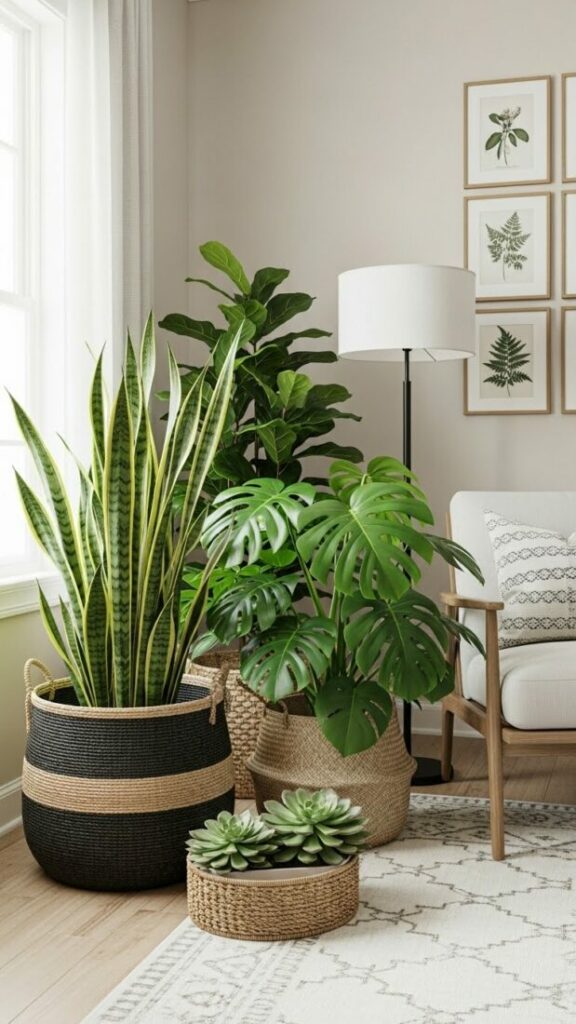
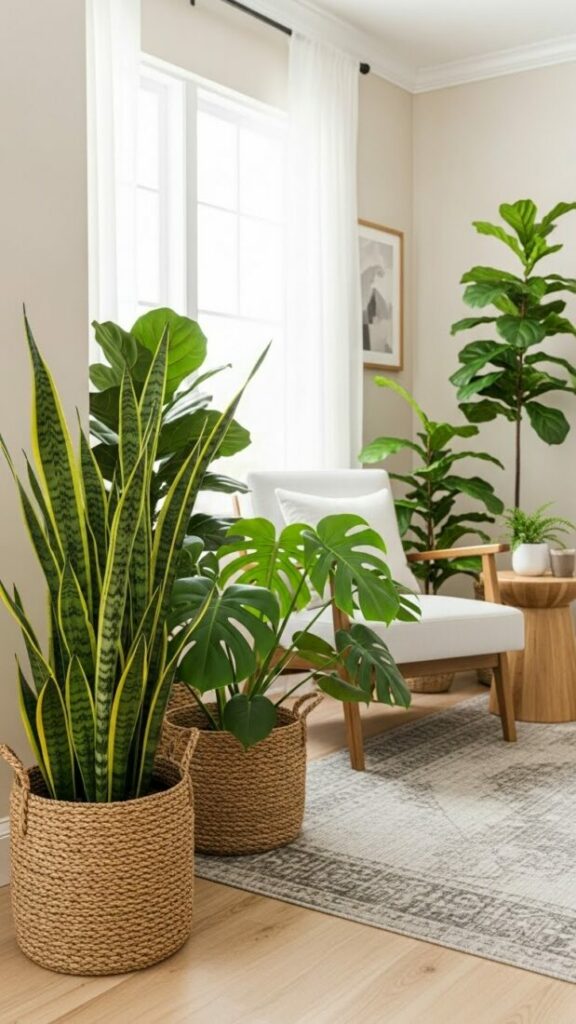
Place it in a woven seagrass basket. The texture contrasts with the glossy green leaves. Keep it solitary. It demands to be the star.
Care Reality Check:
It is a diva. It hates drafts. It hates being moved. It needs consistency. If you move it, it will drop leaves in protest.
Idea 2: The Monstera Jungle Vibe
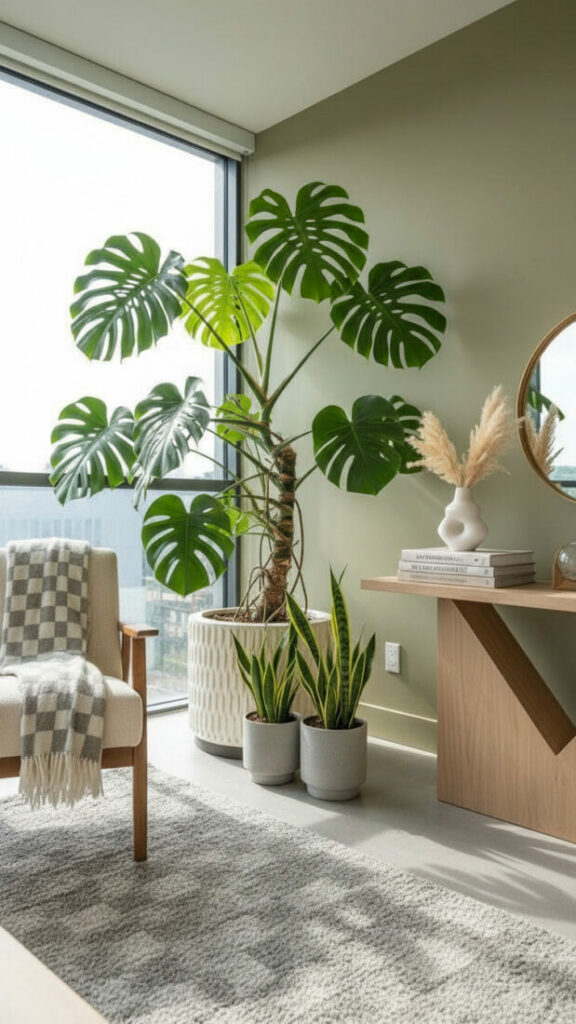
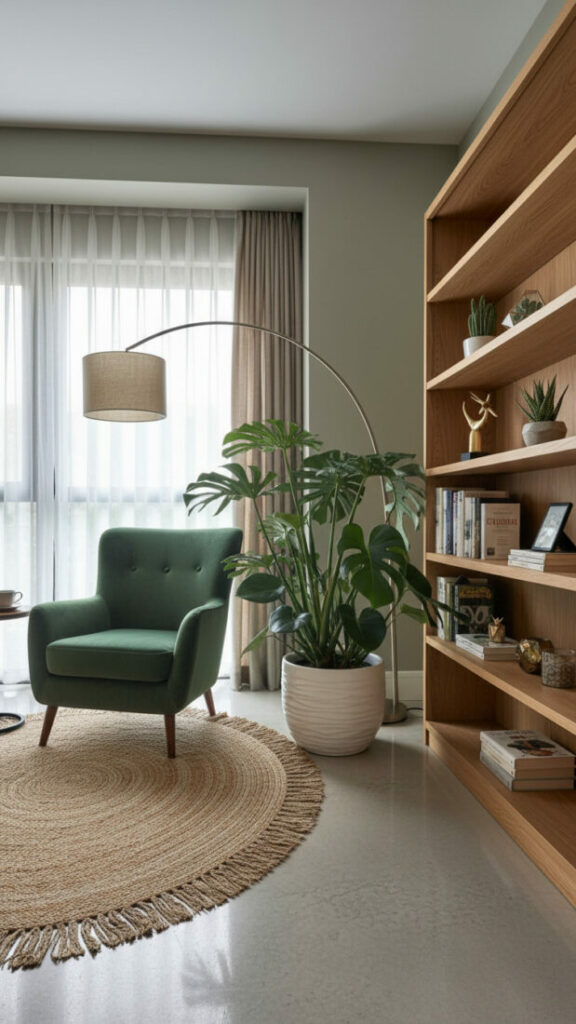
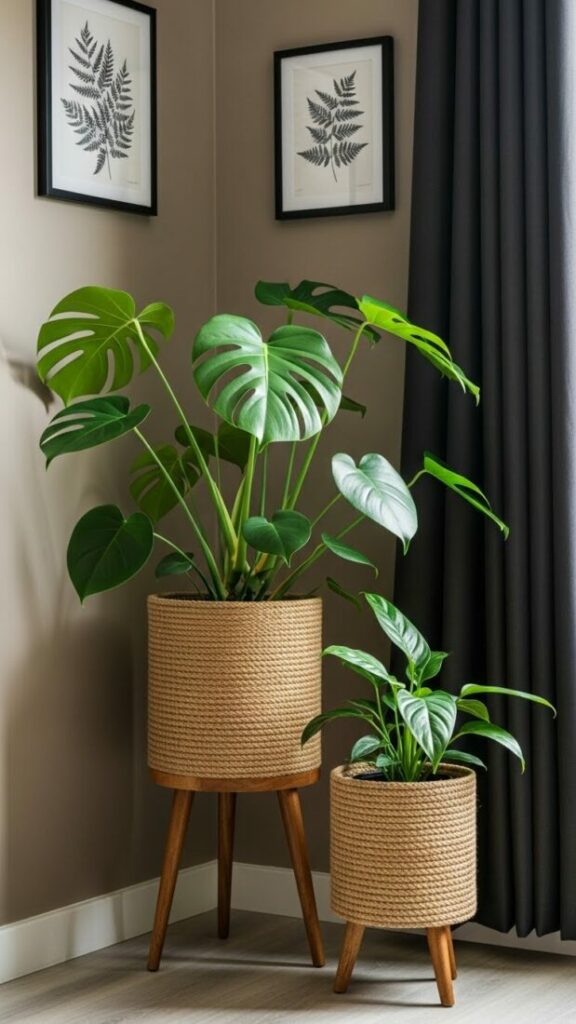
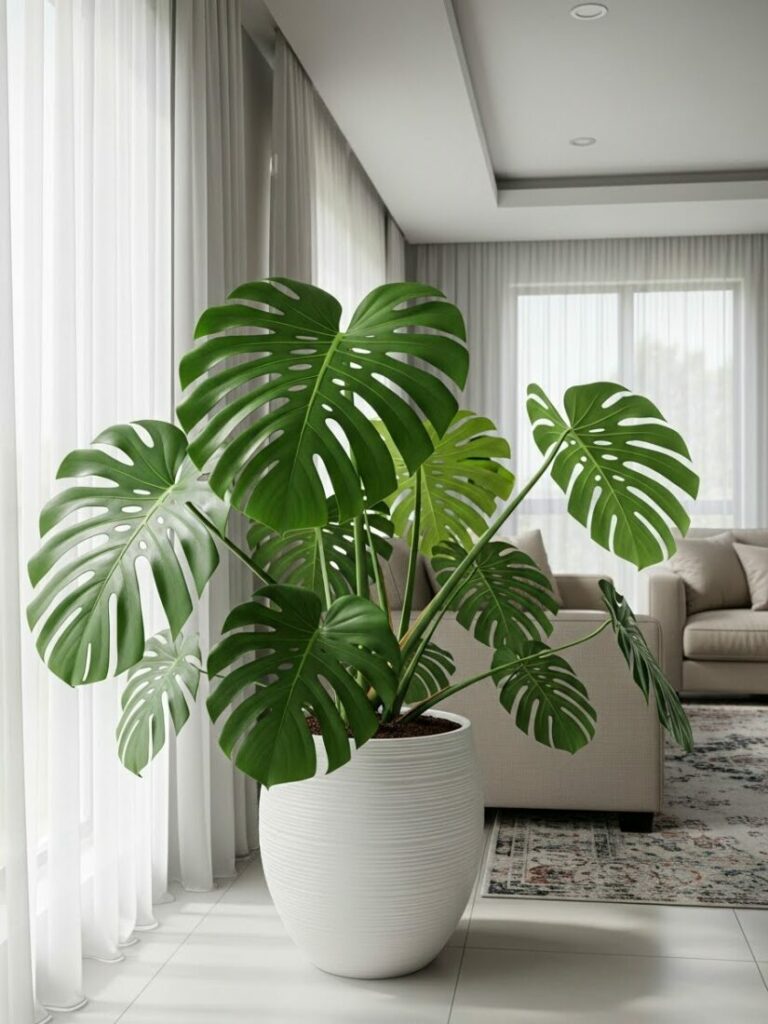
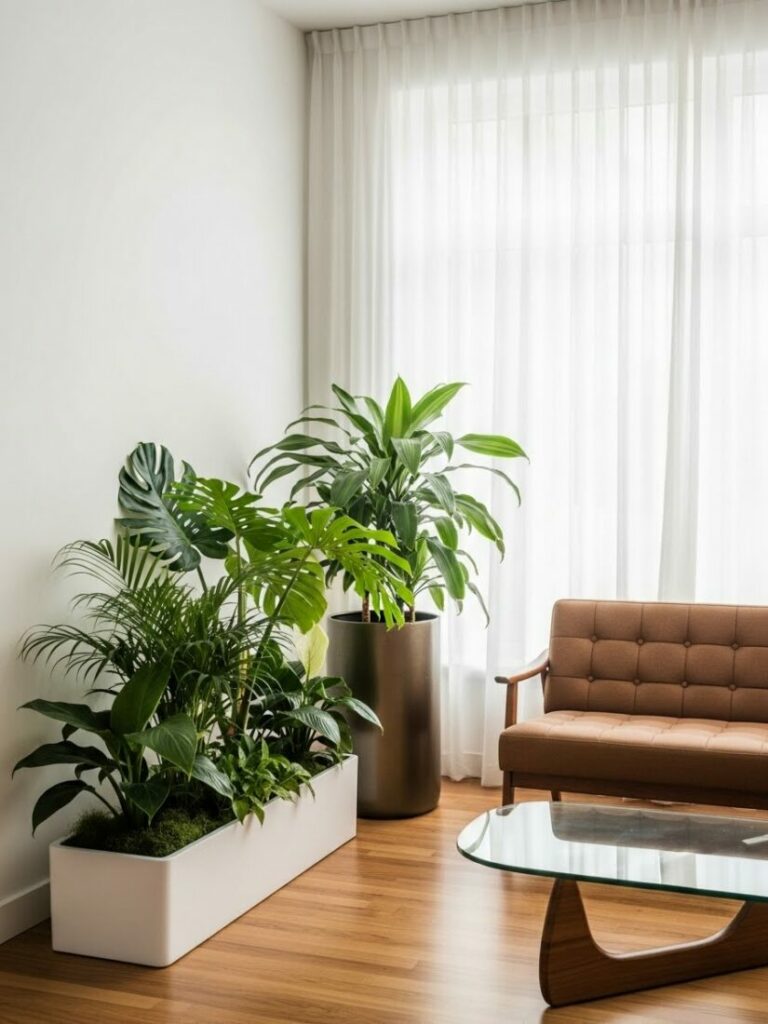
The Monstera Deliciosa is a beast. It grows wide and wild. It brings a retro, 1970s energy to the space.
The Moss Pole Hack:
In nature, Monsteras climb trees. Indoors, you must provide a tree. Install a moss pole.
Tie the vines to the pole. This encourages the leaves to grow massive. It creates a vertical totem of green.
Placement Strategy:
Give it room. Do not shove it in a tight corner. It needs space to spread its “arms.” It works best in a wide hallway or living room.
Idea 3: The Elegant Olive Tree
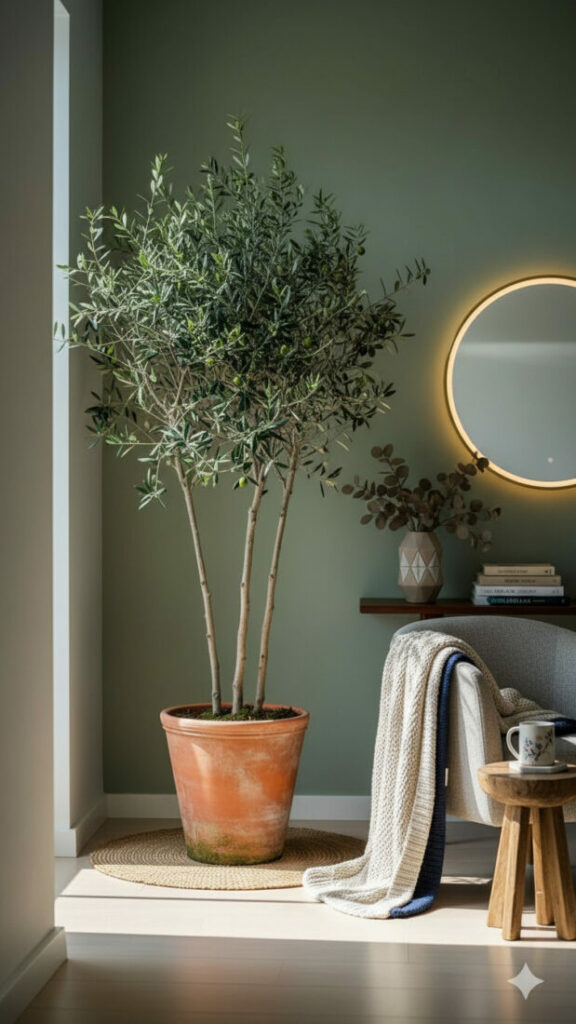
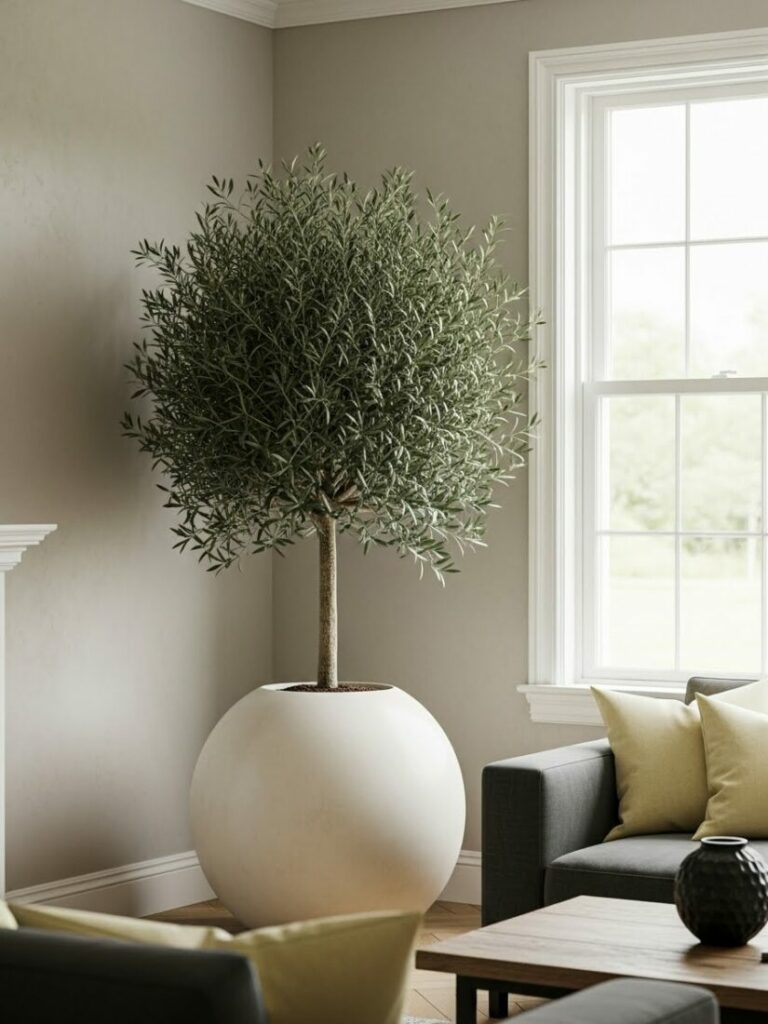
For a sophisticated, Mediterranean look, choose the Olive Tree. It has delicate, silvery-green foliage.
The Minimalist Choice:
Its leaves are small. It does not block the view. It feels airy and light. It is perfect for neutral, beige interiors.
The Sun Requirement:
This is a sun worshipper. It needs direct sunlight for at least 6 hours. Without it, it will slowly shed its leaves.
Idea 4: The Unkillable Snake Plant
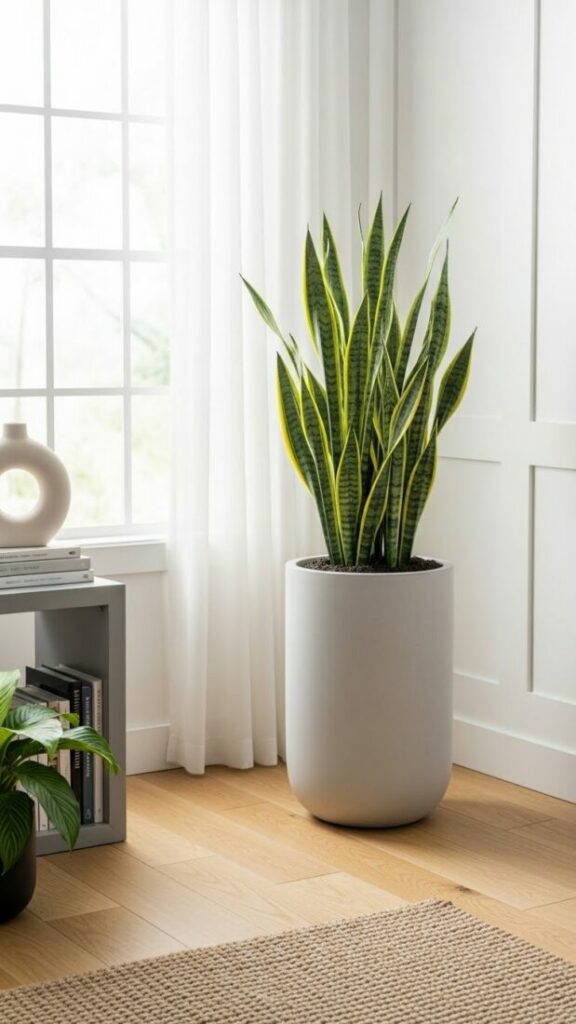
If you have a “black thumb,” the Sansevieria is your friend. You can buy tall varieties that reach 4 feet.
Structural Decor:
The leaves grow straight up. They are architectural swords. They look great in modern, industrial lofts.
Low Light Tolerance:
It can survive in a closet. Seriously. It tolerates low light better than almost any other plant. It is virtually indestructible.
Planter Selection: The Outfit
Your plant is the body. The planter is the clothes. Large indoor plants ideas fail if the pot is ugly.
Ceramic Cylinders:
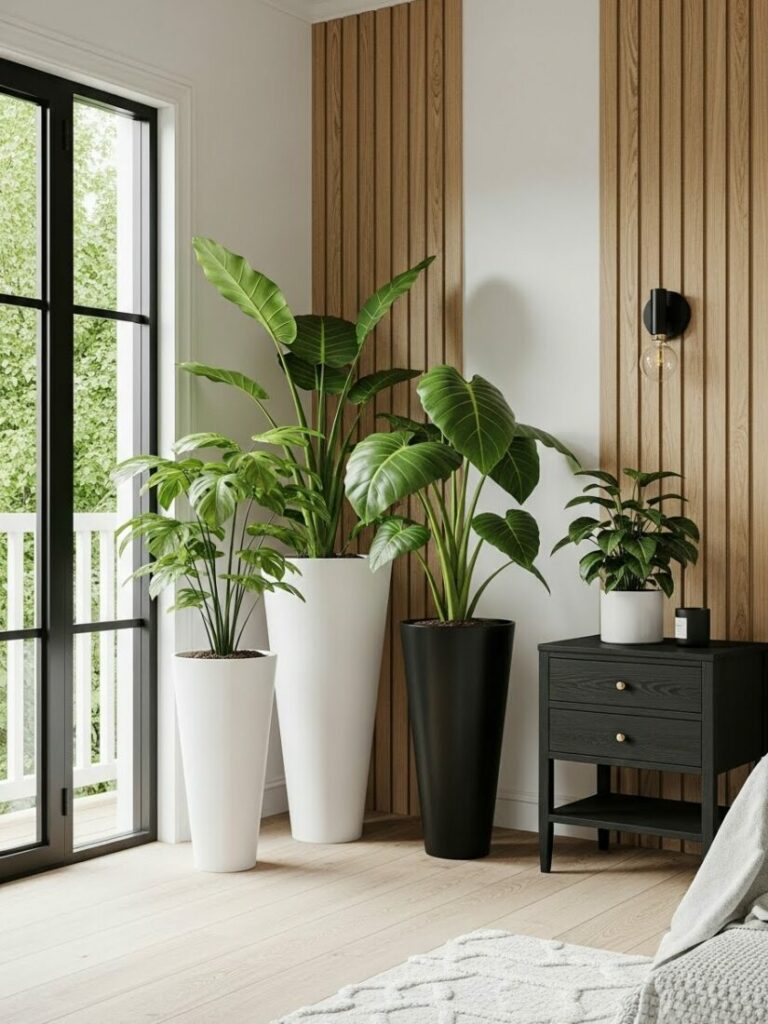
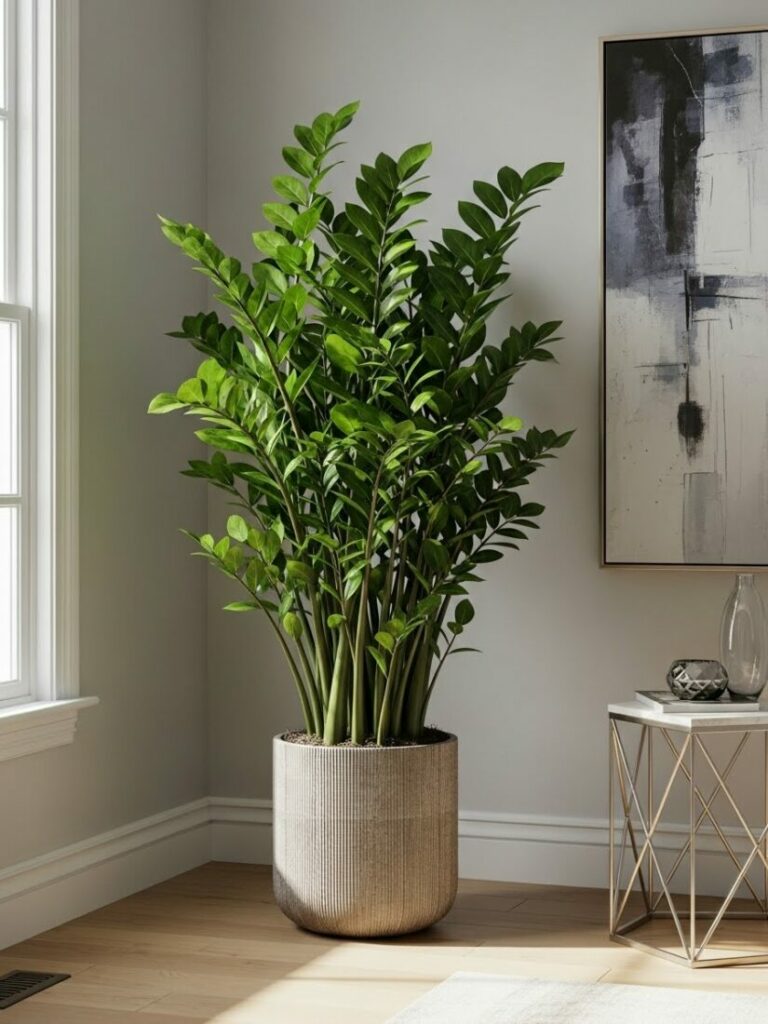
Matte white or black cylinders are timeless. They disappear visually. They let the foliage take center stage.
Terracotta Pots:
Aged terracotta adds warmth. It is porous, which helps the soil breathe. It is excellent for plants that hate wet feet.
Fiberglass Reproductions:
Large ceramic pots are heavy. Use fiberglass instead. It looks like stone or concrete but weighs a fraction of the amount.
The Bird of Paradise Drama
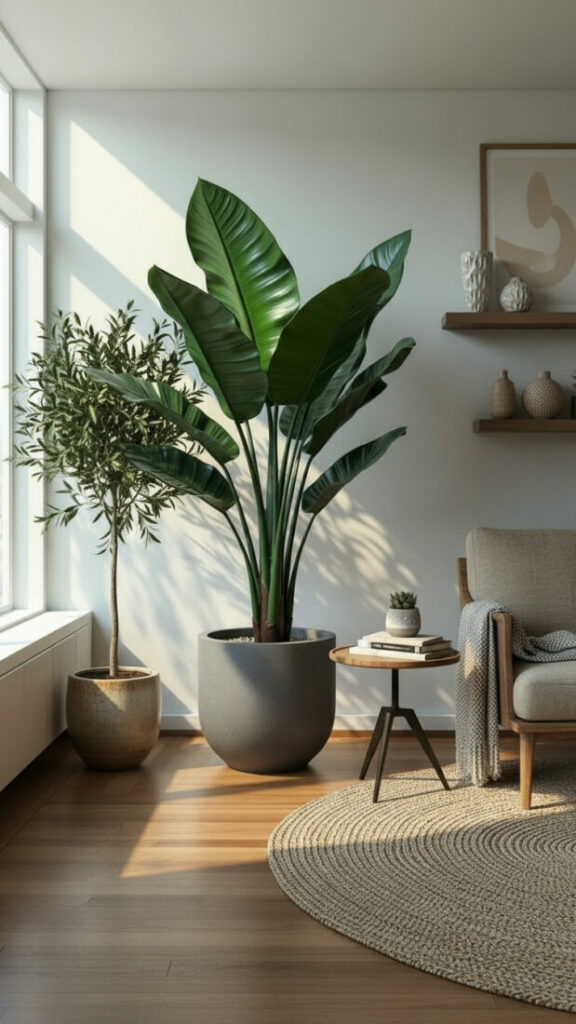
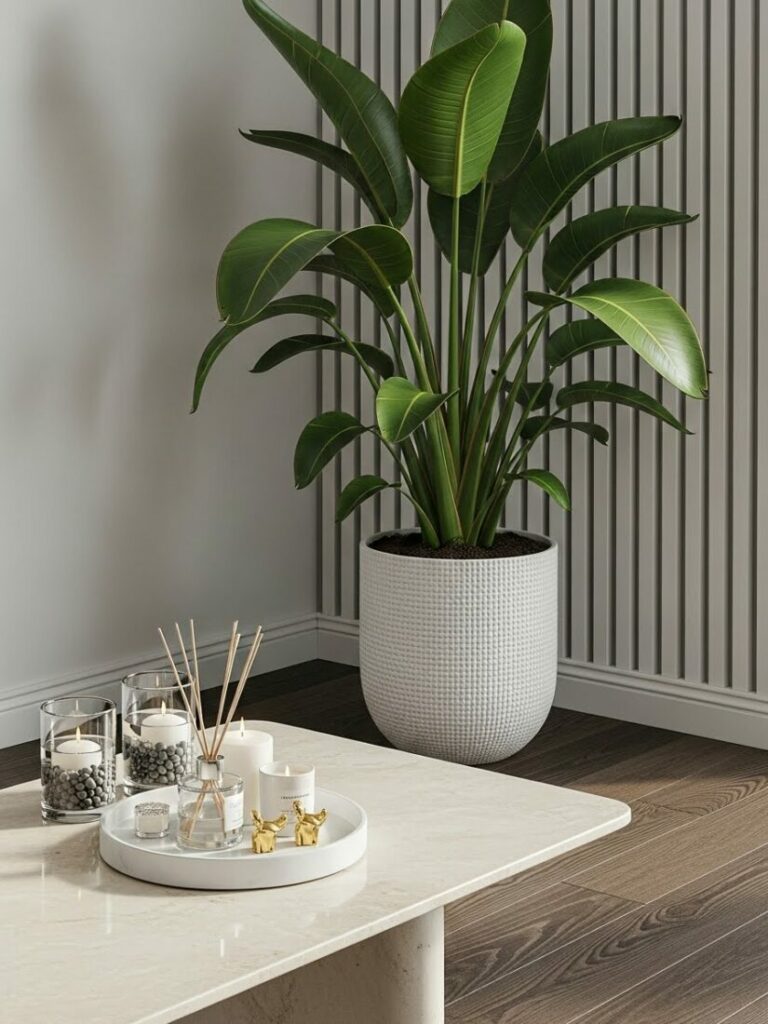
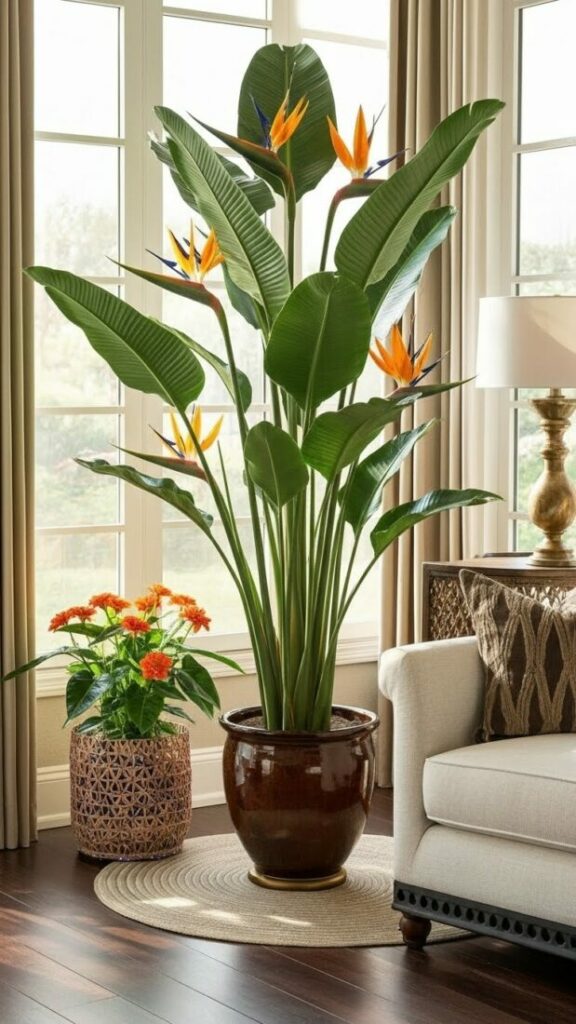
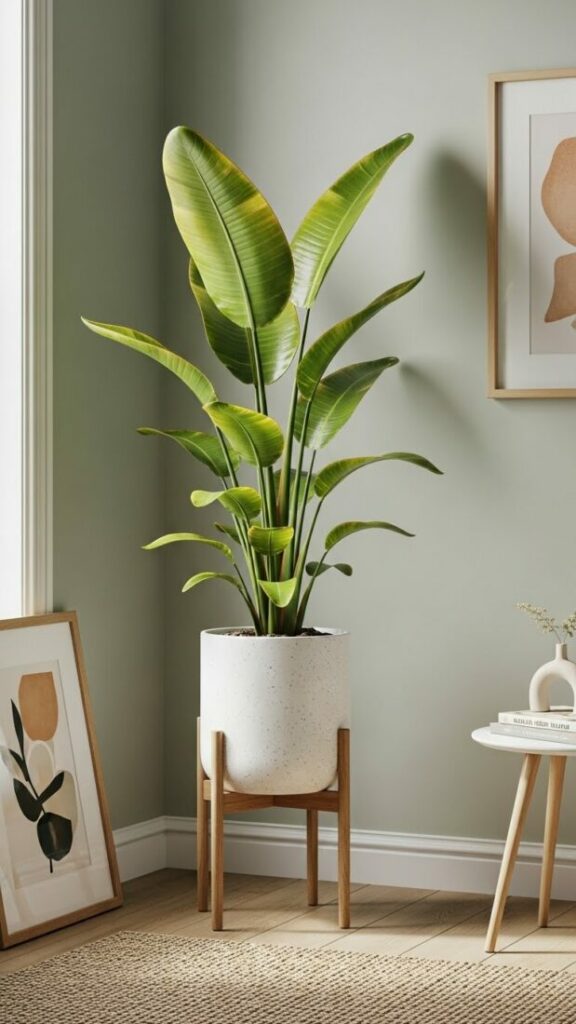
The Strelitzia Nicolai is the ultimate tropical statement. Its leaves are like giant paddles.
Volume and Height:
This plant fills space. If you have high ceilings, this is the best choice. It can grow to 10 feet indoors.
Leaf Splitting:
Do not worry if the leaves split. It is natural. It allows wind to pass through in the wild. It adds texture and character.
Styling: The Rule of Three
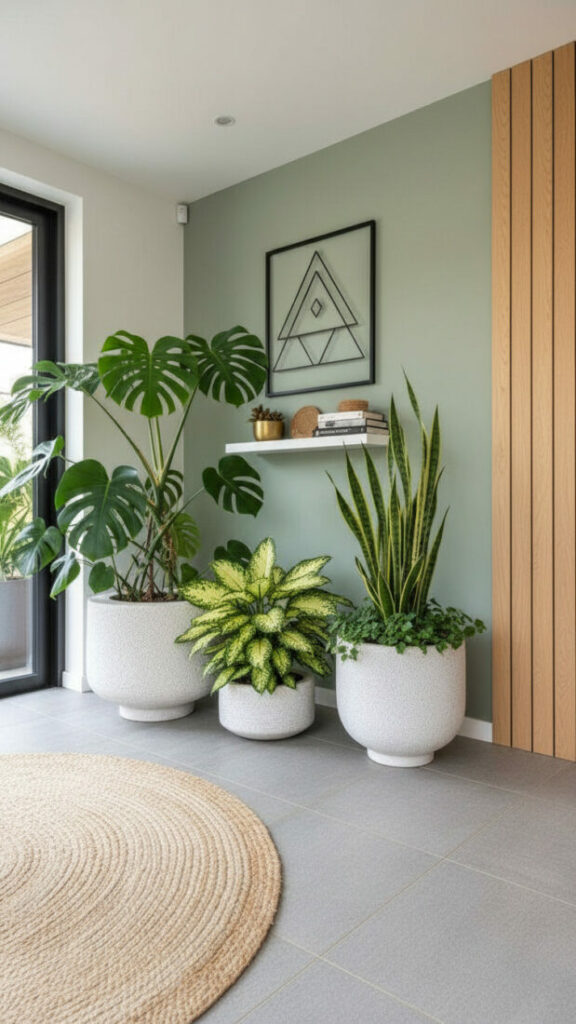
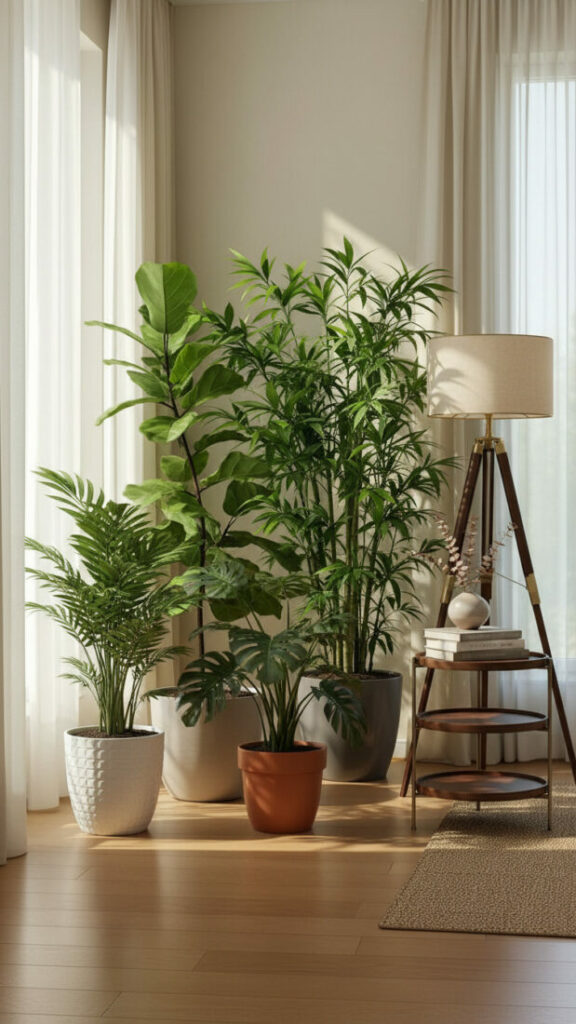
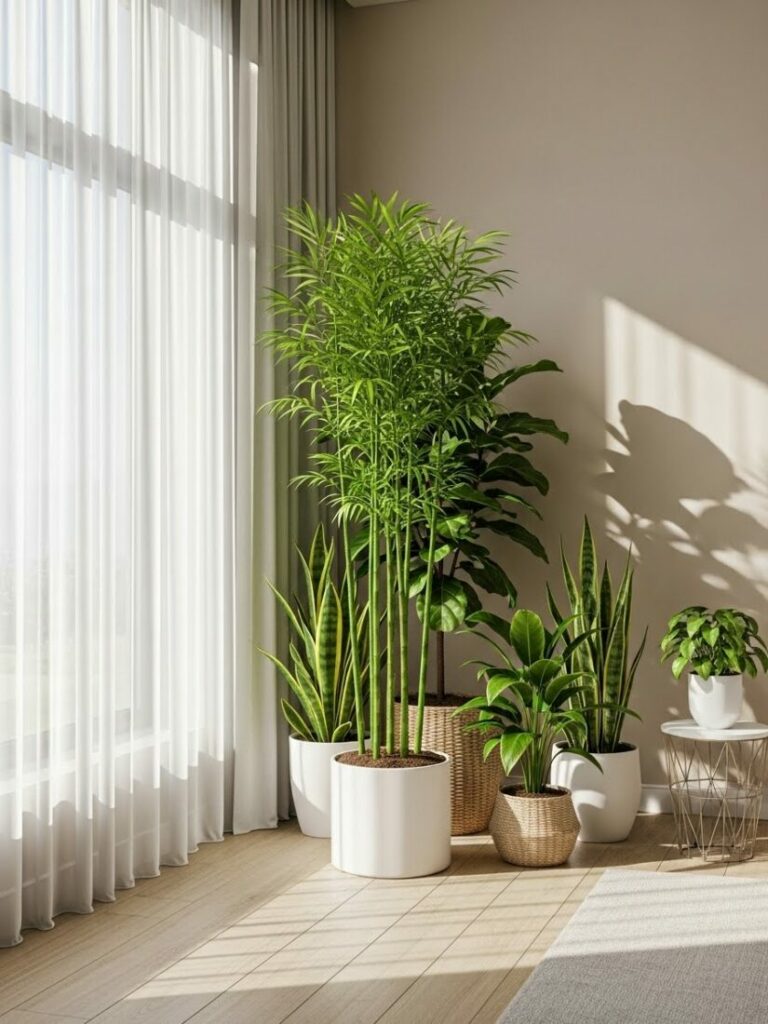
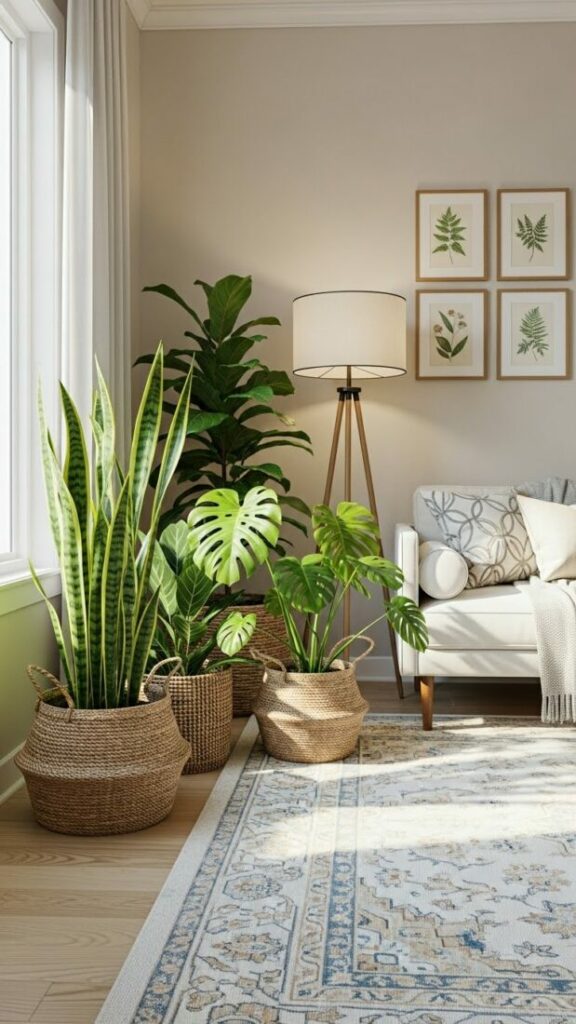
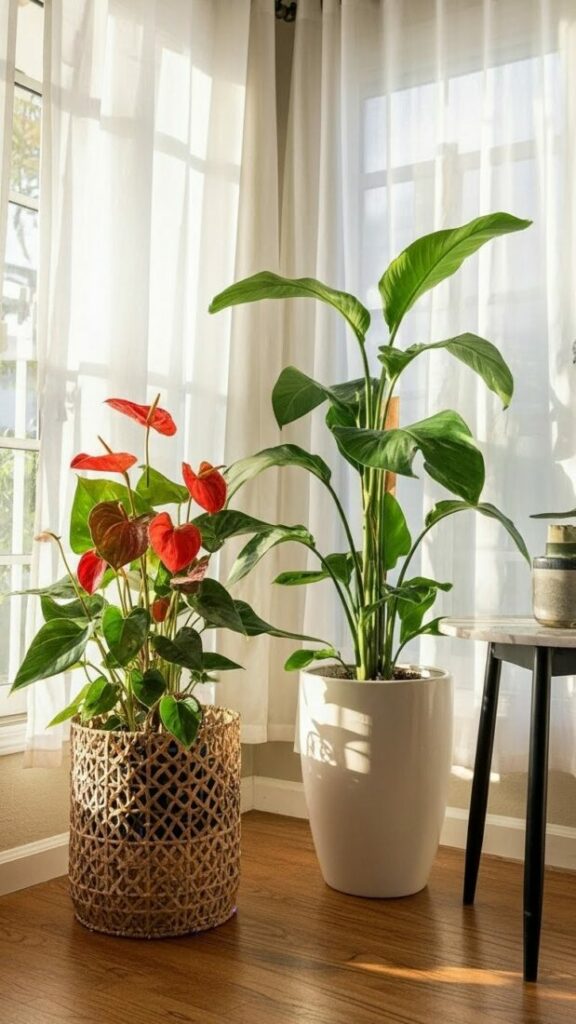
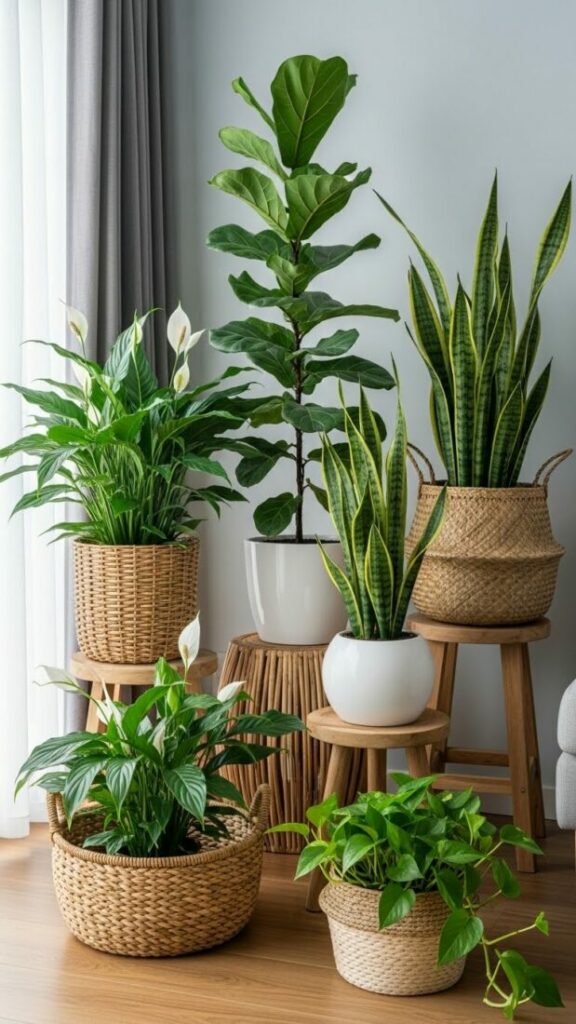
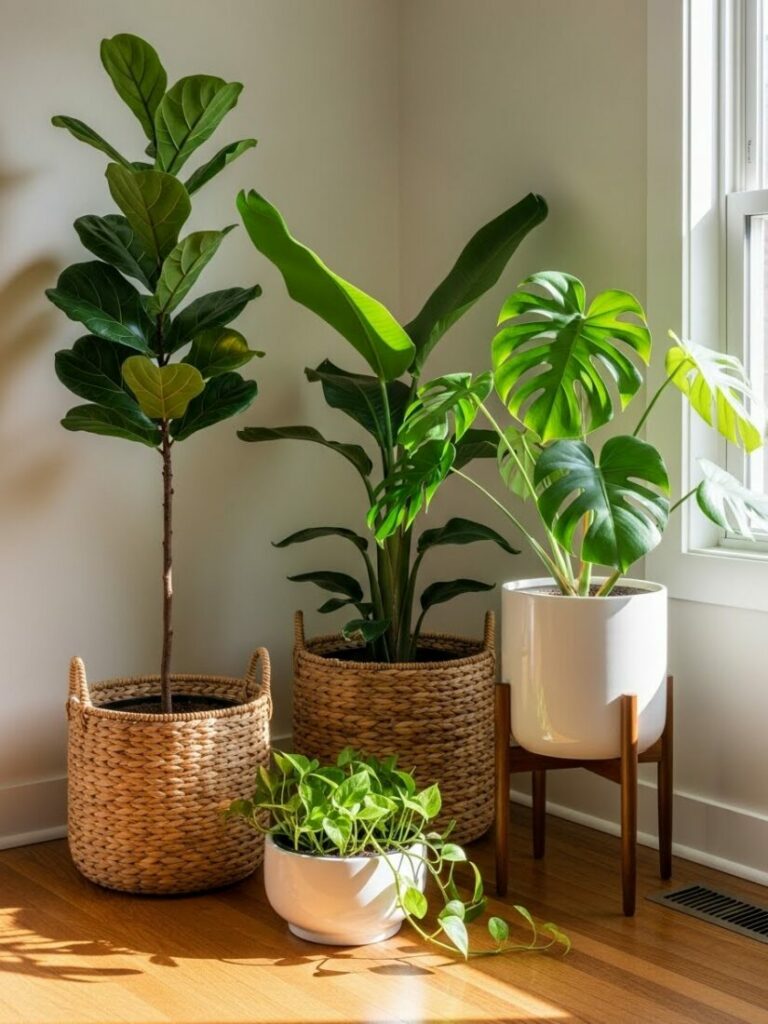
One plant is good. Three plants are a designed vignette. Use the rule of three for a professional look.
Vary the Heights:
Combine a tall tree, a medium shrub, and a low trailer. This creates a cascade of green. It leads the eye through the composition.
Texture Contrast:
Mix leaf shapes. Pair the broad leaf of a Rubber Tree with the feathery frond of a Palm. The contrast makes each plant look better.
The Rubber Tree (Ficus Elastica)
This is the moody cousin of the Fiddle Leaf. The “Burgundy” variety has deep, dark leaves that look almost black.
Gothic Chic:
It works beautifully in minimalist, monochromatic rooms. The dark leaves ground the space. They reflect light like polished leather.
Care Advantage:
It is tougher than the Fiddle Leaf. It handles lower light. It handles erratic watering. It is a great starter tree.
Watering: The Number One Killer
Overwatering kills more plants than underwatering. Roots need oxygen. Wet soil suffocates them.
The Chopstick Method:
Stick a wooden chopstick into the soil. Pull it out. If it is damp and dark, do not water. If it is dry and clean, water deeply.
Drainage Holes:
Never plant in a pot without a hole. The water needs an exit strategy. Use a saucer to catch the excess.
Cleaning Your Plants
Dust is the enemy. A dusty leaf cannot photosynthesize. It slowly starves the plant.
The Shower Method:
For manageable plants, put them in the shower. Use tepid water. Rinse the leaves gently. It cleans the dust and flushes the soil.
The Microfiber Wipe:
For massive trees, use a damp microfiber cloth. Wipe each leaf. Support the leaf with your hand underneath to prevent snapping.
Pest Control: The Reality
Owning plants means dealing with bugs. Spider mites and scale are common.
Neem Oil Defense:
Keep a bottle of Neem oil spray. It is organic and effective. Spray the leaves once a month as a preventative measure.
Inspection Routine:
Check the undersides of leaves weekly. Look for fine webbing or sticky residue. Catching it early saves the tree.
Using Plant Stands for Elevation
Sometimes a plant is not quite tall enough. Large indoor plants ideas often involve “cheating” the height.
Mid-Century Stands:
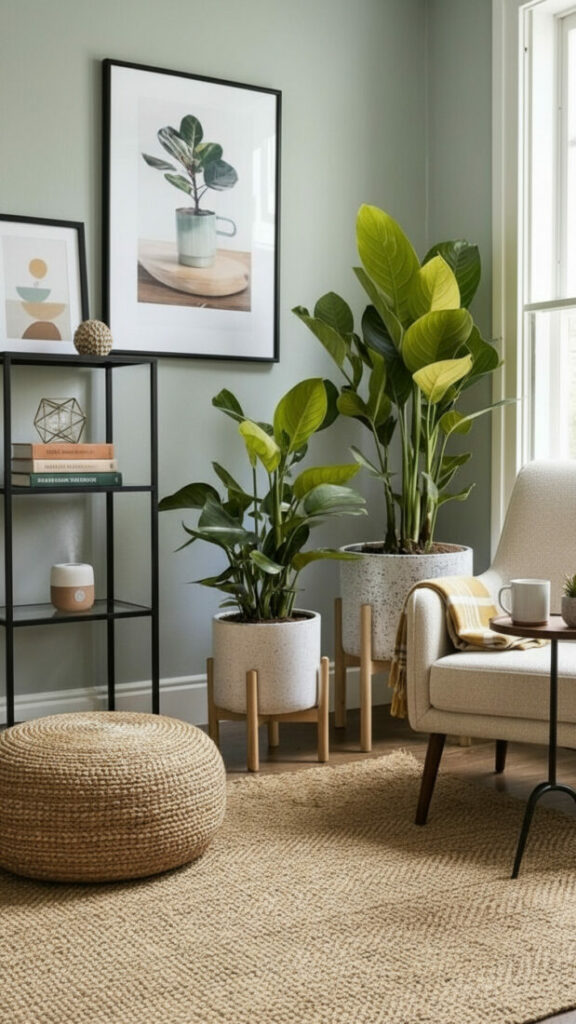
Wooden plant stands lift the pot off the floor. This adds 6 to 12 inches of height. It makes a medium plant look like a large tree.
Visual Airiness:
Lifting the pot reveals the floor underneath. This makes the room feel larger. It prevents the pot from looking like a heavy block.
The Majesty Palm Solution
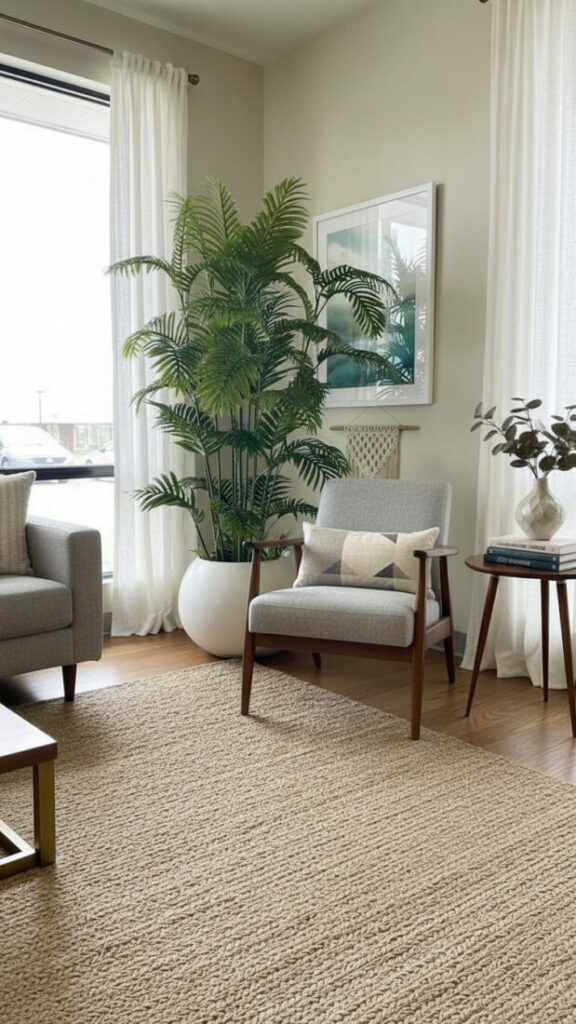
Palms add instant texture. They are feathery and soft. They move with the slightest breeze.
The Humidity Lover:
Palms hate dry air. Their tips will turn brown. They are perfect for large bathrooms where steam is abundant.
Pet Safety:
Most palms, like the Kentia or Parlor Palm, are non-toxic. They are safe for cats and dogs who like to chew.
Artificial Trees: The Faux Option
Not everyone has a green thumb. Or sunlight. Modern faux trees are incredibly realistic.
What to Look For:
Examine the trunk. A real wood trunk is the key to realism. Ensure the leaves have wire inside so you can bend and shape them.
Styling Faux Plants:
Put the fake pot inside a real basket. Top dress it with real dried moss. This hides the plastic base and sells the illusion.
Propagation: Free Plants
Once you have a large plant, you can clone it. Propagation is rewarding and free.
Water Propagation:
Cut a Monstera stem below a node. Place it in a glass vase of water. Watch the roots grow. It looks like a science experiment decor piece.
Gifting Greenery:
Propagated cuttings make amazing gifts. You are literally sharing the life of your home with friends.
Fertilizer: Feeding the Giants
Big plants have big appetites. The soil in the pot runs out of nutrients eventually.
Liquid Gold:
Use a liquid fertilizer during the growing season (Spring/Summer). Dilute it to half strength. Feed monthly.
Winter Fasting:
Do not feed in winter. The plant is dormant. Fertilizer salts will build up and burn the roots.
Common Mistakes to Avoid
1. Potting Too Big:
Do not put a small plant in a massive pot. The excess soil holds too much water. This causes root rot. Only size up 2 inches at a time.
2. Direct Sun Burn:
Even sun lovers can burn. If you move a plant from a dark corner to a window, do it gradually. Acclimatize it over a week.
3. Drafty Spots:
Do not place tropical trees near AC vents or radiators. The temperature fluctuations stress the plant. Leaves will drop.
Lighting Hacks for Dark Corners
You want a tree in that dark corner? You can cheat nature with technology.
Grow Bulbs:
Swap your standard lamp bulb for a full-spectrum grow bulb. They look like normal white light to human eyes.
Shine it on the plant for 8 hours a day. The plant will photosynthesize and thrive, even in a windowless room.
Conclusion: A Living Home
Incorporating large indoor plants ideas transforms your house into a living ecosystem. It connects you to the natural world.
The presence of a tree indoors is grounding. It reminds us to slow down. It reminds us to nurture.
Choose the right plant for your light. Invest in a beautiful planter. Commit to the care routine. The reward is a home that breathes.