Implementing innovative wall cat tree ideas is the best way to enrich your pet’s life without sacrificing floor space. Cats have a natural instinct to climb and observe their world from above. Therefore, providing vertical territory is essential for their happiness.
You can transform blank walls into an exciting jungle gym. This guide explores over 22 creative designs for every home style. We cover everything from minimalist shelves to complex climbing systems.
We will show you how to design a safe and stimulating environment. Get ready to revolutionize your cat’s daily routine. These ideas will make your home a feline paradise.
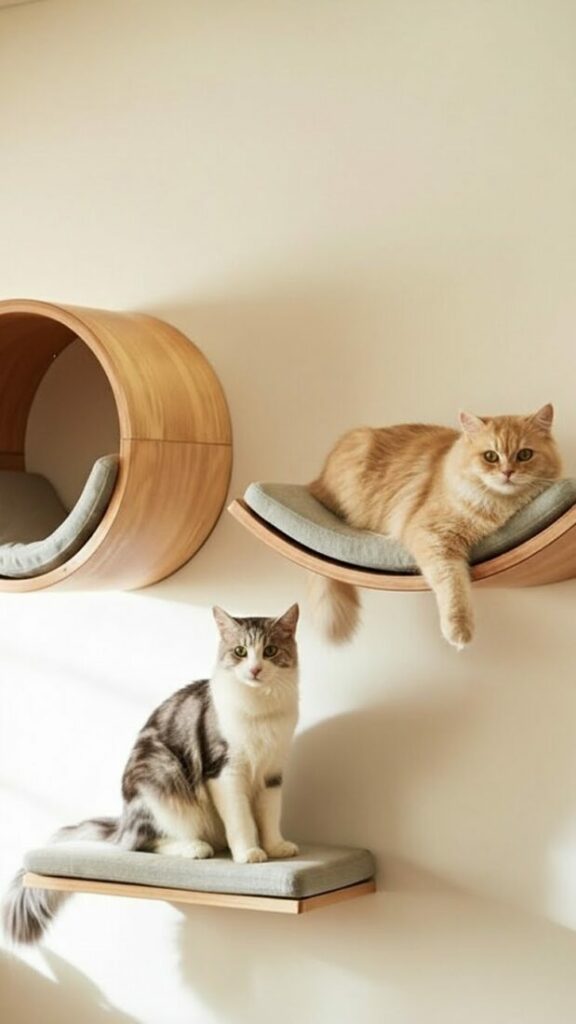
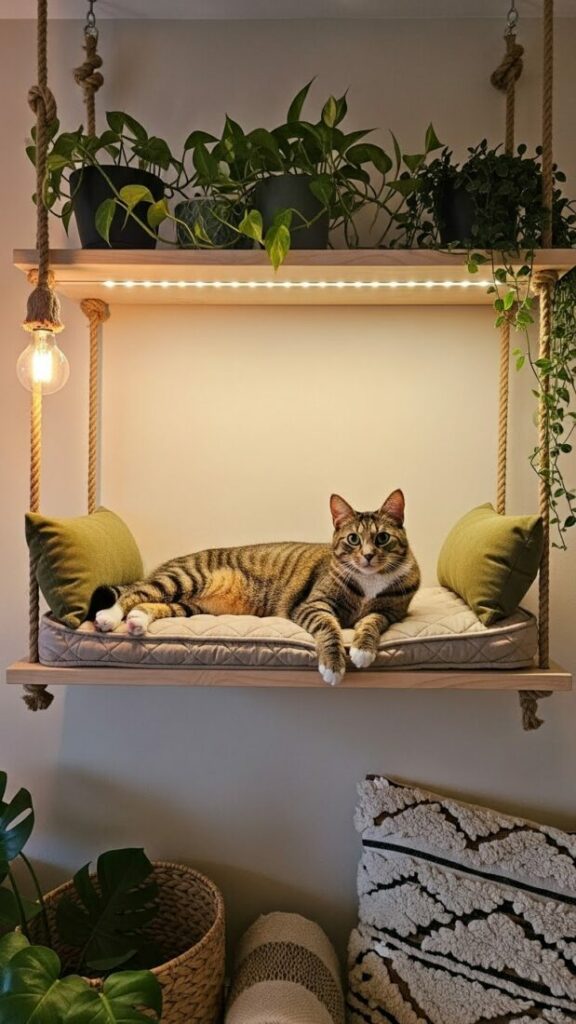
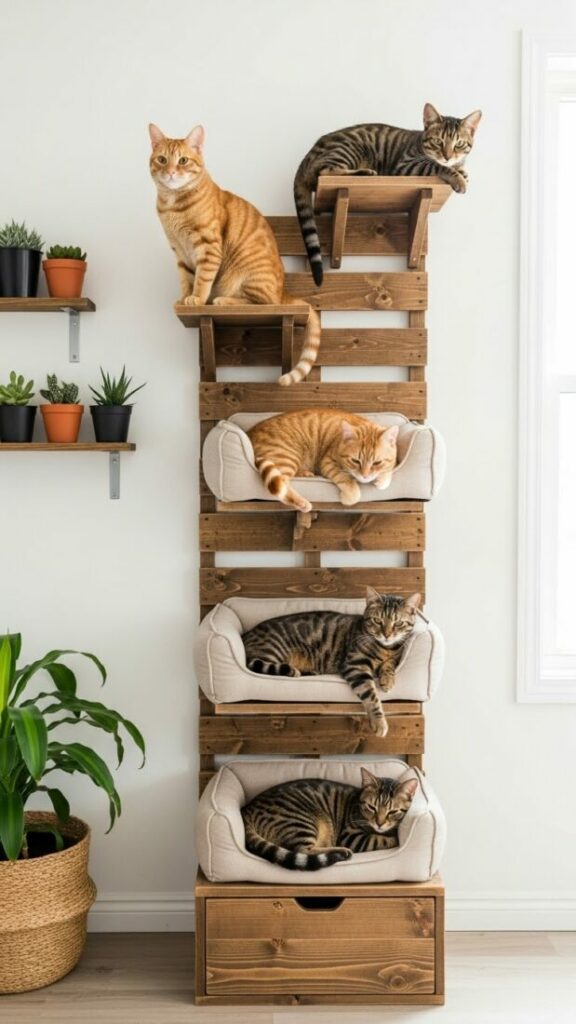
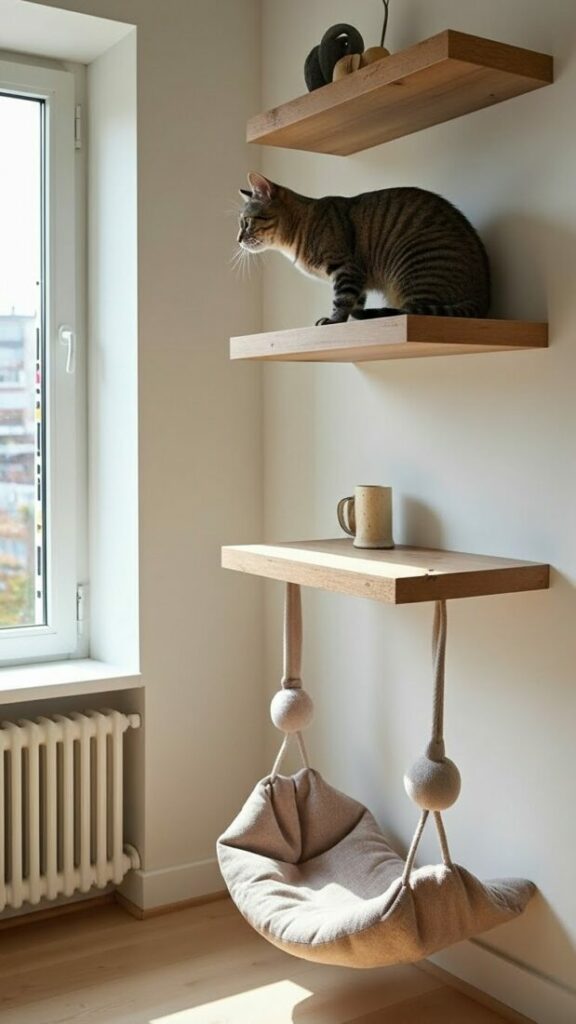
Planning Your Vertical Cat Kingdom
Before you drill into your walls, a solid plan is necessary. A successful cat climbing wall requires understanding your cat’s behavior. You must also consider the structural integrity of your home.
First, observe where your cat likes to hang out. Do they prefer sunny windows or high, dark corners? This will help you place your cat wall shelves effectively.
Next, assess your wall space and decor style. You want the system to blend with your interior design. A cohesive look creates a stylish home for you and a playground for them.
Understanding Feline Instincts
Cats are natural climbers who seek safety in height. This behavior is deeply ingrained in their DNA. Providing vertical cat territory reduces stress and builds confidence.
High vantage points allow them to survey their domain. It also provides an escape route in multi-pet households. This helps prevent conflicts between cats.
Furthermore, climbing is excellent exercise for indoor cats. It keeps them physically fit and mentally stimulated. This is vital for preventing obesity and boredom.
Safety and Structural Integrity
Safety is the most critical aspect of installation. You must locate the studs in your walls. Anchoring into drywall alone is rarely strong enough for jumping cats.
Use a reliable stud finder to mark your spots. Choose heavy-duty brackets and hardware. Ensure the weight limit of the shelves exceeds your cat’s weight.
Remember that the force of a jumping cat adds extra stress. Therefore, sturdy construction is non-negotiable. Regular safety checks are also recommended.
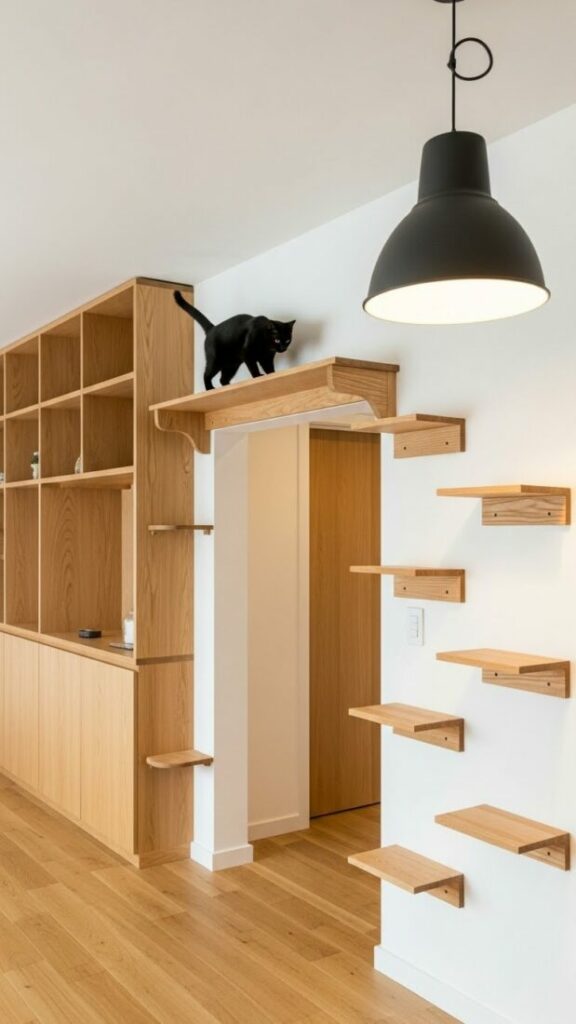
1. The Floating Staircase Concept
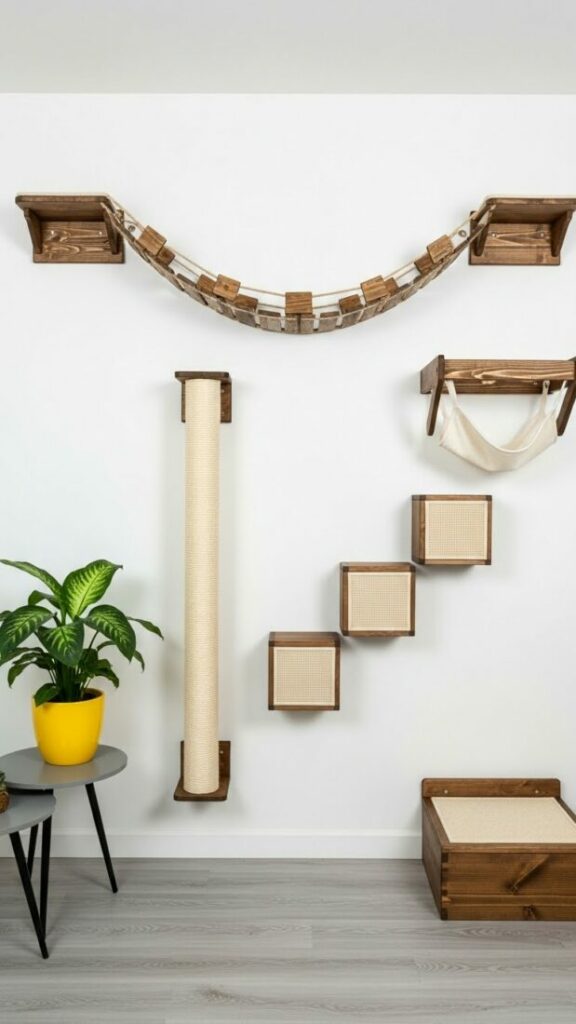
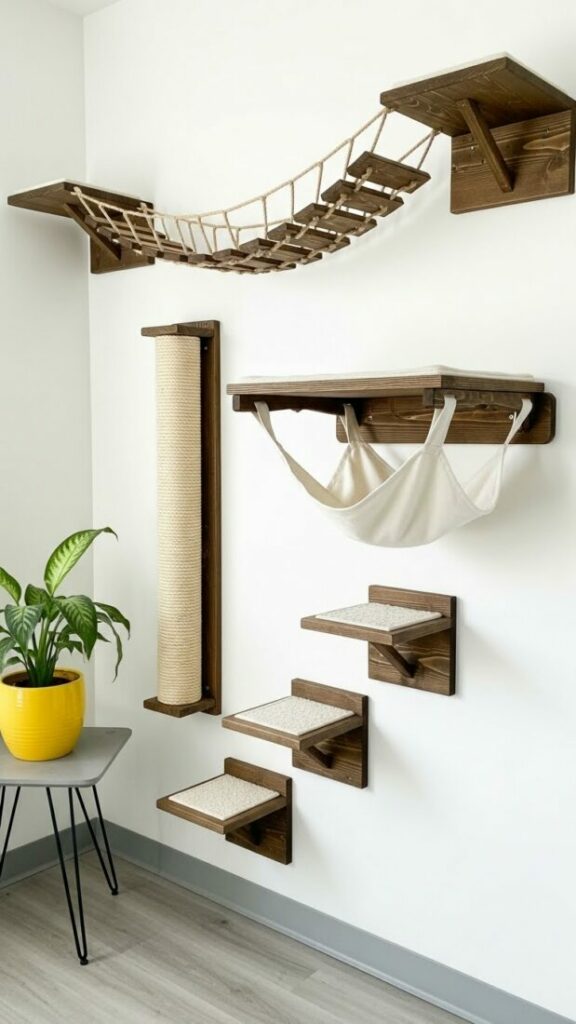
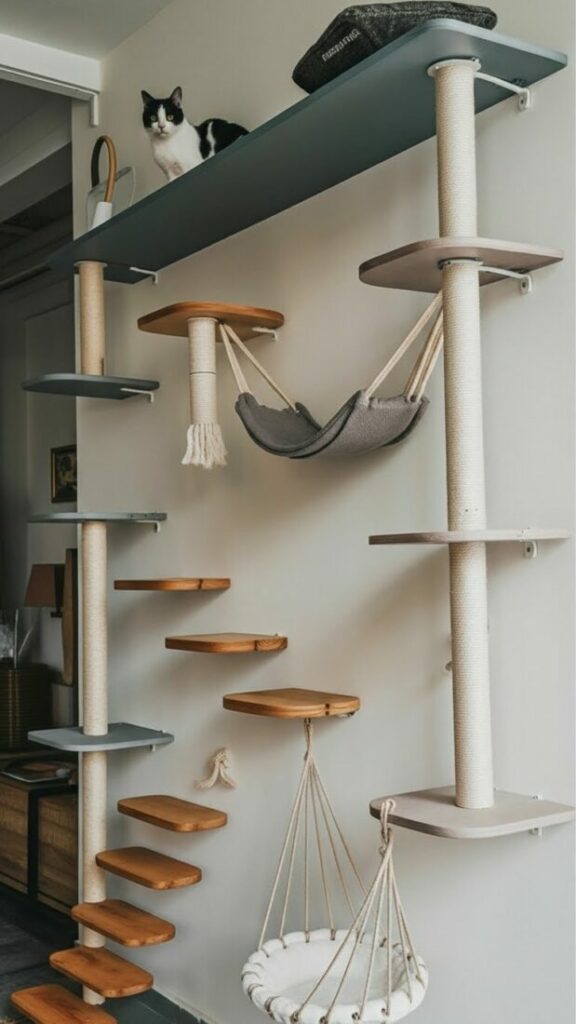
The floating staircase is a classic staple of wall cat tree ideas. It consists of individual small shelves placed in an ascending pattern. This creates a simple, effective path upward.
Space the steps appropriately for your cat’s agility. Older cats may need steps placed closer together. Younger, athletic cats can handle larger gaps.
Use consistent materials, like natural wood, for a clean look. Ensure each step has a non-slip surface. This prevents slips and falls during zoomies.
2. The Suspension Bridge Crossing
Add a sense of adventure with a cat bridge. This feature connects two distant shelves or perches. It adds a dynamic, moving element to the wall.
Cats love the slight sway of a bridge. It mimics the feeling of walking on tree branches. Use sturdy rope and wooden slats for construction.
Ensure the bridge is securely anchored on both ends. It acts as a focal point in your room. It is functional and visually interesting.
3. Cozy Wall-Mounted Hammocks
Every cat needs a dedicated lounging spot. A wall-mounted hammock is the perfect solution. It contours to their body for ultimate comfort.
Place the hammock near a window if possible. This gives them a warm sunbeam to sleep in. It also provides entertainment via “cat TV” outside.
Choose heavy-duty fabric like canvas. Ensure the mounting brackets are strong. This creates a safe, cozy nest high above the ground.
4. The Hexagon Hive Layout
Geometric shapes are very trendy in modern design. Hexagon shelves create a “beehive” effect on your wall. This serves as both cat furniture and wall art.
Arrange the hexagons in a cluster. Cut holes in the sides so cats can pass through them. This creates an enclosed tunnel system.
Cats love enclosed spaces for hiding. This design offers security and playfulness. It looks sophisticated in a living room setting.
5. Sisal Scratching Columns
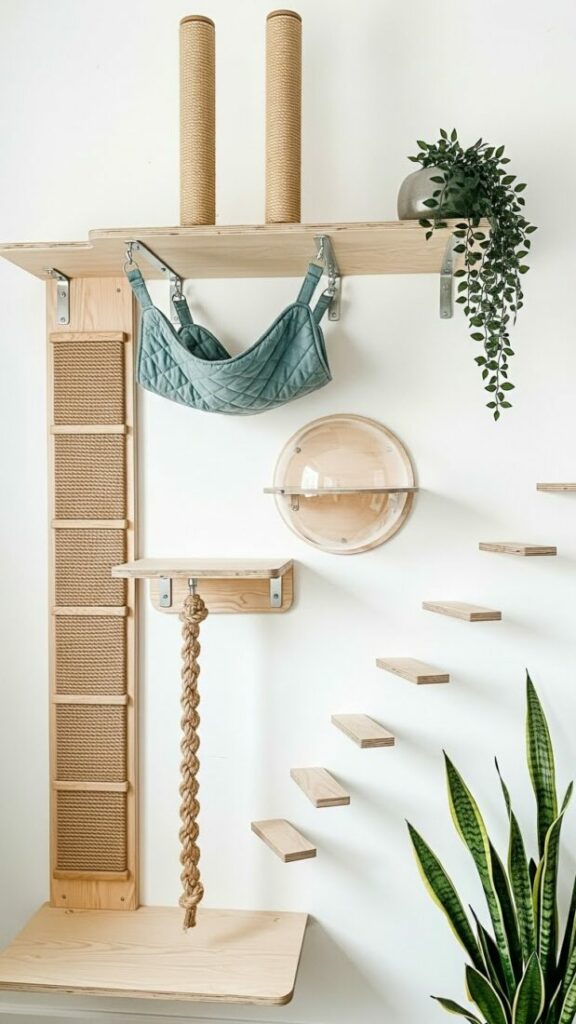
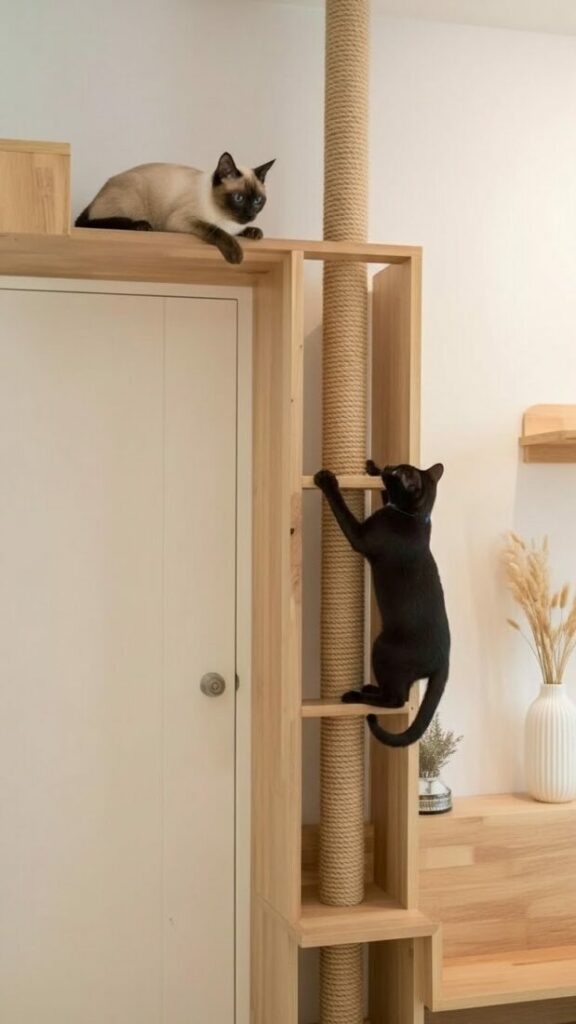
Scratching is a vital natural behavior. Incorporate a vertical scratching post into your wall system. You can mount a tall pole wrapped in sisal rope.
This allows cats to stretch their full body length. It also provides a way to climb straight up. This saves your sofa from destruction.
Place shelves at the top of the column. This rewards the climb with a resting spot. It is a functional element of catification.
6. Corner Climbers for Space Saving
Corners are often dead space in a room. Use them for a space-saving cat tree solution. Install wedge-shaped shelves going up the corner.
This layout is very stable. It utilizes the structural strength of two walls. It is perfect for small apartments or tight rooms.
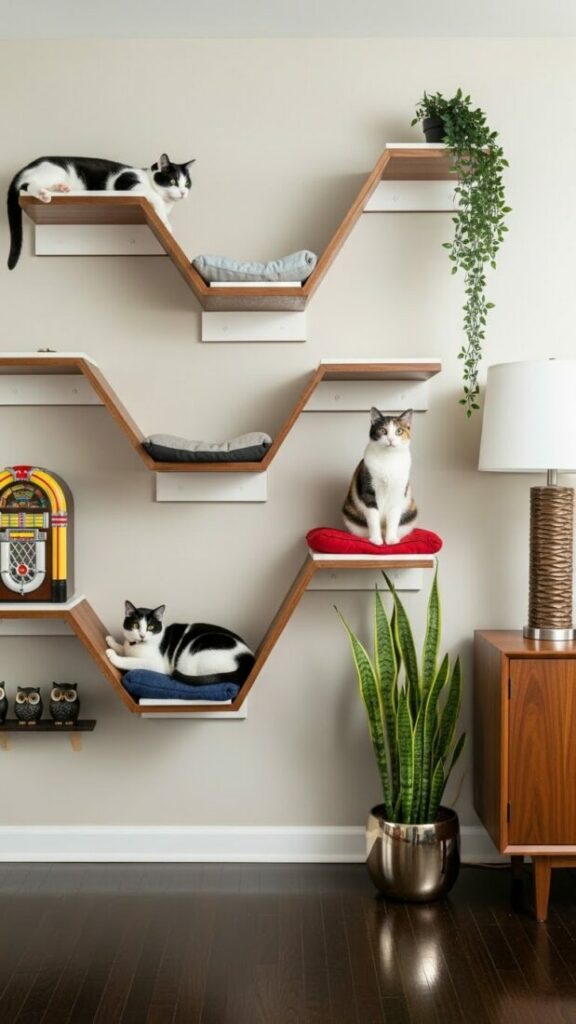
You can alternate the shelves on each wall. This creates a zigzag pattern. It maximizes height without encroaching on the room.
7. The Continuous Runway Walkway
Create a superhighway for your cats. Install long cat walkways around the perimeter of the room. Place them high up near the ceiling.
This allows cats to circle the room without touching the floor. It is excellent for high-energy cats. It gives them a vast amount of territory.
Ensure the shelf surface is non-slip. You can use carpet or cork. This prevents slipping during high-speed chases.
8. The Box Hideaway Concept
Cats love boxes more than anything. Incorporate a permanent wooden box into your wall design. This acts as a secure hiding spot.
Cut entry holes on the sides or front. Place a soft cushion inside. This becomes a private bedroom for your pet.
You can paint the box to match your walls. Or, leave it natural wood for warmth. It provides a safe retreat from household noise.
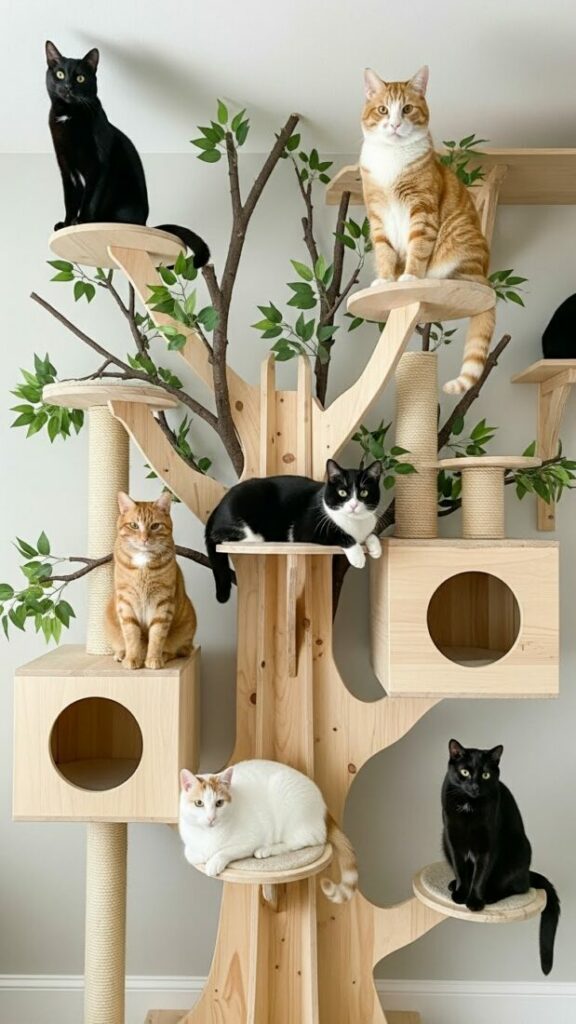
9. Tree Branch Aesthetics
Bring nature indoors with a tree-inspired design. Use shelves that look like branches. Or, paint a tree mural behind standard shelves.
This creates a whimsical and natural look. It taps into the cat’s instinct to climb trees. It works beautifully in a boho or rustic room.
You can use real, treated branches for supports. Ensure they are thick and strong. This adds incredible texture to your wall cat tree ideas.
10. Industrial Pipe Shelving
For an urban loft vibe, use industrial pipes. Black metal piping makes for sturdy shelf brackets. Combine this with dark stained wood.
This style is incredibly durable and strong. It can support heavy cats easily. The aesthetic is modern and edgy.
You can create complex climbing structures with pipes. Use the pipes themselves as climbing bars. Wrap parts of the pipe in rope for grip.
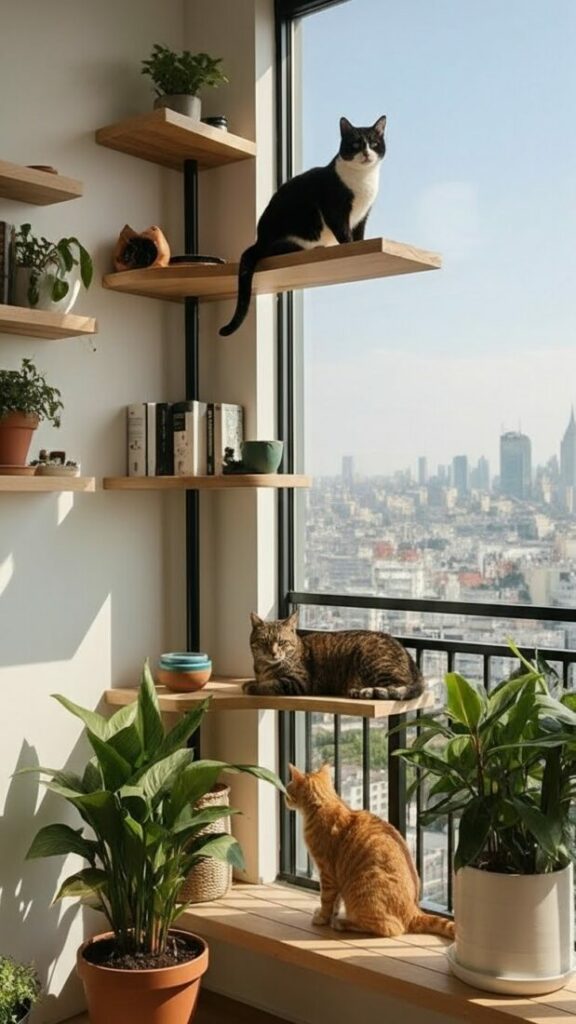
11. The Window Perch Integration
The window is the television for cats. Integrate your wall system with a cat perch under a window. This is prime real estate for any feline.
Ensure the perch is wide enough for lying down. Add a soft mat for comfort. This will become the most used spot in the house.
Connect this perch to other wall shelves. This allows them to access the window from above. It creates a seamless flow of traffic.
12. Minimalist Floating Shelves
If you prefer a clean look, go minimalist. Use sleek, floating cat shelves with hidden brackets. Paint them the same color as your wall.
This makes the shelves appear to disappear. The focus remains on the cat, not the furniture. It is perfect for modern, uncluttered homes.
Choose thin but strong materials. Metal or high-density wood works well. This keeps the visual weight of the room light.
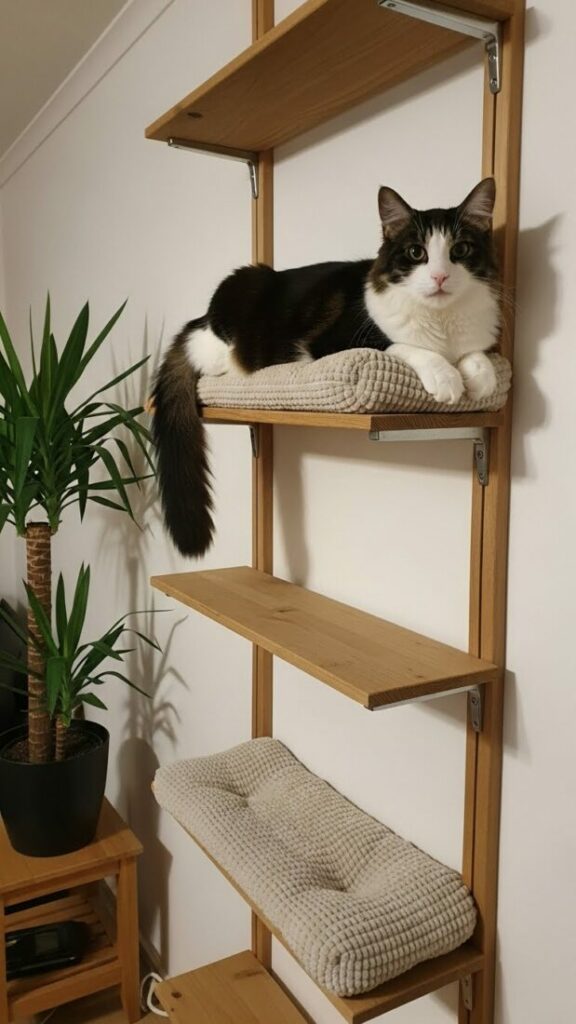
13. Carpeted Comfort Steps
Wood can be slippery for some cats. Carpeted shelves provide excellent traction. This is safer for clumsy or older cats.
Cover your shelves in a durable carpet remnant. You can use velcro to make it removable. This allows for easy cleaning or replacement.
Carpet also adds a warm texture. It is comfortable for scratching and sleeping. Choose a neutral color to blend with decor.
14. The Vertical Feeding Station
Do you have dogs who steal cat food? Create a high-up feeding station. Place a wide shelf high on the wall.
Secure food bowls into the shelf surface. This keeps the dog out of the cat’s dinner. It also gives the cat peace during meals.
Ensure there is an easy route up and down. You do not want a full stomach jump to be dangerous. This solves a common multi-pet problem.
15. Floor-to-Ceiling Tension Posts
If you cannot drill holes, use tension posts. These poles wedge between the floor and ceiling. They often have shelves attached to them.
This is a great rental-friendly option. It provides vertical height without wall damage. It is also easy to move if you relocate.
These posts are very stable if tightened correctly. They often come with sisal wrapping. This adds a scratching element to the structure.
16. The “Invisible” Acrylic Shelf
Acrylic shelves are modern and chic. They are completely transparent. This creates a true “floating” effect for your cat.
You can see your cat’s paws from underneath. This is adorable and fun for photos. It is a unique twist on standard wood shelves.
Ensure the acrylic is thick and durable. It must be rated for your cat’s weight. Use non-slip pads so they don’t slide.
17. Boho Macrame Elements
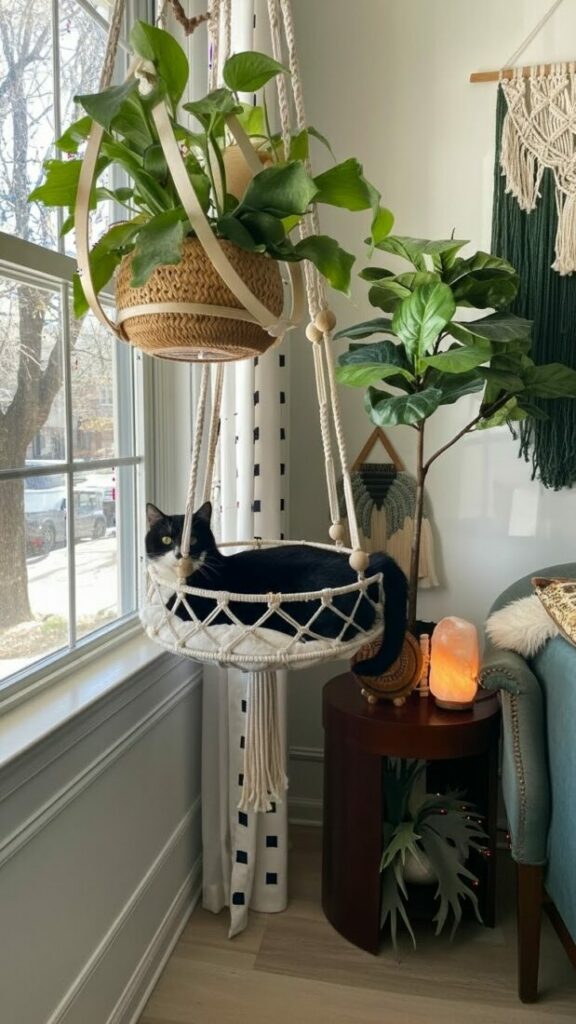
Add a soft, artistic touch with macrame. Hang a macrame cat bed from a sturdy wall bracket. This adds texture and a boho vibe.
The swinging motion is relaxing for some cats. It looks more like decor than pet furniture. Pair it with plants for a jungle feel.
Ensure the cord used is strong. Cotton rope is durable and safe. It creates a cozy, swaying nest for naps.
18. Cloud-Shaped Shelves for Whimsy
Add a playful touch with shaped shelves. Cloud shapes are very popular and cute. Paint the wall blue for a sky theme.
This works well in a bright, cheerful room. The curves are gentle and safe. It makes the cat look like they are walking on air.
You can cut these shapes from plywood yourself. Or, buy pre-made decorative shelves. It adds personality to your wall cat tree ideas.
19. Activity Wall with Hanging Toys
Turn the wall into a gym. Attach dangling toys to the bottom of shelves. Feathers, balls, or ropes work well.
This encourages active play while climbing. It turns a passive shelf into an interactive game. It is great for bored indoor cats.
Ensure toys are safe and secure. Do not use strings that could be a choking hazard. Rotate the toys to keep interest high.
20. The Cat Condo Complex
For the ultimate luxury, build a complex. Connect multiple boxes, bridges, and ramps. Cover a whole wall in cat furniture.
This creates a massive cat condo effect. It offers endless routes for exploration. It is perfect for multi-cat households.
Vary the types of modules used. Mix open shelves with enclosed boxes. This provides variety and endless entertainment.
21. The Spiral Staircase Post
This design creates a spiral around a central post. It mimics a spiral staircase. It is compact and very efficient vertically.
The central post can be a scratcher. The steps fan out from it. It allows for rapid climbing in a small footprint.
Mount the central post securely to the wall. This structure is very stable. It looks architectural and interesting.
22. Theme-Based Adventure Walls
Get creative with a specific theme. A Super Mario theme with green pipes is popular. Or, try a jungle theme with fake vines.
Paint the shelves to match the theme. Use decals on the wall behind them. This turns the cat wall into a conversation piece.
Your cat becomes part of the decor. It is fun for you and them. It shows off your personality and love for your pet.
Installation and Safety Tips
Proper installation is the difference between fun and disaster. Always prioritize safety and durability. A falling shelf can injure your cat.
Use wall anchors rated for heavy loads if studs aren’t available. However, mounting into studs is always superior. Test the shelf with your own weight before letting the cat on.
Place non-slip pads on smooth surfaces. Wood can be slippery for paw pads. Felt or cork pads provide necessary grip.
Conclusion
Creating a vertical playground is a gift to your cat. These wall cat tree ideas open up a new world for them. They provide exercise, comfort, and security.
Start small with a few shelves. Observe what your cat likes. You can always expand the system over time.
With the right planning, you can create a stunning feature. Your walls will become a source of joy. Happy climbing to your feline friend!
Frequently Asked Questions (FAQ)
How much weight can cat wall shelves hold?
This depends entirely on the installation. Into drywall with standard anchors, they might hold 20 lbs. Into wood studs, they can hold 50+ lbs.
Always check the manufacturer’s rating. Remember to account for the force of a jumping cat. Over-engineering is better than under-engineering.
How far apart should I space the shelves?
A good rule of thumb is 12 to 18 inches vertically. Horizontally, they can be 12 to 16 inches apart. Observe your cat’s jumping ability.
Older or heavier cats need smaller gaps. Kittens and athletic cats can handle larger jumps. Adjust the spacing to fit your specific pet.
Can I install a cat wall in a rental apartment?
Yes, but you must be careful. You will likely need to patch holes when you leave. Floor-to-ceiling posts are a great drill-free alternative.
If you drill, use minimal holes. Ask your landlord for permission first. Sometimes, they are okay with it if you repair the walls later.
Will my cat actually use the wall shelves?
Most cats love height naturally. However, some need encouragement. Use treats or catnip to lure them up the first time.
Ensure the path is easy to navigate. If a jump is too hard, they will avoid it. Once they realize it’s safe, they usually love it.