
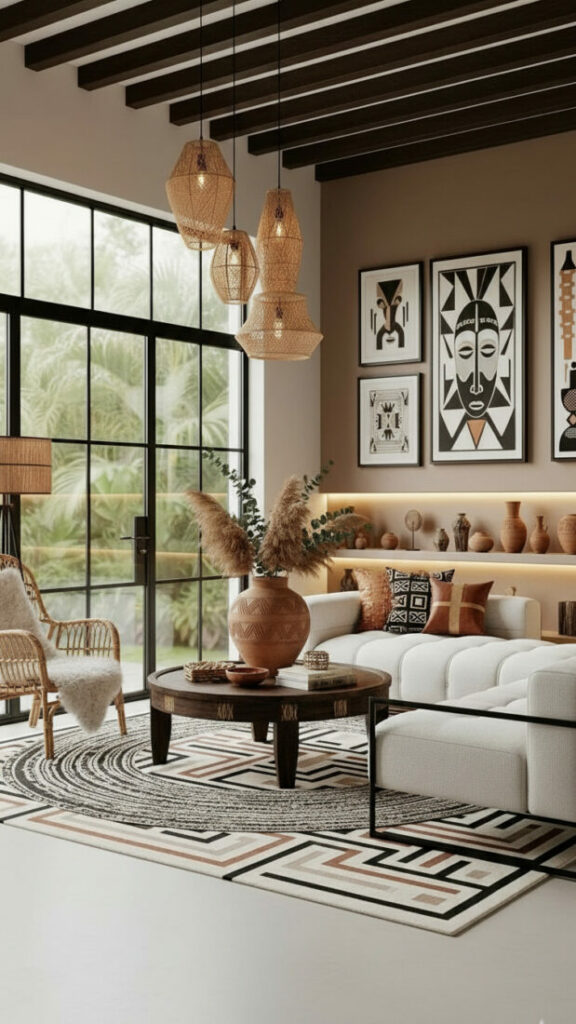
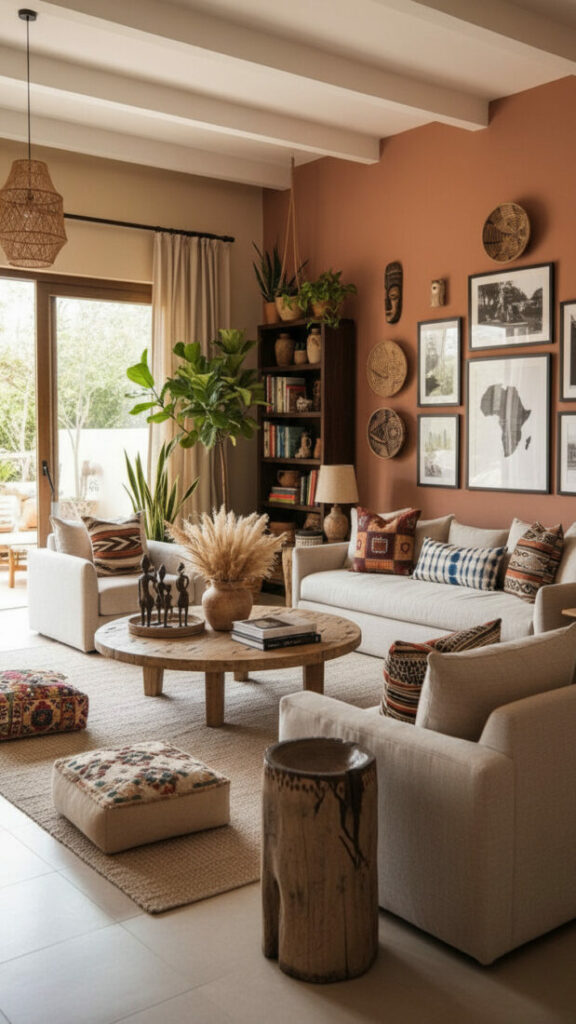
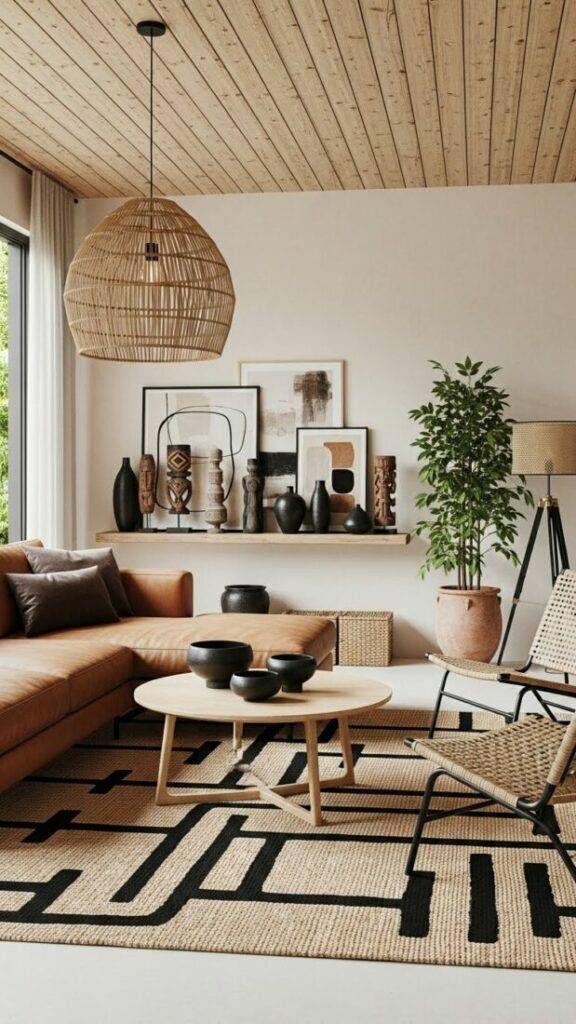
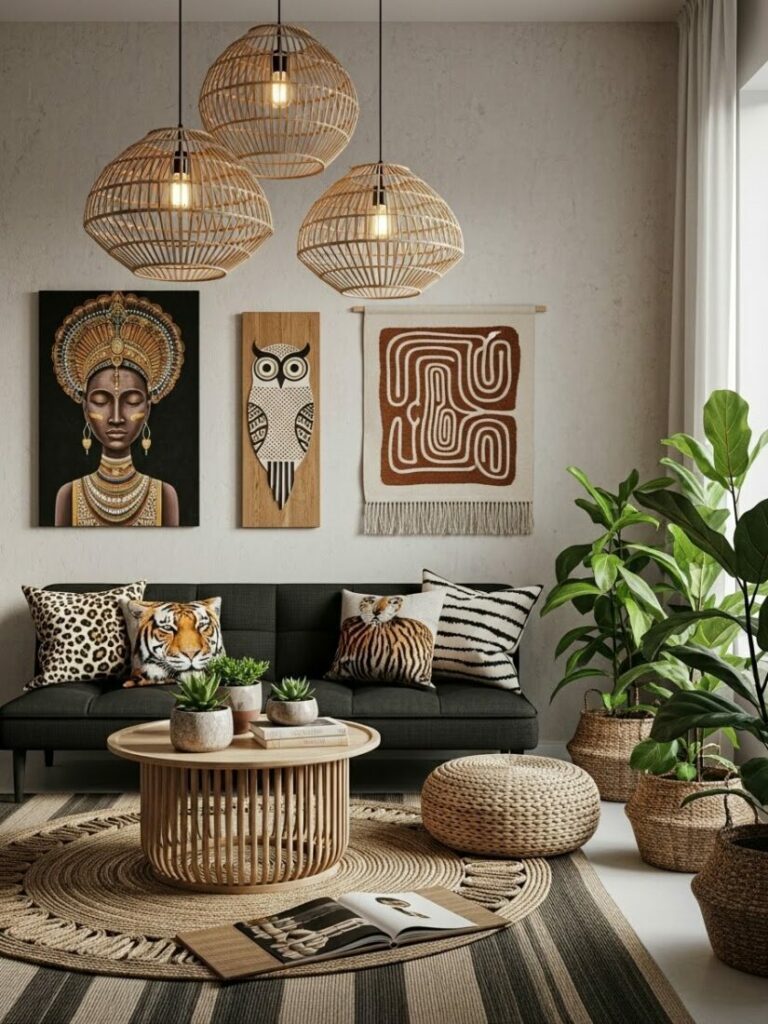
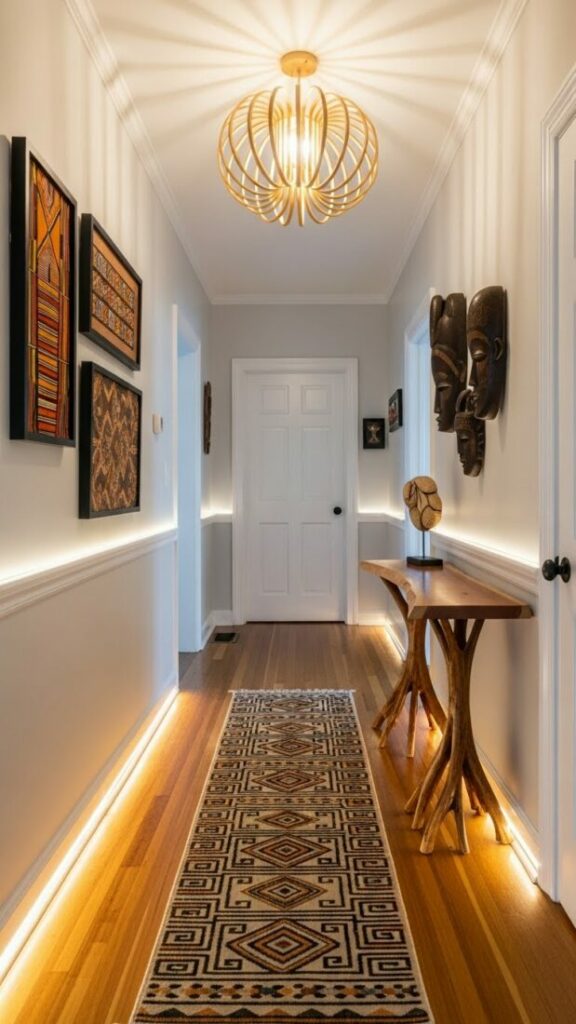
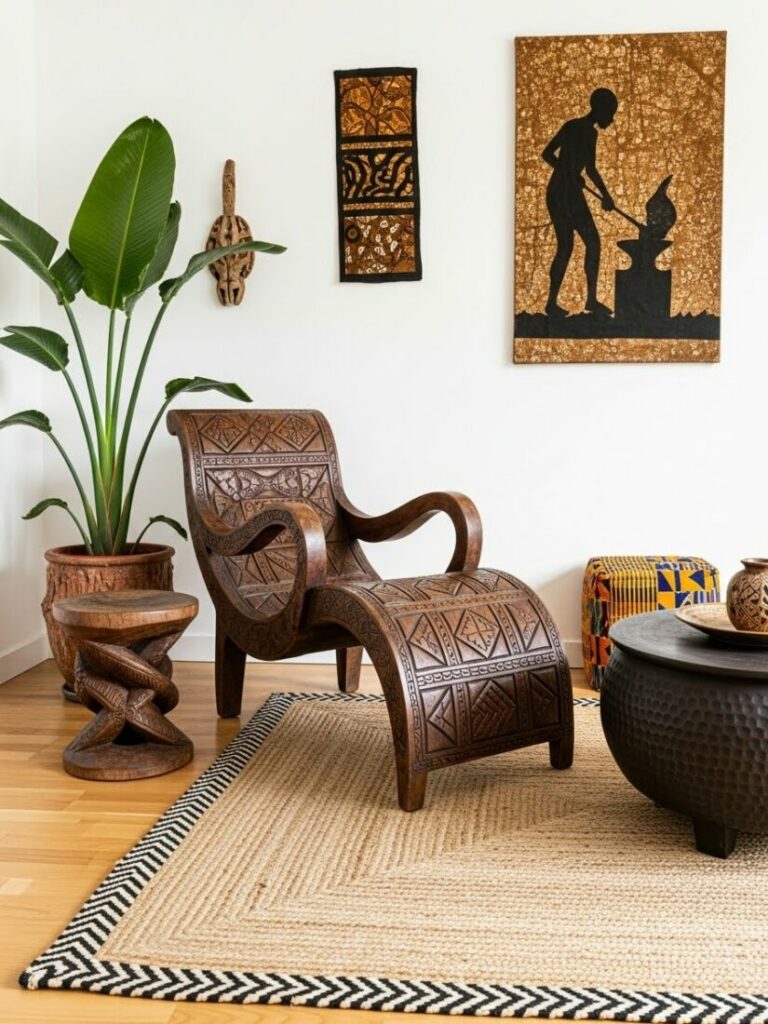
In the evolving landscape of interior design, few styles resonate as deeply or feel as visually rich as Afrobohemian home decor. Often shortened to “Afroboho,” this aesthetic is far more than a passing trend; it is a celebration of heritage, a curated collection of stories, and a masterclass in the art of layering texture, history, and warmth. By blending the free-spirited, eclectic nature of Bohemianism with the bold patterns, organic materials, and ancestral craftsmanship of the African continent, Afrobohemian design creates spaces that feel both grounded and ethereal.
The search intent behind Afrobohemian decor is rooted in a desire for authenticity. In an era of mass-produced, flat-pack furniture, homeowners are seeking interiors that reflect a global perspective. This guide serves as a definitive roadmap for those looking to transform their home into a soulful sanctuary that honors African history while embracing the relaxed, modern comfort of the bohemian lifestyle.
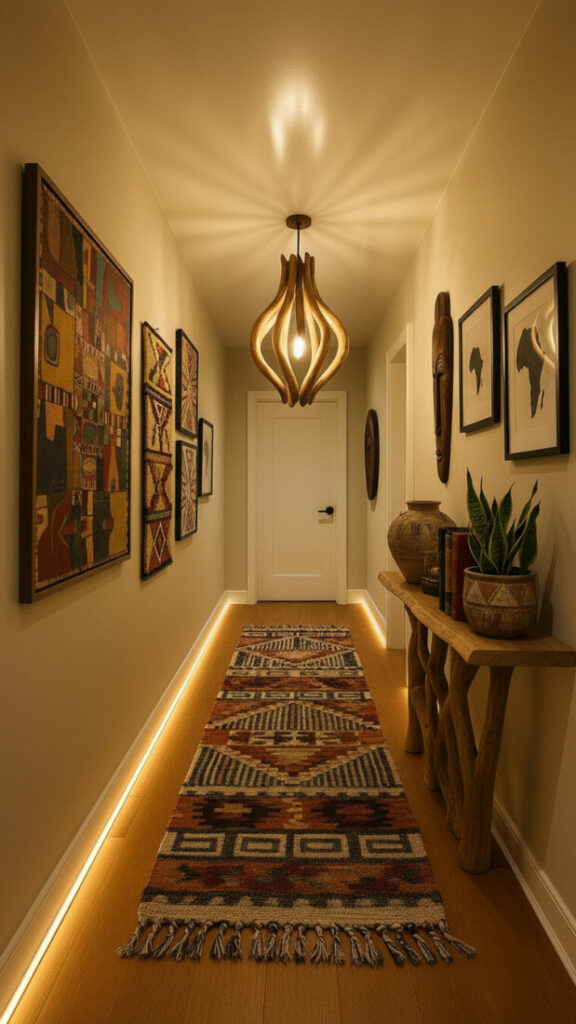
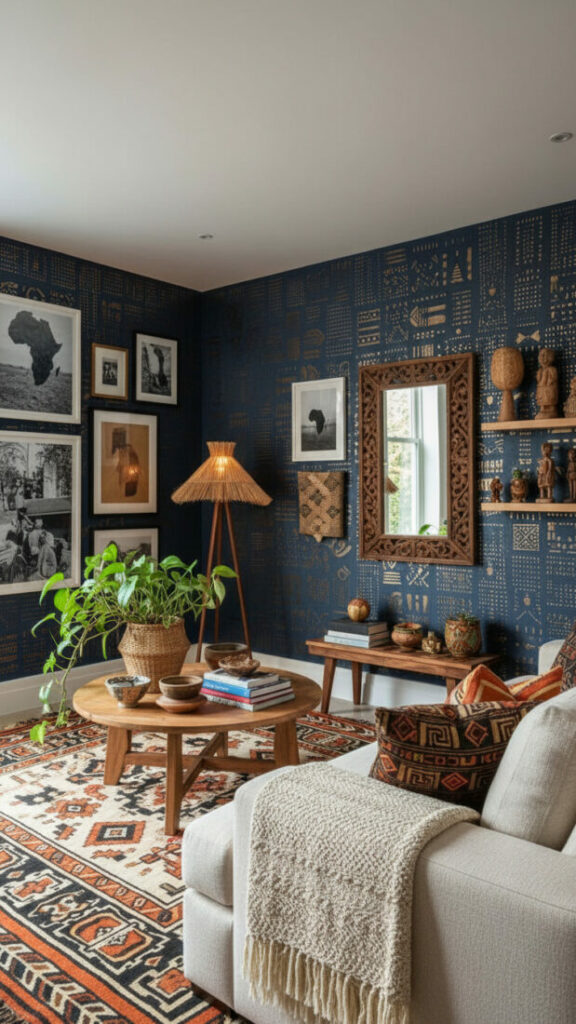
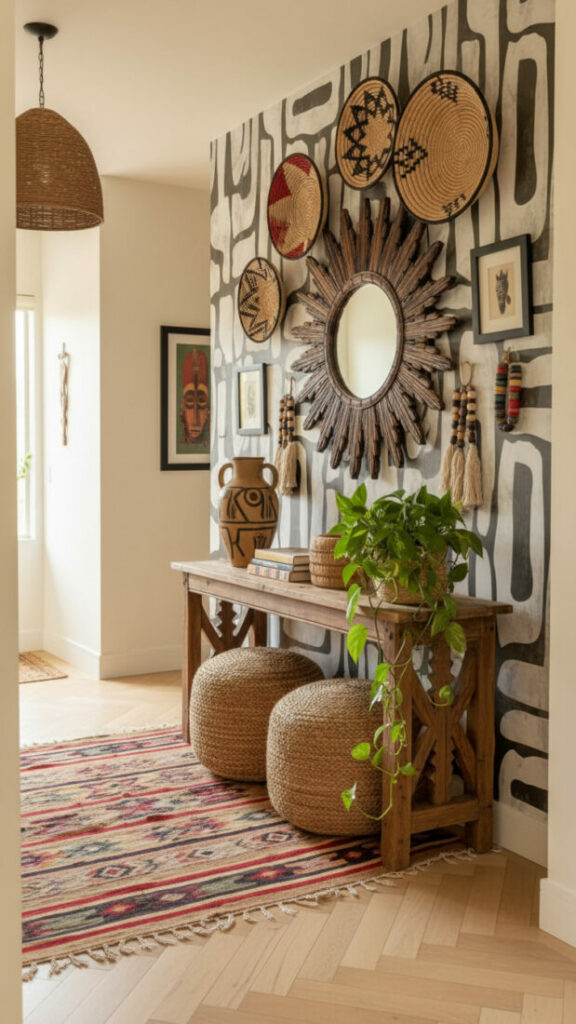
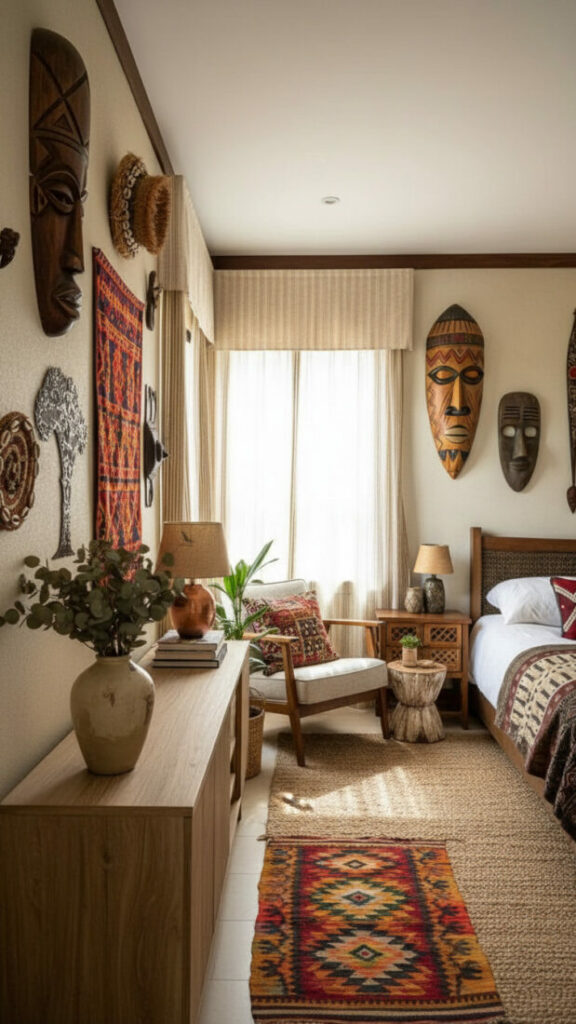
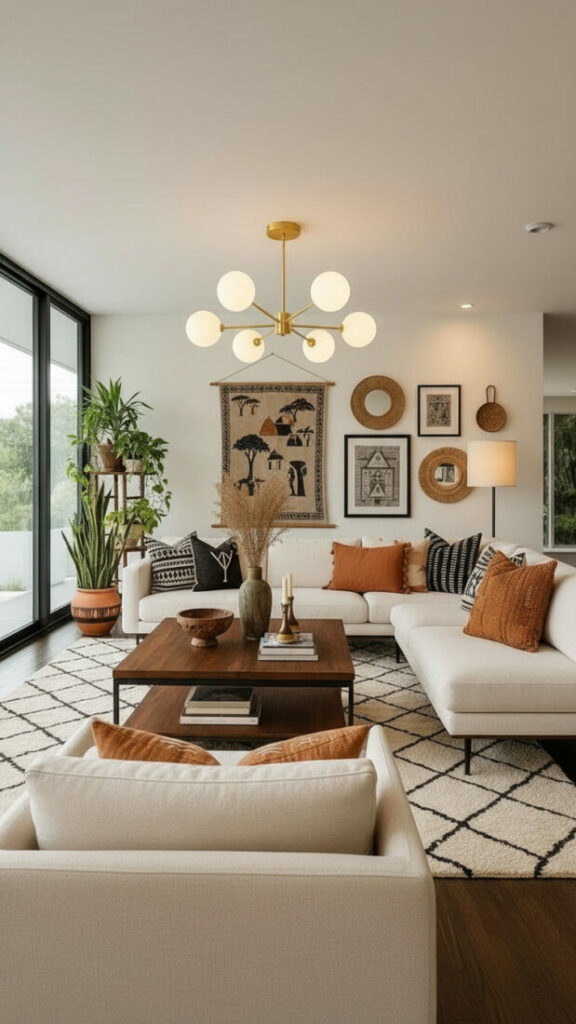
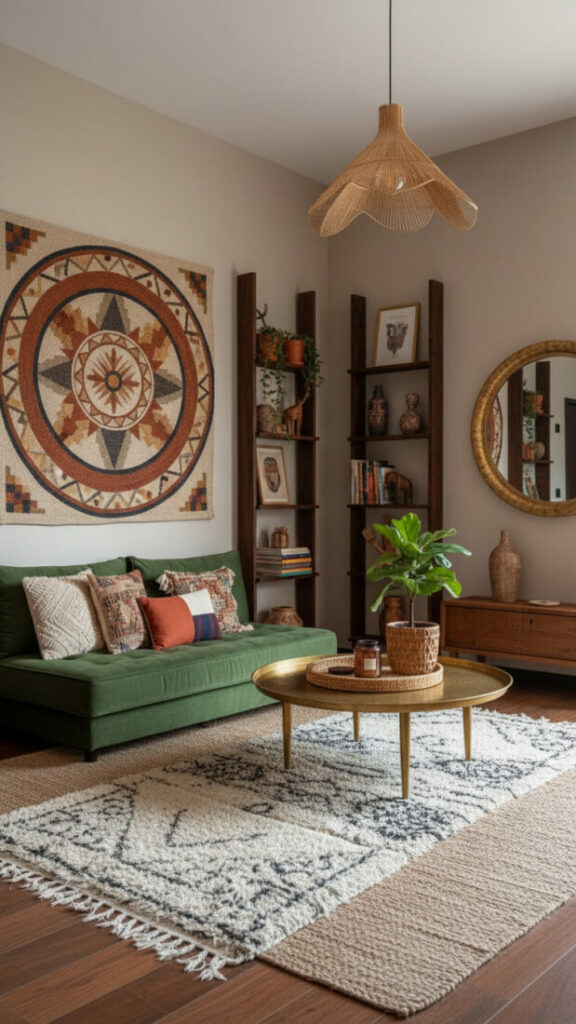
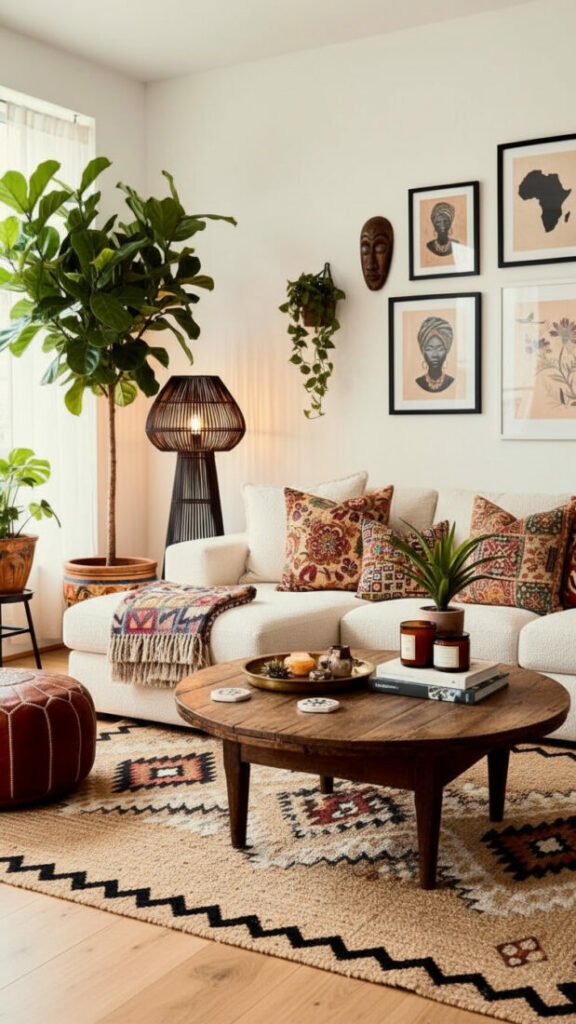
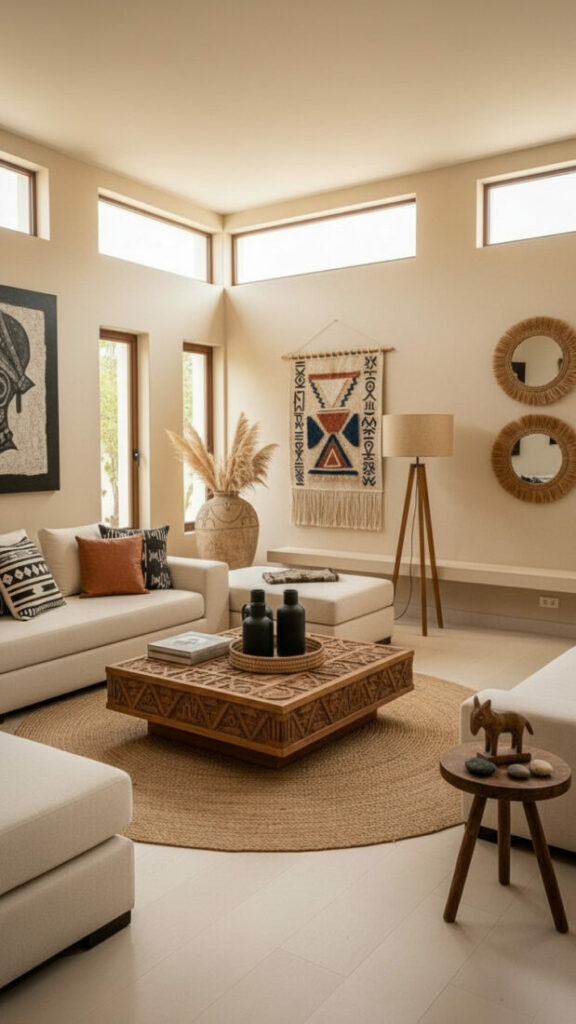
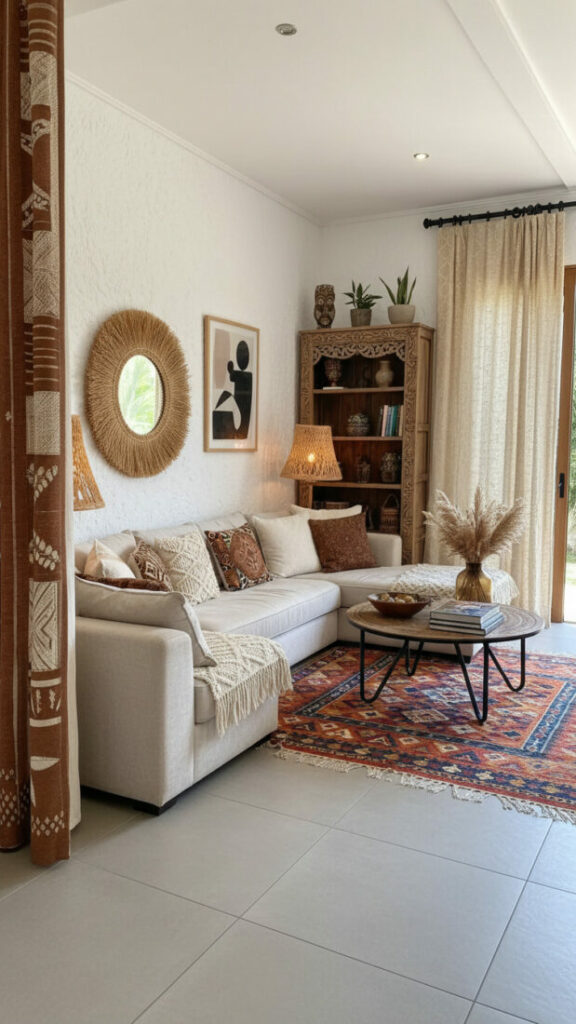
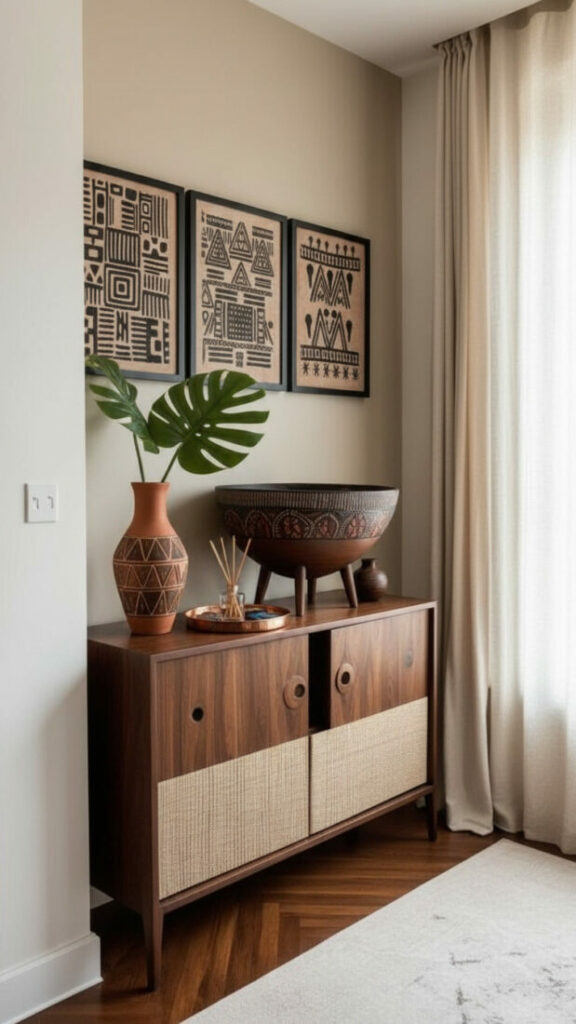
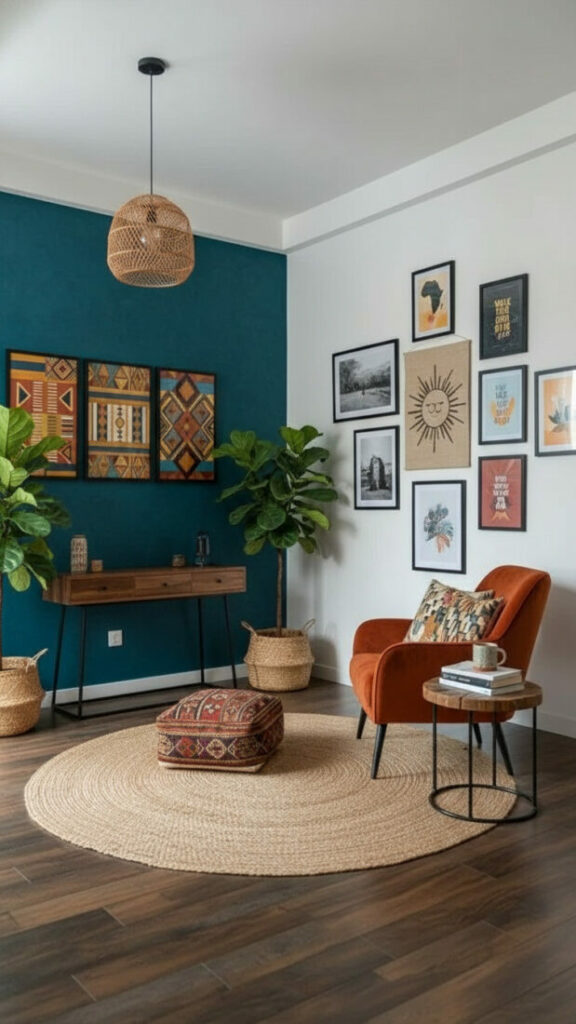
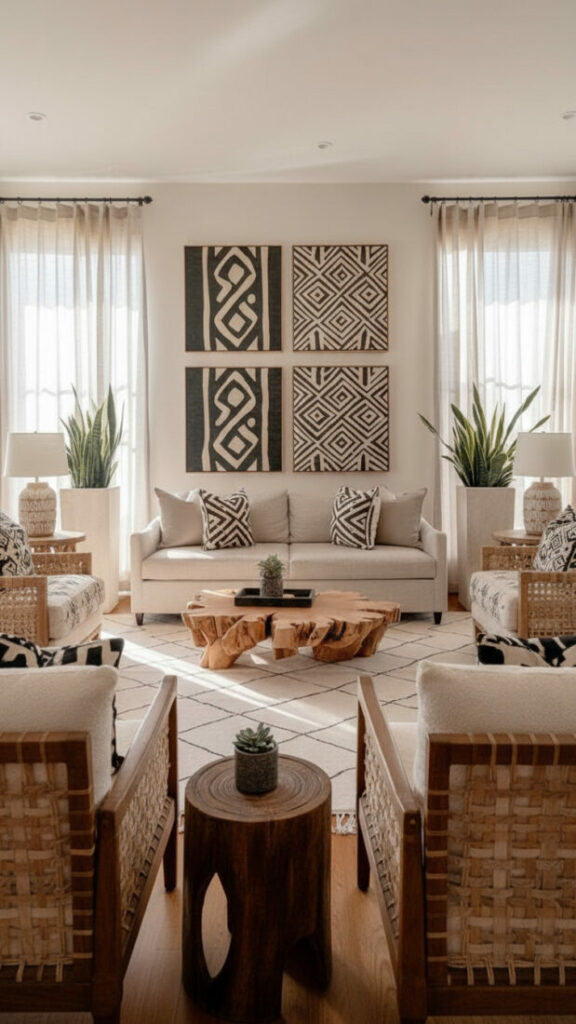






Foundation of Authentic Malian Mudcloth
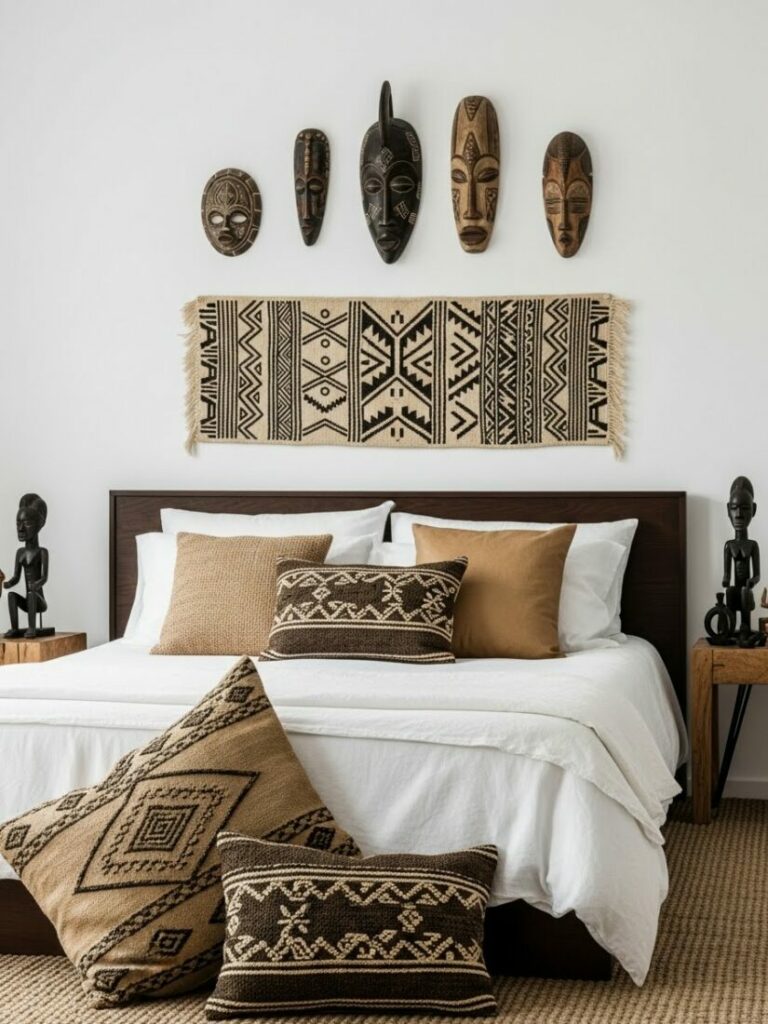
Malian Mudcloth, or Bògòlanfini, is the cornerstone of Afrobohemian home decor. Traditionally, these textiles are made by men who weave the cloth and women who dye it using fermented mud and local plant extracts. Each geometric pattern—whether a series of dots, zig-zags, or crosses—carries a specific cultural meaning, often representing proverbs or local history.
In a modern living room, mudcloth offers a tactile, high-contrast element that balances the softness of a contemporary sofa. Don’t limit yourself to large throws; incorporating Boho Mudcloth Pillow Covers (Set of 2) is an accessible way to introduce this aesthetic. Its matte, earthy texture is essentially the “denim” of Afroboho—it goes with everything and only gets better with age. When sourcing, look for pieces that replicate that authentic hand-painted feel to ensure the “soul” of the fabric is present in your space.
Majesty of the Bamileke Juju Hat
The Juju hat, a feathered headdress from the Bamileke people of Cameroon, is a symbol of prosperity and divinity. Traditionally used by royal dancers, these hats represent the beauty and fragility of life. In interior design, they serve as a unique wall sculpture that provides a soft, circular counterpoint to the sharp angles of windows and shelves.
Styling a Juju hat requires space to breathe. Placing one above a headboard or centered over a fireplace creates an immediate sense of “soft luxury.” They are available in a range of colors, from natural white and cream to vibrant ochres. The feathers catch the light beautifully, adding a dynamic, moving texture that traditional canvas art cannot replicate. It is a piece of art that invites a sense of wonder and grace into the room.
Layered Vintage Moroccan and Berber Rugs
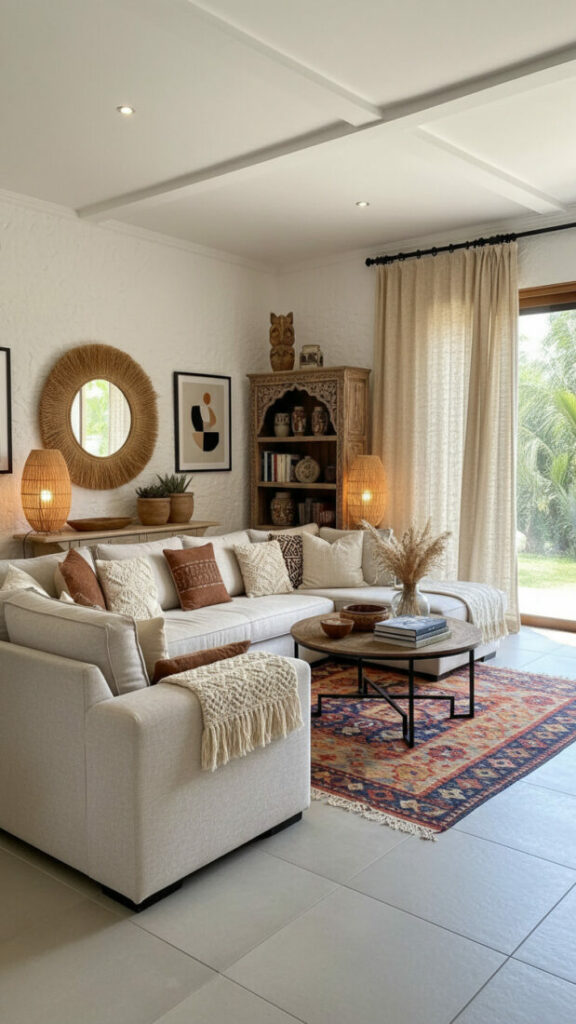
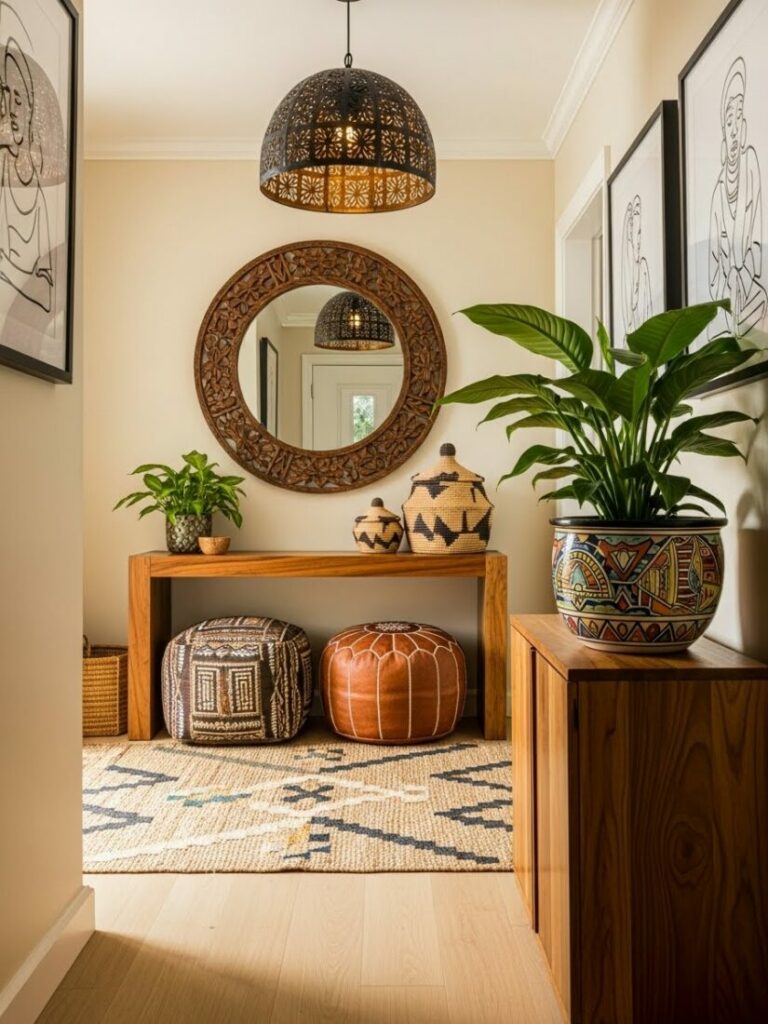
Rugs are the “soul” of the floor in Afrobohemian design. The aesthetic favors a layered approach: start with a large, neutral base like a Round Jute Area Rug (3ft), then place a smaller, more intricate Beni Ourain or Boucherouite rug on top. This creates physical warmth and visual depth.
Berber rugs are known for their thick, wool piles and asymmetric, hand-knotted patterns. They were originally made by nomadic tribes for warmth, and that sense of nomadic utility translates perfectly into the “collected” look of a bohemian home. The contrast between the rough, grassy texture of the jute and the soft, plush wool of the Berber rug provides a sensory experience underfoot that makes a room feel instantly cozy and lived-in.
Hand-Carved Sénoufo Stools as Functional Art
Originating from the Sénoufo people of the Ivory Coast, these stools are carved from a single piece of hardwood. With their four stout legs and slightly concave tops, they are masterpieces of minimalist sculpture. They serve as the perfect side table for a low-profile sofa or as a standalone accent in a hallway.
The beauty of the Sénoufo stool lies in its imperfection. The chisel marks left by the artisan tell a story of manual labor and time. In an Afrobohemian space, these stools ground the room. Their dark, rich wood tones contrast beautifully with lighter elements like cream linens. They represent the “Afro” side of the aesthetic—solid, ancestral, and timeless.
Terracotta and Clay Vessel Groupings
Earthy materials are vital for creating a grounded atmosphere. Terracotta, or “baked earth,” brings the warmth of the savanna sun indoors. A curated Set of 3 Matte Ceramic Vases arranged in odd numbers on your mantle or shelving units can instantly warm up a corner.
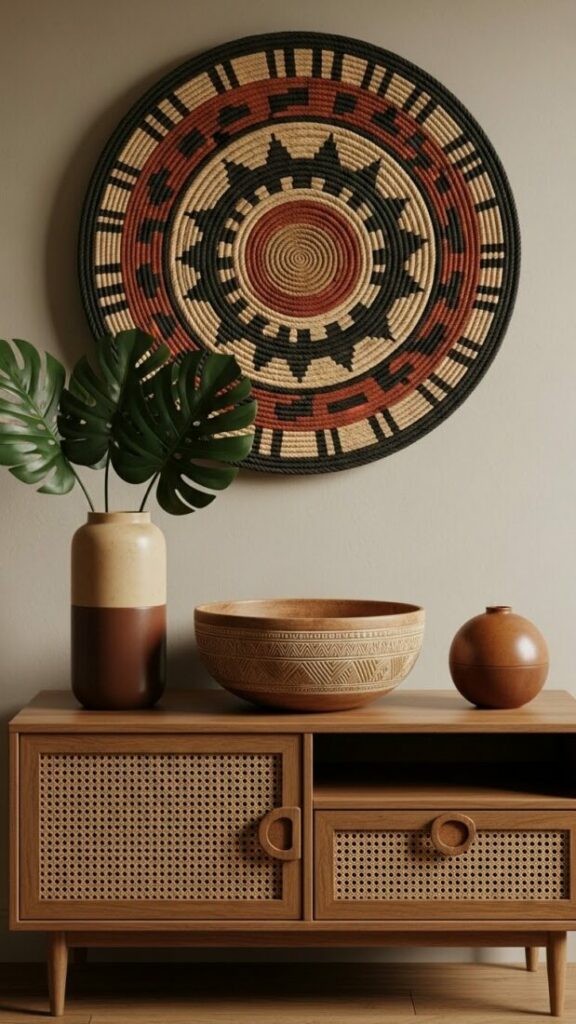
To keep the look modern, choose vessels with matte, unglazed finishes. This emphasizes the raw beauty of the clay. You can fill them with Artificial Dried Pampas Grass for texture, but they often look best as empty, sculptural objects. The varying shades of orange, brown, and sienna in the clay create a natural gradient that ties together the other wood and textile elements in the room.
Woven Tonga Baskets as Dimensional Wall Decor
Tonga or Binga baskets from Zimbabwe are hand-woven from palm leaves. They feature radial, geometric patterns that are as much about storytelling as they are about utility. While they were originally used for winnowing grain, they have become a staple of global wall decor.
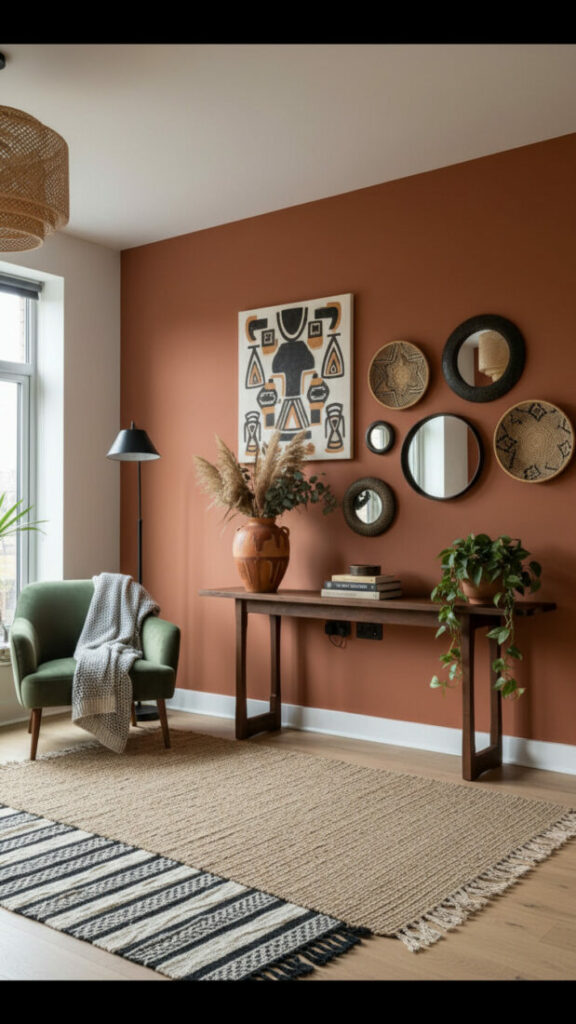
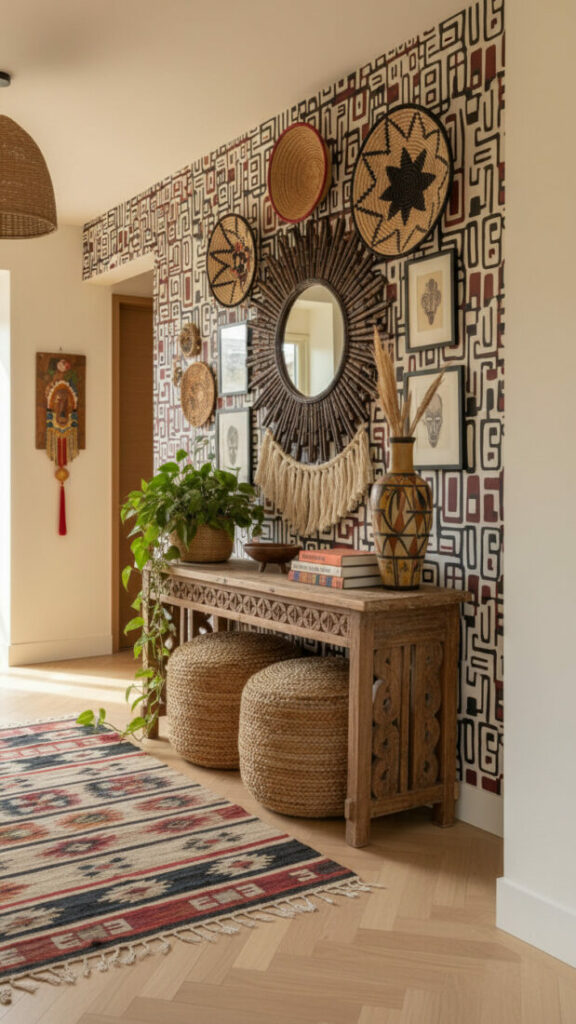
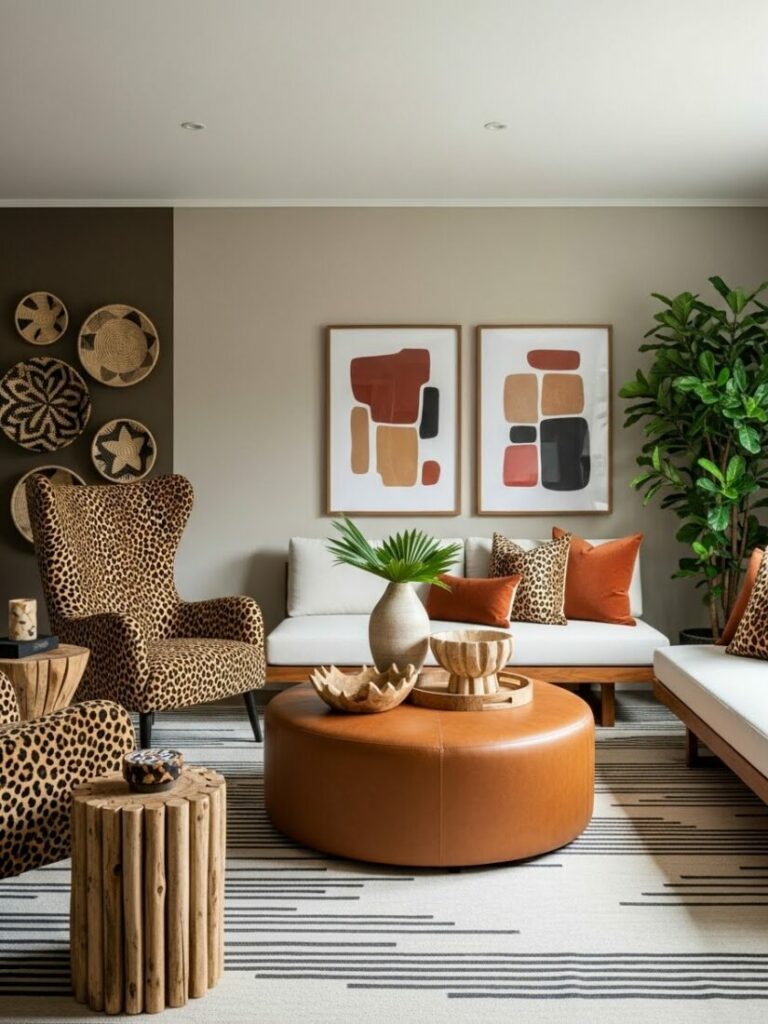
Instead of one large piece, create a “basket wall” by clustering 5 to 7 baskets of varying sizes. This adds a three-dimensional quality to your walls that flat art lacks. The intricate weaving patterns draw the eye in, while the natural palm fibers keep the space feeling light and airy. It is a fantastic way to honor African weaving traditions while adding a bohemian, eclectic vibe to a dining or living area.
Structural Rattan and Wicker Accents
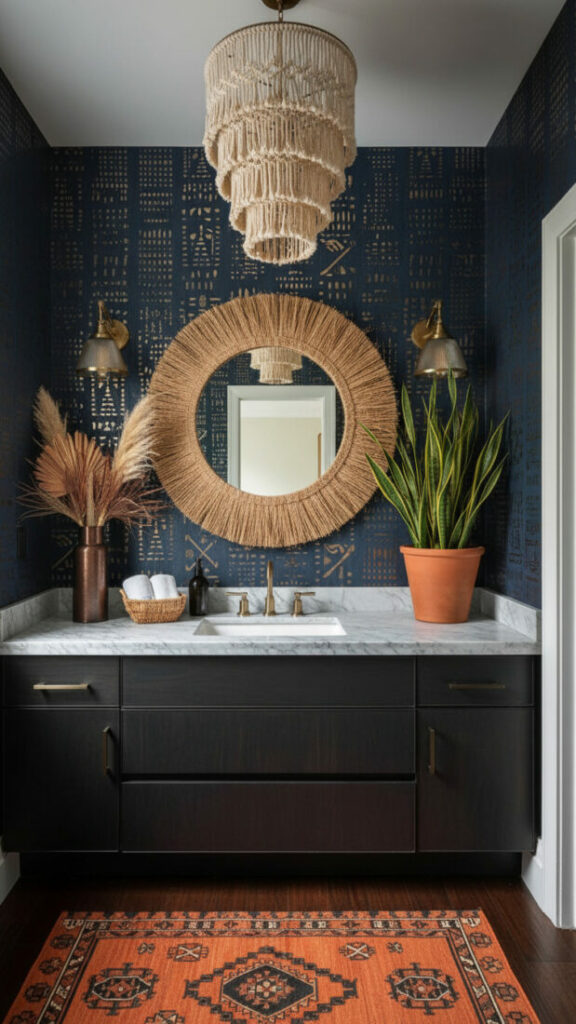
Rattan is a staple of bohemian design, but in the Afroboho niche, we look for more structural, bold shapes. Think of the Malawi chair—a wide, intricately woven throne that feels both regal and relaxed. Accents like a Rattan Sunburst Wall Mirror utilize the open weave of the material to allow light to pass through, which is essential for keeping a maximalist room from feeling “heavy.”
Pairing rattan furniture with soft textiles, like a mudcloth throw or a velvet pillow, creates a sophisticated balance of materials. Rattan is a sustainable vine that grows quickly, making it an eco-friendly choice for the conscious decorator. Its golden-brown hue provides a perfect middle-ground color that bridges the gap between dark wood furniture and light walls.
Power of Large-Scale Tropical Greenery
No bohemian space is complete without life. For an Afrobohemian home, look for plants that thrive in high-contrast environments. To create levels in your greenery display, utilize a Bamboo Tiered Plant Stand to hold various species like the Bird of Paradise or ferns. Greenery acts as a natural “softener” for the hard edges of furniture and artifacts.
Plants also bridge the gap between the indoors and outdoors. Placing a large plant in a Natural Seagrass Belly Basket reinforces the earthy material palette, while using Hanging Macrame Plant Hangers (Set of 3) can draw the eye upward and maximize vertical space. The vibrant green of the leaves provides a much-needed pop of color that makes the ochres and browns of the room feel more alive.
Deep Indigo Adire Textiles
Natural indigo is one of Africa’s most precious dyes. The Yoruba people of Nigeria are famous for Adire, a resist-dyed cloth that features intricate, symbolic patterns in varying shades of deep blue. This “cool” tone is essential in an Afrobohemian space to balance the “warm” tones of wood and clay.
Indigo acts as a sophisticated neutral. Use a Mudcloth Patterned Table Runner for a special dinner setting, or toss a few Indigo Blue Tie-Dye Cushion Covers onto a leather sofa. The deep, soulful blue adds a layer of mystery and depth to the room. It feels ancient and modern at the same time, providing a visual resting point in a room filled with busy patterns.
Monolithic Raw Wood Coffee Tables
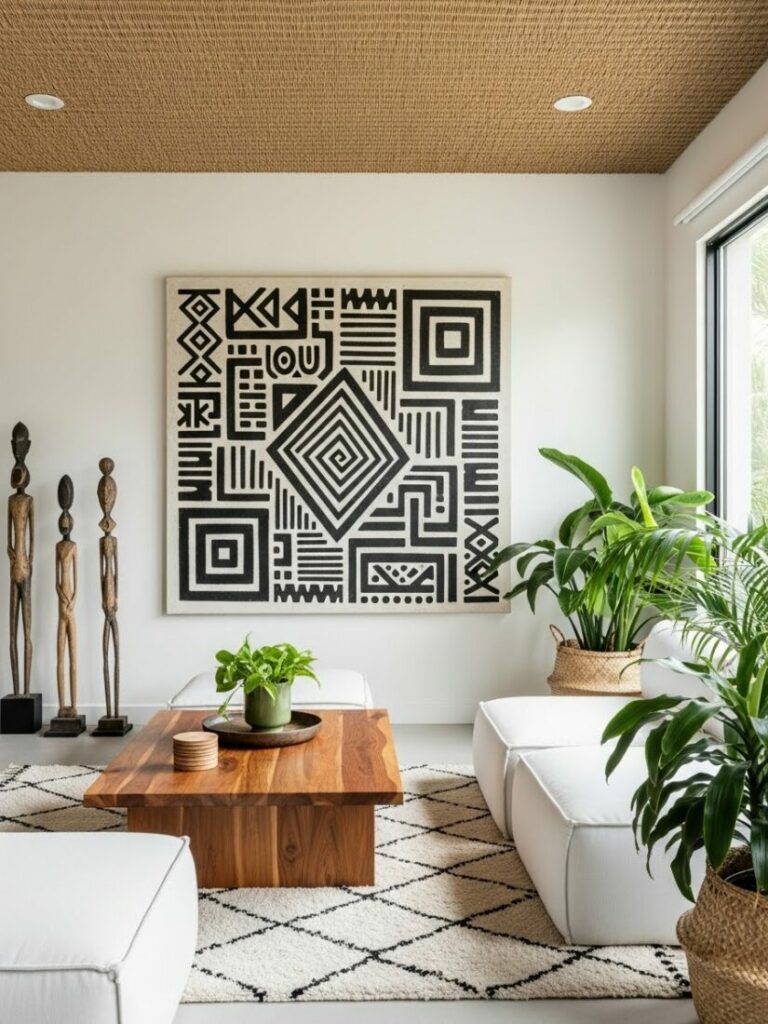
In Afrobohemian decor, we celebrate the tree itself. A raw, live-edge wood coffee table serves as the literal and figurative anchor of the living room. Look for tables that show the grain, the knots, and the natural cracks of the wood. This aligns with the “wabi-sabi” appreciation for imperfection found in many bohemian homes.
A heavy wood table provides a sense of permanence and history. It’s a piece that invites you to touch it, connecting you back to the earth. When styled with a few curated books and a Decorative Wood Bead Garland draped over a tray, it becomes a focal point that screams “global chic.” The raw wood adds a rugged, masculine edge that balances the softer textiles and feathers found elsewhere in the room.
Shaggy Raffia Wall Hangings
Raffia is a fiber made from the palm leaves of the raffia palm. It has a shaggy, unrefined texture that brings a “safari” element to Afrobohemian decor. Raffia wall hangings, or a complementary Small Macrame Wall Hanging, add a dynamic, moving element to your walls.
Because it is a natural, un-dyed material, raffia provides a beautiful neutral texture. It’s perfect for layering over a gallery wall or hanging in a hallway. The “shagginess” of the material breaks up the flatness of painted walls, creating a more tactile and interesting environment. It is the ultimate expression of the “hand-crafted” luxury that defines the Afroboho aesthetic.
Distressed Leather Moroccan Poufs
Leather adds another layer of natural material to the mix. An Unstuffed Moroccan Leather Pouf is perhaps the most versatile piece of furniture in a bohemian home. They serve as extra seating, a footrest, or even a makeshift side table. In an Afrobohemian context, choose distressed tan or deep chocolate leather to maintain the earthy color story.
Over time, the leather will develop a unique patina, telling the story of your life in the home. Poufs also help to lower the “center of gravity” of a room. By providing seating at a lower level, you encourage a more relaxed, grounded way of living. This is a core part of the bohemian philosophy—creating spaces where people feel comfortable and uninhibited.
Bold Ankara Wax Print Accents
While mudcloth is earthy, Ankara prints are vibrant. These high-contrast wax prints are known for their kaleidoscopic colors and bold, repeating motifs. In an Afrobohemian home, Ankara should be used as a deliberate “pop.” A single chair upholstered in a bright Ankara print or a few vibrant cushions can wake up a neutral room.
Ankara represents the modern, urban side of the African continent. It is vibrant, energetic, and full of life. By mixing these bold prints with more traditional, muted elements like wood and clay, you create a space that feels contemporary and globally aware. It’s a way to inject personality and joy into your interior design.
Ancestral Masks and Tribal Sculptures
Traditional African masks are not just decorative; they are artifacts of cultural storytelling. When incorporating them into your home, do so with respect. Accents like African Tribal Resin Figurines or a single, well-placed mask from the Dogon people can add a sense of intellectual and spiritual depth to a room.
Place a mask on a pedestal or hang it at eye level. The strong, often abstract geometric lines of the carvings provide a sophisticated vertical element. These pieces act as a bridge to the past, reminding us of the human history behind the objects we choose to live with. They add a “curated” feel to the room, moving it away from “trendy” and toward “timeless.”
Hand-Hammered Brass and Copper Hardware
To add a touch of “Global Chic,” incorporate warm metals. A Brass Hammered Decorative Bowl, copper lighting fixtures, or even small bronze animal figurines add a glint of luxury. Unlike polished chrome, hammered metals show the marks of the artisan, aligning with the Afroboho love for the handmade.
Warm metals reflect light in a soft, diffused way, enhancing the cozy atmosphere of an earthy room. They also provide a sense of “preciousness” among the more rustic materials like wood and clay. A brass tray on a raw wood table is a classic styling trick that makes the whole room feel more intentional and upscale.
Breathable Natural Linen Upholstery
Linen is the perfect base fabric for an Afroboho space. Its natural, slightly wrinkled texture feels effortless and unpretentious. Choose sofas and armchairs in oatmeal, sand, or charcoal tones. Linen provides a neutral, high-quality backdrop that allows your more colorful African textiles to take center stage.
Linen is also one of the most sustainable fabrics available, made from the flax plant. It’s breathable, making it perfect for year-round comfort. In a room filled with heavy patterns and textures, a clean linen sofa acts as a “visual resting point,” preventing the space from feeling cluttered or overwhelming.
Intricate Hand-Woven Baule Cloth
Baule cloth from the Ivory Coast is made of narrow strips of hand-loomed fabric sewn together. It often features subtle, intricate embroidery and a soft fringe. It is more delicate than mudcloth and is perfect for adding a layer of cozy luxury to a bedroom or living area.
Use a Baule cloth as a bed runner or drape it over the back of a reading chair. The narrow strips remind the viewer of the traditional loom size, emphasizing the time-consuming process of its creation. Its patterns are often more understated, making it a great choice for those who want to introduce African textiles in a more subtle way.
The Global Gallery Bookshelf Curation
Your bookshelf should be a reflection of your personality and travels. Mix your favorite design books with small African artifacts like soapstone carvings, trade beads, or small hand-carved animals. Avoid symmetry—style your items in clusters of varying heights.
A “Global Gallery” bookshelf acts as a window into a well-traveled life. Use items you’ve collected over the years to tell a story. This is the “Bohemian” side of the aesthetic—maximalist, curated, and deeply personal. It transforms a functional piece of furniture into a revolving exhibit of your favorite cultural finds.
Textured Plaster or Lime-Wash Walls
To truly commit to the Afroboho look, consider the walls themselves. A lime-wash finish or textured plaster evokes the earthen dwellings found in many parts of the African continent. This creates a soft, chalky texture that catches the light in a beautiful, diffused way.
Textured walls provide a sense of age and permanence. They move away from the “flat” look of modern drywall and toward something that feels more ancient and architectural. This is a high-impact design choice that serves as the perfect canvas for your masks, baskets, and wall hangings.
Contemporary African Abstract Art
While traditional artifacts are wonderful, don’t overlook the vibrant contemporary art scene in Africa. Large-scale Abstract Afrocentric Wall Art Prints that utilize the colors of the landscape—deep reds, burnt oranges, and forest greens—can act as a sophisticated “anchor” for your room’s color palette.
Contemporary art keeps your Afrobohemian decor from feeling like a period piece. It shows an engagement with the current creative energy of the continent. By supporting modern African artists, you are participating in a living cultural exchange that adds a layer of modern relevance to your interior design.
Ethically Sourced Cowhide Rugs
Cowhide rugs add an organic shape to a room dominated by squares and rectangles. Their soft, dappled patterns introduce a subtle “wildness” that fits the Afrobohemian aesthetic perfectly. Incorporating a Faux Cowhide Rug (Small) is a durable and easy-to-clean option that makes it practical for high-traffic areas.
Layering a cowhide rug over a large jute mat is a classic Afroboho move. It adds a touch of “safari luxury” to an office or living room. Because every hide is unique, it’s another way to ensure your home feels one-of-a-kind. Ensure you are purchasing from ethical, by-product sources to align with the sustainable values of the bohemian lifestyle.
Clay Beaded Lighting Fixtures
Moving away from industrial lighting, Afrobohemian spaces favor fixtures that feel handmade. Chandeliers made of thousands of hand-rolled clay beads or wood beads add a monumental vertical texture to a room. They cast beautiful, dappled shadows that contribute to the atmospheric mood of the space.
A beaded chandelier is a statement piece. It draws the eye upward, highlighting the height of the room. Its material—clay—grounds the luxurious scale in an earthy reality. Whether it’s in a dining room or an entryway, it serves as a stunning reminder of the power of repetitive, handcrafted elements.
Durable Woven Seagrass Floor Mats
For entryways or kitchens, seagrass mats are a practical and aesthetic choice. They are moisture-resistant and offer a natural, grassy scent that adds to the multi-sensory experience of your home. Their golden-brown color provides a neutral, textured base that fits perfectly with the earthy Afroboho palette.
Seagrass is a humble material that balances the more “precious” items in the room. It reminds us that Afrobohemian decor is ultimately about utility and a connection to nature. It’s a durable foundation that allows your more intricate, wool rugs to stand out when layered on top.
Grounded Low-Level Seating
The “Boho” influence often favors a more casual, grounded way of living. Incorporate floor cushions, low benches, and floor-level coffee tables. This seating arrangement reflects the communal living styles found in many cultures and creates an intimate, inviting setting for guests.
Low seating encourages you to slow down. It’s harder to be formal when you’re sitting on a plush floor cushion. This design choice transforms your home from a “showcase” into a “sanctuary” where people feel comfortable and uninhibited. It encourages conversation and a more relaxed pace of life.
Ashanti Bronze and Copper Figurines
Small bronze figurines, such as the Ashanti gold weights from Ghana, add historical weight to your decor. These small, meticulously detailed pieces often depict scenes from daily life or symbolic animals. They are the “micro-details” that make a home feel curated.
Placing one on a stack of books or next to a candle adds a small focal point that invites closer inspection. Their dark, metallic finish provides a nice contrast to light wood and fabrics. They are a way to incorporate history in a subtle, sophisticated way that honors the metalworking traditions of West Africa.
Scent as Decor: Sandalwood and Resins
Afrobohemian decor is a multi-sensory experience. Complete the atmosphere with earthy scents like frankincense, myrrh, or sandalwood. Burning these resins in a hand-carved stone burner adds a final layer of atmospheric quality to the room.
Scent has a direct connection to our emotions and memory. By choosing scents that evoke the earth and the forest, you are grounding your home in a way that visual decor alone cannot achieve. It creates a “mood” that welcomes you the moment you step through the door, reinforcing the sense of peace and tranquility.
Philosophy of Intentional Maximalism
Finally, Afrobohemian style is about “more is more”—more texture, more history, more soul. Don’t be afraid to fill your corners with baskets and your walls with art. The goal is a space that feels lived-in, loved, and globally inspired.
Intentional maximalism is about a rich layering of meaningful objects. It’s about creating a space where the eye always has something beautiful to land on. It is a celebration of abundance—of culture, of craft, and of life. In an Afrobohemian home, your treasures are on full display, creating a warm, vibrant, and deeply personal environment.
Cultural Significance and Artistic Legacy
To truly master Afrobohemian home decor, one must look beyond the surface level of aesthetics and understand the craftsmanship behind the items. This style is an homage to the African artisan. When you purchase a hand-woven basket or a piece of mudcloth, you are supporting a lineage of craft that has been passed down through generations. For a deeper understanding of the history and meaning behind these patterns, the Metropolitan Museum of Art’s guide on African textiles is an invaluable resource for any home decorator looking to add authentic cultural depth to their space.
Room-by-Room Implementation
In the living room, focus on layering. Start with a neutral base and build up with mudcloth pillows and a Juju hat. The bedroom should be a retreat of softness, utilizing Baule cloth and low-level lighting. Finally, the dining room should encourage community with long wood tables and collections of woven baskets. Each room should tell a part of your global story, creating a home that is as intellectually stimulating as it is visually beautiful.
Conclusion
Afrobohemian home decor is a journey toward creating a home with a soul. By mixing the ancient traditions of the African continent with the relaxed, modern comfort of the bohemian lifestyle, you create a space that is both grounded and ethereal. It is a style that celebrates imperfection, heritage, and the human hand. Your home becomes a sanctuary of warmth and a true reflection of a life well-traveled.